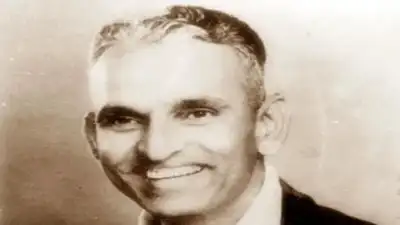
MJ Gopalan
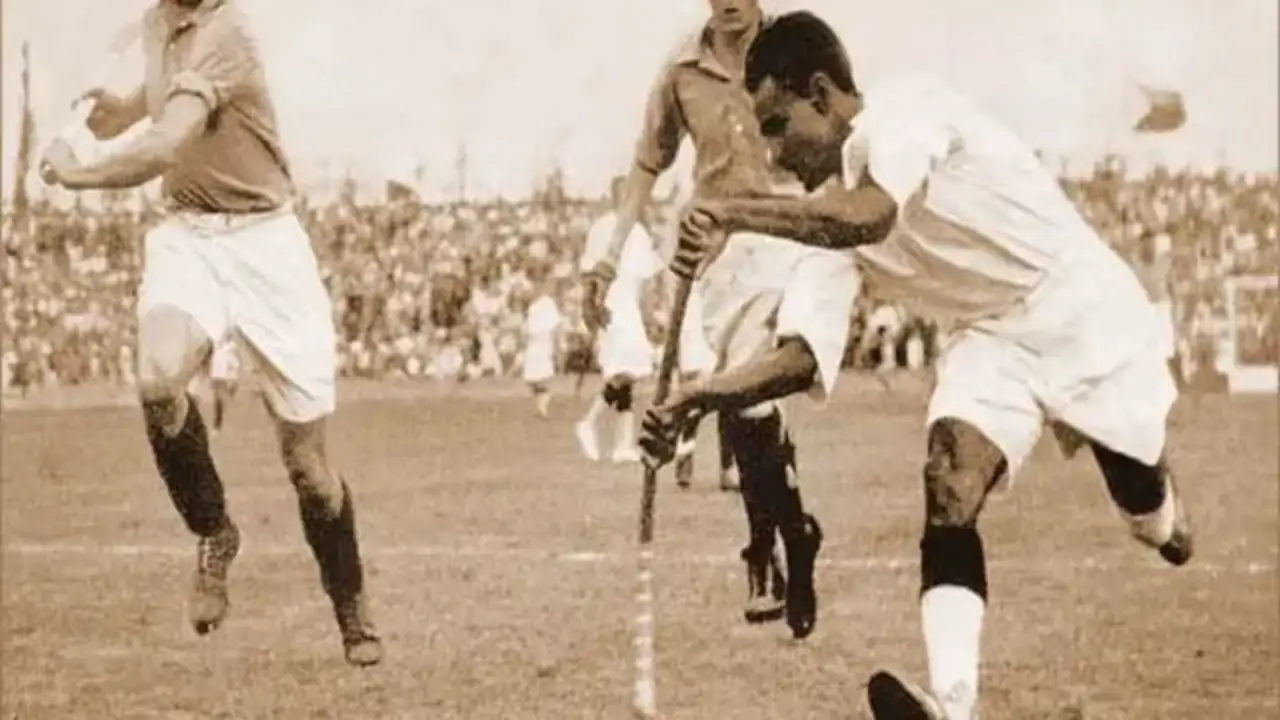
India, led by Dhyan Chand, produced one of the most dominant campaigns in Olympic hockey history and won the gold medal after defeating Germany 8-1 in the final. It was a decision that looked very different once the Berlin Olympics were over.
A gifted cricketer and hockey player, Gopalan found himself facing an extraordinary choice in 1936: pursue a place in the Indian hockey team for the Berlin Olympics under legendary captain Dhyan Chand, or travel to England with the Indian cricket side. He played as a centre-half and, in 1935, toured New Zealand with the Indian hockey side, which enjoyed considerable success. That experience put him firmly in the reckoning for the 1936 Olympic squad. Gopalan had already made his Test debut before the 1936 tour, playing his only Test for India against England at Calcutta in the 1933-34 season. He took one wicket and scored 18 runs. Gopalan took 194 wickets and scored 2,916 runs in 78 matches, while his batting improved significantly as his career progressed. He also captained Madras for several years and remained one of the most influential figures in the city’s cricketing circles for around 25 years. When the Ranji Trophy was inaugurated in 1934, Madras and Mysore played the competition’s first-ever match.
Because his opportunities on the cricket tour were limited, the irony became even greater.
But what followed made the decision one of the most fascinating “what if” moments in Indian sport. He chose cricket, following his greater passion. The Indian hockey team went on to win Olympic gold in Berlin, while Gopalan, despite being part of the cricket tour he had chosen, did not get an opportunity to play a Test in England. Gopalan’s hockey career was also significant. But when the opportunity came to compete for a place in the hockey team for the Berlin Games, Gopalan chose not to pursue the Olympic route. Instead, he accepted his place on the cricket tour of England. Gopalan, who had been faced with the possibility of being part of that historic side, was instead in England with the cricket team. With Mohammad Nissar and Amar Singh ahead of him, Gopalan was not expected to play a major role, and he ultimately did not play a Test in England. Despite his reputation in domestic cricket, that remained his only appearance at Test level. His first-class record, however, reflected the quality of the cricketer he was. Gopalan was given the honour of bowling the first delivery in Ranji Trophy history.