
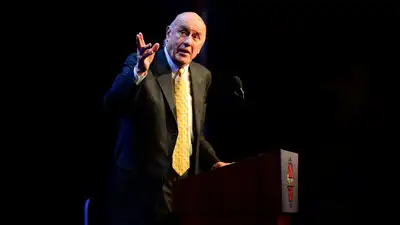
Bob Pettit. Image via: Bob Donnan-USA TODAY Sports
He led the Southeastern Conference in scoring in each of his three varsity seasons and helped LSU reach its first NCAA Final Four in 1953. The Hawks drafted him, and he was Rookie of the Year in 1955, the franchise’s last season in Milwaukee before it moved to St. A year later he became the league’s first MVP, and he won the award again in 1959. At 6-foot-9 and 205 pounds, Pettit was thin by today’s standards, but he played bigger than his frame, becoming one of the first big men to score facing the basket rather than with his back to it. The first, in 1957, ended in double overtime of Game 7 when a Pettit tip-in rolled off the rim. The rematch in 1958 went the other way. Pettit scored 50 in the clincher, and Celtics forward Tommy Heinsohn, who drew the defensive assignment that night, said coach Red Auerbach needled him about it for years afterward, joking that the Celtics would have won ten straight titles if Heinsohn had only held Pettit under 50.
Louis. That approach is a big reason the league later carved out a position called power forward. Pettit and the Hawks met Russell’s Celtics in the Finals four times, and three of those series went the distance.
Bob Pettit, the NBA’s first Most Valuable Player and the man who gave the Boston Celtics their only real scare during Bill Russell’s dynasty, has died at 93. Robert Lee Pettit Jr. spent all 11 of his NBA seasons with the St. Louis Hawks, and in 1958 he did something nobody else managed against Russell: he beat him for a championship. That title came in Game 6 of the Finals, when Pettit dropped 50 points to close out the series, a mark that stood as the record for a championship-clinching game until Giannis Antetokounmpo matched it in 2021. It was the signature moment of a career that also included two MVP awards, 11 straight All-Star selections and a spot on all four of the league’s Anniversary Teams. Pettit finished with career averages of 26.4 points and 16.2 rebounds. Robert Lee Pettit Jr. was born on December 12, 1932, in Baton Rouge, Louisiana, where his father worked as the East Baton Rouge Parish Sheriff. He was cut from his high school team, then grew five inches by the time he reached LSU, turning into a big man who could also score from 15 feet out, a rare skill for a post player in that era. By the time he retired in 1965, Pettit was the NBA’s career scoring leader and second on the all-time rebounding list. Pettit was inducted into the Naismith Memorial Basketball Hall of Fame in 1971 and later earned a statue outside LSU’s arena alongside fellow Tigers Hall of Famers Pete Maravich and Shaquille O’Neal. His number 50 is retired at LSU, and his number 9 hangs with the Hawks.
Louis, said Pettit never gave him a reason to doubt him on the floor. “He was a hell of a player,” Wilkens said. Basketball did not come easily at first. Lenny Wilkens, his teammate for his final seasons in St. He returned home to Baton Rouge after basketball, working in banking, and stayed a familiar face at LSU and New Orleans Pelicans games. The NBA’s statement on his death called him a player who “raised the bar for excellence as the league’s first MVP. “
LSU Athletics announced the death on Thursday, a day after it happened, though the school has not released a cause.