
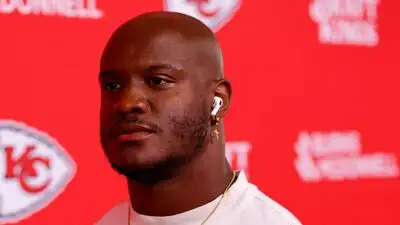
Kenneth Walker is one of the most important Chiefs players at present (Getty Images)
Kenneth Walker had 14 carries for 89 yards in the first half of Kansas City’s Week 1 matchup against the Denver Broncos. Then a 28-yard carry that was the longest play of the game. For a Chiefs team returning from a 6-11 collapse and a quarterback still finding his footing after ACL surgery, Walker did not just contribute. When the Chiefs signed Walker to a three-year deal worth up to $45 million in March, the move was framed as a backfield upgrade. Kansas City has not had a 1,000-yard rusher since Mahomes took over as the starting quarterback. Then Mahomes tore his ACL in Week 15 of 2025, the Chiefs went 6-11, and suddenly the absence of a credible ground game was impossible to ignore.
That is a stunning gap for a team that won multiple Super Bowls. He set up a Mahomes touchdown on the opening drive. Then added two receptions. He carried the offense. And that was only the first half. Patrick Mahomes is the name on the marquee, but Walker is the reason this offense functions. That sounds like an overstatement. It isn’t. What it actually was, was a structural fix. The passing game covered it up for years. Walker is also reviving something that had gone dormant in Andy Reid’s offense for years: the screen game.
Walker forced 77 missed tackles across the 2025 regular season and playoffs, trailing only Bijan Robinson over that span, while earning a 91.4 PFF grade. After waiving Emari Demercado, the remaining backs on the roster are Emmett Johnson, a Day 3 rookie, and Brashard Smith, a gadget player without the size to reliably block. Walker spent four years in Seattle largely underused, splitting touches with Zach Charbonnet and never fully earning a bell-cow role until Charbonnet’s knee injury forced the Seahawks’ hand late in the 2025 season. In Super Bowl LX, Walker ran for 135 yards on 27 carries with two receiving touchdowns as Seattle defeated New England 29-13. Week 1 against Denver was one data point. But the role, the contract, the scheme, and the 28-yard burst that stopped a stadium cold in the first half all point toward the same thing.
They signed a player whose ceiling had been artificially suppressed for years.
Reid opened up his screen-game playbook in training camp and Walker was the primary target, flashing strong receiving skills and even occasional one-handed catches, according to Jesse Newell of The Athletic. It just depends on what the play is, honestly,” Walker said. He has improved his overall PFF grade every single season of his career. That kind of consistency is rare. So is his running style. At his July training camp press conference, Walker explained how patience and explosiveness coexist in his game. “I would just believe over the years running the ball since growing up, and just working with my pops, just seeing the defense is I believe that’s how I really learned how to be patient or, you know, explosive. “I feel like that helps the O-Line…whatever they need me to do, that’s what I’m gonna do. ” The Chiefs have no real competition for passing-down work behind Walker. The result is a roster built around giving Walker every snap they can justify. The Chiefs internally view Walker as a three-down back. That is not a label Kansas City has applied to a running back in a long time. This is where context matters. His usage in Seattle prior to that injury was likely a team preference rather than any reflection on Walker himself. He became the first running back to win Super Bowl MVP since Terrell Davis did it for Denver in Super Bowl XXXII. Kansas City did not sign a complementary piece. The difference is real. In Seattle, Walker worked within a system that never fully committed to him. Join conversation Share your thoughts in the comments Be respectful · TOI community guidelines In Kansas City, the system is being designed around what he does. Walker is not a piece of the Chiefs’ rebuild. He is the foundation of it. Get the latest Sports News and Live updates. Download the TOI app.
Walker, who told Kay Adams he had been working directly with Mahomes to build passing game chemistry, averaged fewer than 40 catches per season in Seattle. During Reid’s early tenure with Kansas City, Jamaal Charles gave him the personnel to run one of the most dangerous screen attacks in the NFL. That element has been absent since. That number is expected to jump considerably here.