
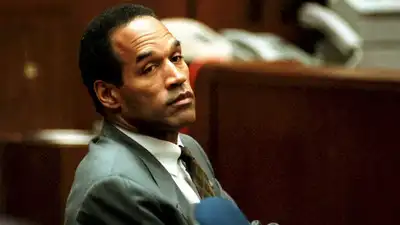
But in 1994, the shocking murders of Nicole Brown Simpson and Ron Goldman changed the course of his life. O.J. Simpson ‘s life once seemed like the perfect American success story. A gifted young athlete rose from humble beginnings to become an NFL superstar, Hollywood actor and household name. The football legend soon stood at the centre of a criminal case that would divide the nation and reshape his public legacy.
Orenthal James Simpson was born in San Francisco on July 9, 1947. Simpson won the Heisman Trophy in 1968, cementing his status as one of college football’s brightest stars. The Buffalo Bills selected him in the 1969 NFL Draft, setting the stage for a professional career that would make him a national celebrity.
His early years were far removed from the fame and wealth he would later enjoy. His parents separated when he was young, and his mother raised him and his siblings in the city’s Potrero Hill neighbourhood. As a child, Simpson faced health challenges, including rickets, which affected his legs. He also encountered trouble as a teenager. Yet football gave him a direction and a chance to change his circumstances. At Galileo High School, Simpson’s talent began to stand out. His academic record initially complicated his path to a major college programme, so he attended City College of San Francisco before transferring to the University of Southern California. At USC, his career took off.
In 1973, he became the first player in NFL history to rush for more than 2,000 yards in a season, reaching 2,003 yards in just 14 games. Simpson later played for the San Francisco 49ers before retiring from the NFL in 1979. That reputation made the events of 1994 all the more startling. On June 12, 1994, Nicole Brown Simpson, O.J. The case took a dramatic turn on June 17, when Simpson failed to surrender to police as expected. Simpson’s criminal trial began in January 1995 and quickly became known as the “Trial of the Century. On October 3, 1995, the jury found Simpson not guilty of the murders of Nicole Brown Simpson and Ron Goldman. In 1997, a civil jury found Simpson liable for the deaths of Brown Simpson and Goldman and ordered him to pay $33.5 million in damages to their families. He died on April 10, 2024, at age 76, after a battle with cancer. In 2008, he was convicted in a separate Las Vegas case involving armed robbery and kidnapping after a confrontation over sports memorabilia. He served nearly nine years in prison before his release in 2017. That conviction was unrelated to the 1994 murders, but it added another major legal episode to a life already marked by extraordinary highs and devastating controversy.
Because of Simpson’s fame, but also because it raised difficult questions about domestic violence, race, policing and the treatment of evidence, the case drew intense attention not only. Simpson’s success in the NFL made him one of the defining athletes of his era. His speed, power and ability to break through defensive lines made him a standout running back for the Buffalo Bills. The achievement earned him the league’s Most Valuable Player award and strengthened his place among football’s elite. But football was only one part of his celebrity. Simpson moved into acting, broadcasting and advertising, becoming a familiar face to audiences who did not necessarily follow the sport. His charm and public profile made him a sought-after personality. For years, his image represented success. He had crossed from sports into mainstream entertainment, building a public identity that reached well beyond the football field. Simpson’s former wife, and Ron Goldman were killed outside Nicole’s home in the Brentwood area of Los Angeles. The murders quickly became a major national story, and attention soon turned to Simpson. He was later seen riding in a white Ford Bronco driven by his friend Al Cowlings. Police followed the vehicle in a slow-speed pursuit through Los Angeles, with television networks broadcasting the scene live. Millions watched as a celebrated sports figure became the focus of a criminal investigation. Simpson eventually surrendered and pleaded not guilty to the murders. The Los Angeles Police Department’s history of racial tension, particularly following the Rodney King case, became a central part of the public debate. What had begun as a double-murder investigation soon became a legal and cultural event that extended far beyond the courtroom. O.J. Prosecutors argued that forensic evidence connected Simpson to the killings. His defence team challenged the evidence and raised questions about the police investigation, including the conduct of detective Mark Fuhrman. One of the trial’s most memorable moments came when Simpson tried on a pair of leather gloves linked to the crime. The gloves appeared not to fit, giving defence attorney Johnnie Cochran a pivotal moment in his closing argument. The verdict prompted sharply different reactions across the country and intensified debate about race, justice and public trust in law enforcement. The criminal acquittal, however, did not end the legal case. The civil verdict used a different legal standard from the criminal trial, and the two outcomes remain central to understanding the case. Simpson continued to deny responsibility for the killings. The aftermath also followed Simpson into the next chapter of his life. Join conversation Share your thoughts in the comments Be respectful · TOI community guidelines For many, Simpson’s story remains a reminder of how quickly public perception can change. His football records and Heisman legacy are part of sports history, while the murders, criminal trial and civil judgment continue to shape how his name is remembered. His life cannot be reduced to a single moment, but neither can the lasting weight of the case be separated from his public legacy. What began with a young boy’s dream of football greatness ended as one of the most scrutinised stories in modern American history. Get the latest Sports News and Live updates. Download the TOI app.