
Representative Image
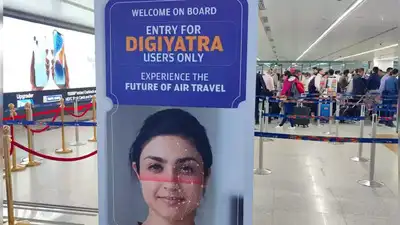
Starting November 1, eligible Indian nationals with e-passports travelling on Air India and IndiGo can use digital identity credentials at selected airport checkpoints. The trials cover seven airports and will run through December 2026, with passenger feedback informing plans for a wider rollout in 2027. Digi Yatra is opening international passenger trials. The service will initially be available to passengers travelling on international flights operated by Air India and IndiGo, subject to airport infrastructure availability. The trials will cover Delhi, Bengaluru, Hyderabad, Cochin, Mumbai, Chennai and Amritsar airports. Eligible passengers can use Digi Yatra for terminal entry, security hold areas, and boarding gates at enabled touchpoints. IndiGo passengers will be eligible on select international routes. While the trial covers all international destinations served by Air India.
Digi Yatra international trials: Who can use it and how it works
Feedback from the three-month programme will help inform plans for a wider rollout in 2027, while the redesigned app aims to improve the experience for existing users. With the start of international passenger trials, we are taking an important step towards extending this experience to eligible Indian nationals travelling internationally.” He added that interoperability with global frameworks such as the International Air Transport Association’s (IATA) One ID and the International Civil Aviation Organization’s (ICAO) Public Key Directory (PKD) would be key to exploring how e-passport-based digital credentials could enable more seamless, secure journeys across borders. Alongside the international passenger trials, Digi Yatra has introduced a redesigned mobile app to simplify navigation and make the digital identity process clearer for users. The update brings a cleaner interface, an improved boarding pass display with airline-mapped colours, more intuitive navigation and a more structured credential wallet.
Service availability will also depend on each airport’s infrastructure. Suresh Khadakbhavi, CEO of Digi Yatra Foundation, said, “Digi Yatra has demonstrated how digital identity can simplify domestic air travel. The international passenger trial is limited to Indian nationals holding e-passports and travelling on eligible international flights operated by Air India and IndiGo. Passengers must create an e-passport-based Verifiable Credential (VC) through the Digi Yatra app before using the service. Passengers do this by scanning the machine-readable zone (MRZ) of the e-passport, reading the embedded chip using a compatible smartphone’s Near Field Communication (NFC) capability, taking a selfie, and verifying the details. Once created, the digital credential will be stored in the passenger’s Digi Yatra wallet on the passenger’s device and can be used at enabled airport touchpoints during the trial. However, Digi Yatra will not replace the existing international travel process. Passengers will still need to carry their travel documents and complete mandatory airline document checks, immigration and other travel formalities as usual. It also adds clearer indicators for guardian and minor credentials and a redesigned consent screen. The international passenger trials will give Digi Yatra an opportunity to assess how its digital identity system works for eligible travellers beyond domestic air travel. You use AI every day. Now get your AI Quotient. Take the AIQ test.
Digi Yatra said the changes aim to improve clarity, accessibility and the overall user experience, while keeping passenger consent, privacy and security central to the platform. Digi Yatra currently has more than 26.5 million users and has enabled over 110 million journeys, according to the company. The platform operates across 39 domestic airports and serves 11 domestic airlines, with average airport adoption at about 30%. The company also plans to expand the app’s language support. It is currently available in 11 regional languages and plans to support all 22 scheduled by 2027. The company also plans to cover another 25 domestic airports by the same year.
The updated consent screen is intended to help passengers understand what information is being shared, with whom and for what purpose.