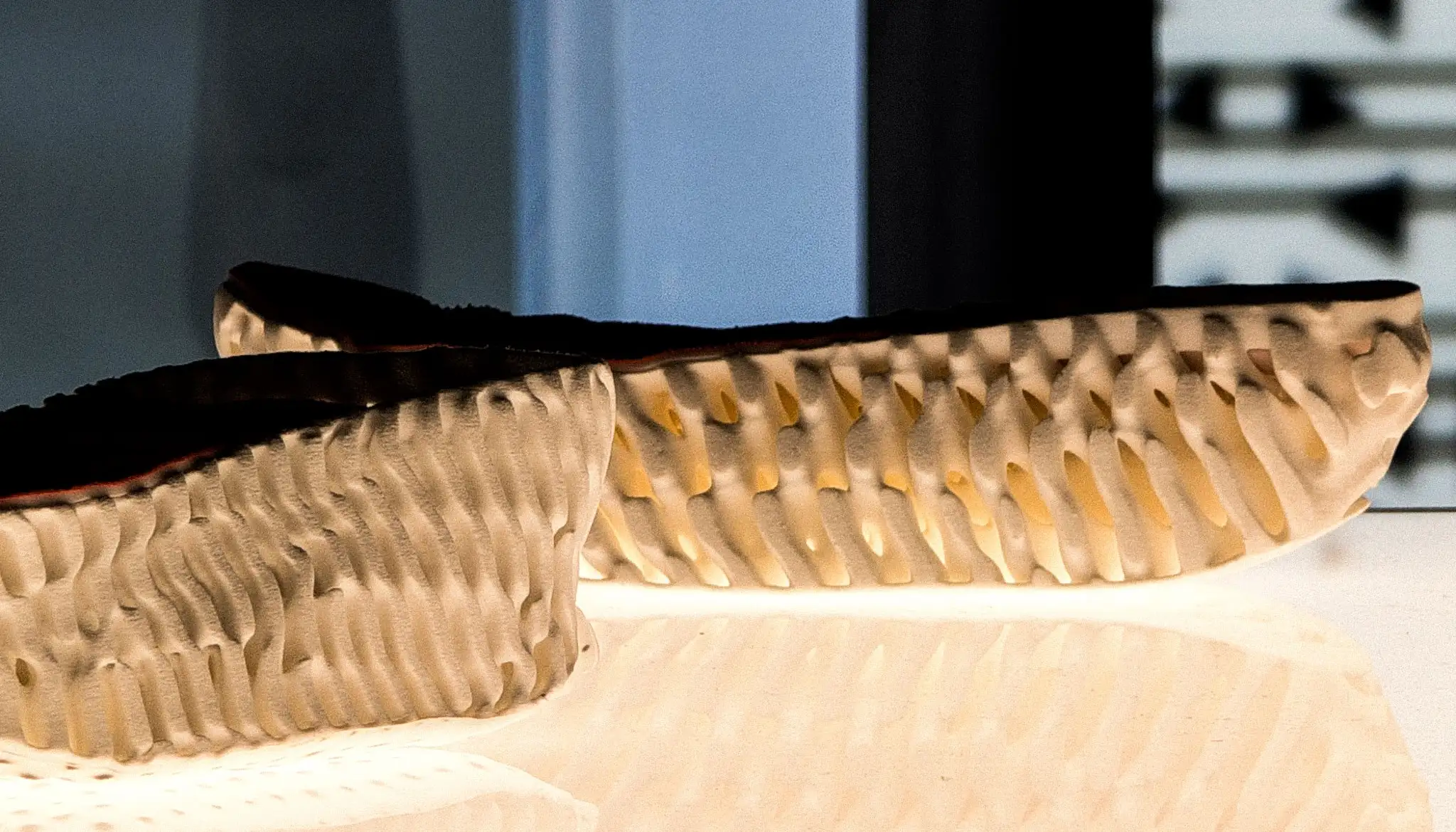
An early prototype of Adidas’s printed foam at the APEX Lab in Herzogenaurach
EVA, the light and cheap foam that sat under most shoes for years, gave way to expanded TPU, which Adidas brought to market as Boost in 2013. It was the final stop at the APEX Lab during Home of Innovation, the company’s name for a tour through the labs where athletes test products most people won’t see for another year or two.
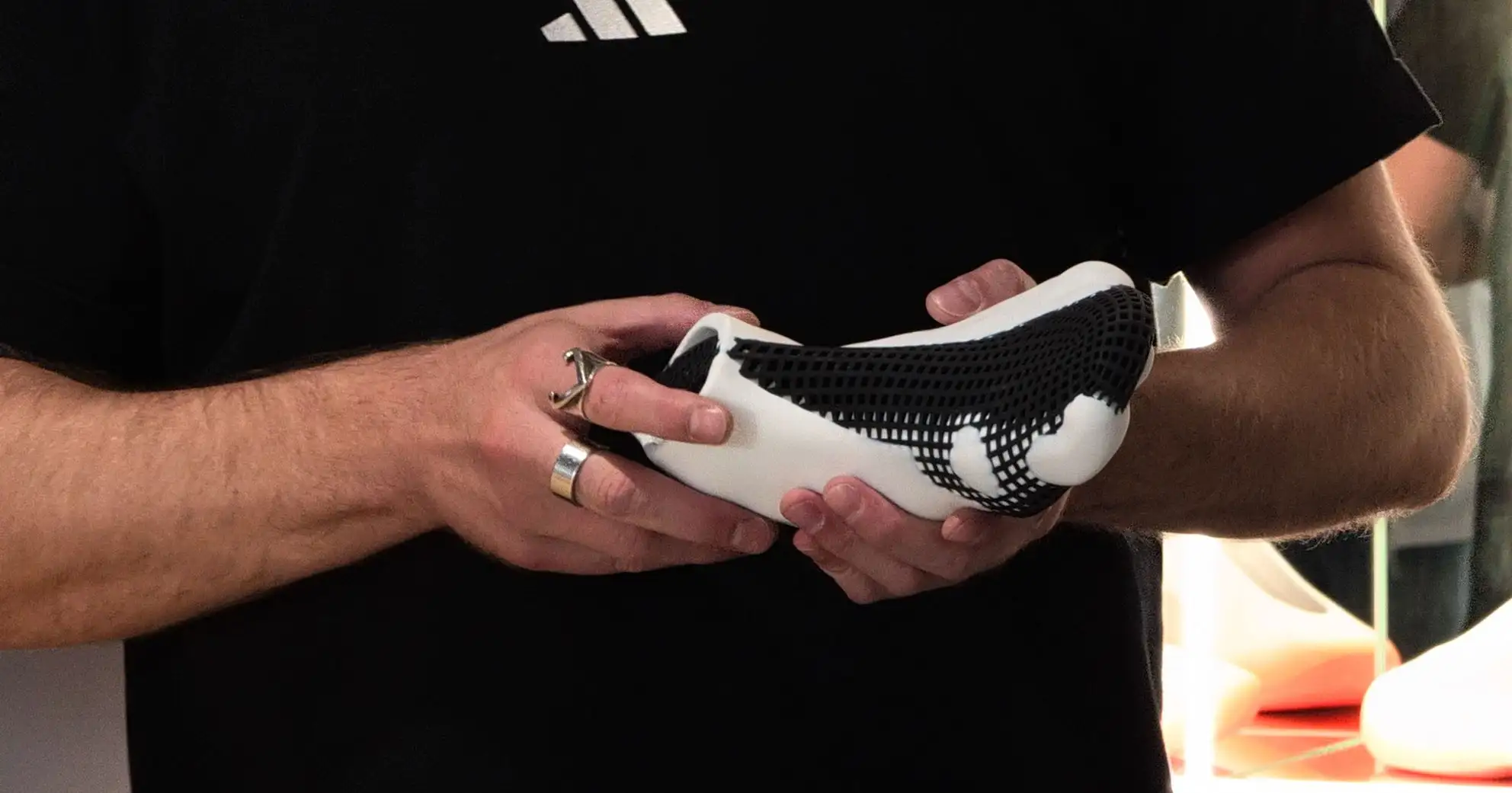
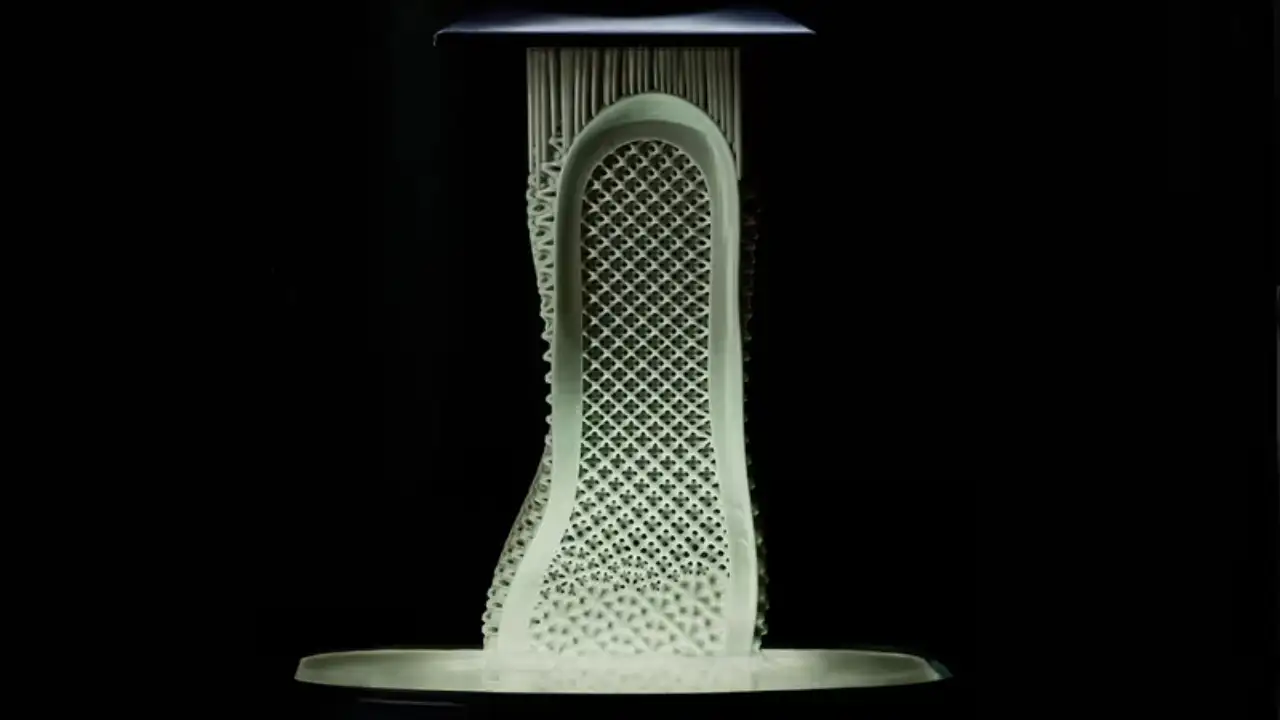
Mateo, the designer behind it, said the project was at a very early stage, much further from production than R.A.P., and that the group was the first outside Adidas to see it. Running-shoe foam has changed a great deal over the past decade, but it is still made in moulds, and a moulded midsole behaves the same way for every runner who wears that size. Adidas has been 3D-printing midsoles for close to a decade to get around that, though it has printed them from resin rather than foam. At its headquarters in Herzogenaurach, Adidas has now shown foam that comes out of a printer. Chief Creative Officer Alasdhair Willis calls it “a future continuously being built. APEX, short for Athlete Product Excellence, is the elite-only room where Adidas makes bespoke products for its biggest names. Most of the tables there dealt with how a shoe gets customised to a single athlete. One covered the profile APEX builds before anything is made: 3D body and foot scans, pressure mapping and gait analysis, the process behind boots and shoes made for Lionel Messi, Anthony Edwards, Noah Lyles and Alexander Zverev. A foot model recreated from APEX scan data, used to build Project R.A.P. footwear Another held Project R.A.P., short for Radical Athlete Perception, Adidas’s 3D-printed footwear platform. Its lattice boots are made from an athlete’s scan data and worn in MLS matches by Philadelphia Union’s Cavan Sullivan, and its basketball shoes by Brooklyn Nets rookie Mikel Brown Jr. The last table came with a warning. What he showed was printed foam, in structures that could be tuned in ways a moulded midsole cannot. Foam sits under almost every athletic shoe, but running is where the race to improve it has been fought most openly. For most of the last decade, progress in running-shoe cushioning has been a materials race. The next jump came from PEBA-based foams, which are lighter and return more energy, and which now sit under most elite racing shoes. Adidas’s printed foam changes how it compresses through its structure, not a new formula Each step came from a lab working on the formula. A better foam meant a new polymer, a new blend or a new way of expanding it. Engineers could shape a midsole, stack layers or add a carbon plate, but the foam inside a moulded midsole behaves more or less the same throughout. Changing how it compresses has meant changing what it is made of. There is a practical reason for that. Foam midsoles are moulded, and a mould can only produce shapes that can be pulled back out of it. Complex internal structures are off the table, so the chemistry has had to carry most of the load. The Futurecraft 4D midsole, printed by Carbon as a lattice rather than moulded from foam. (Picture: Adidas)
Because a moulded midsole comes out the same for everyone in a size, that hasn’t been possible with foam before,. Because the project now moves as quickly as he can test it, mateo has practically been living at the factory for the past three or four months, Taylor said,.
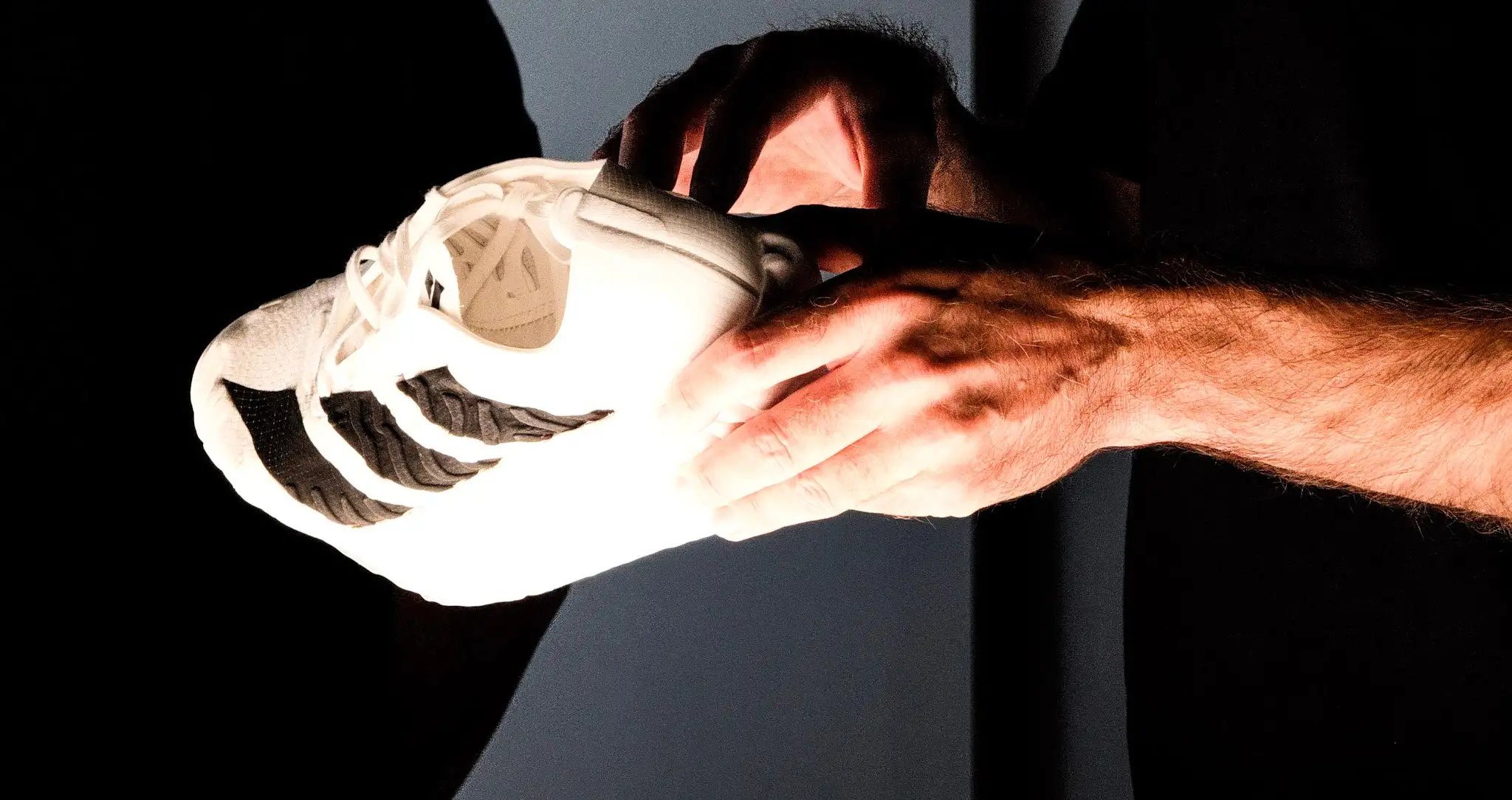
He said this design was only one example, and a different structure could be optimised for weight, or built for walking rather than running, from the same material. Mateo said the lab can collect an athlete’s pressure data, kinematics and foot scans, and then tune the structures to that athlete. He was wearing one of the structures, so he walked up and down beside the table to show it working. This design is meant to maximise vertical deformation, meaning how far the foam compresses under load, and it does that by collapsing forward as the runner moves. You could see the cells fold in a set direction rather than squashing evenly, as a moulded slab would. The idea of a midsole that folds forward will be familiar from 4DFWD, which produced that movement with printed resin. The structure Mateo was wearing does it in foam, with the arrangement of its cells deciding how it compresses. A basketball shoe has to absorb heavy landings and support sharp cuts, while a walking shoe needs comfort over hours rather than speed over minutes. If the structure decides how the foam behaves, one printed material could in principle be shaped for each of those jobs. Geometry becomes more useful once it can be adjusted for an individual. APEX already profiles athletes across football, basketball, tennis and running, so the data needed to shape foam for one person is being collected well beyond runners. Speed matters as much as precision. The process he described was simple: make a pair, test it with the athlete in the lab, adjust it, make another pair, and narrow down to the best shoe for that athlete. Adidas’s printed foam prototypes, which can be remade for each athlete without a mould. Alexander Taylor, Adidas’s Senior Vice President of Innovation Design & Concepts, who was leading the group, put that pace in context. With conventional manufacturing, each change means working on moulds, and the structures on Mateo’s table could not be moulded in the first place. The shoes also look different, since the process produces shapes nothing from a mould would. For now, the project is being judged by how the structures behave rather than by numbers. Mateo didn’t share energy-return figures to compare against moulded foams, and at this stage there may not be finished ones to share. Printed foam is still a long way behind R.A.P., which already has boots on an MLS pitch. If it follows the same path, its first wearers will be the athletes whose profiles are already on file at APEX, a few steps from the table where it was shown. You use AI every day. Now get your AI Quotient. Take the AIQ test.
Three weeks before the session, Mateo was at the factory where the samples on the table were made, and he produced five versions of the structure, each tuned differently.
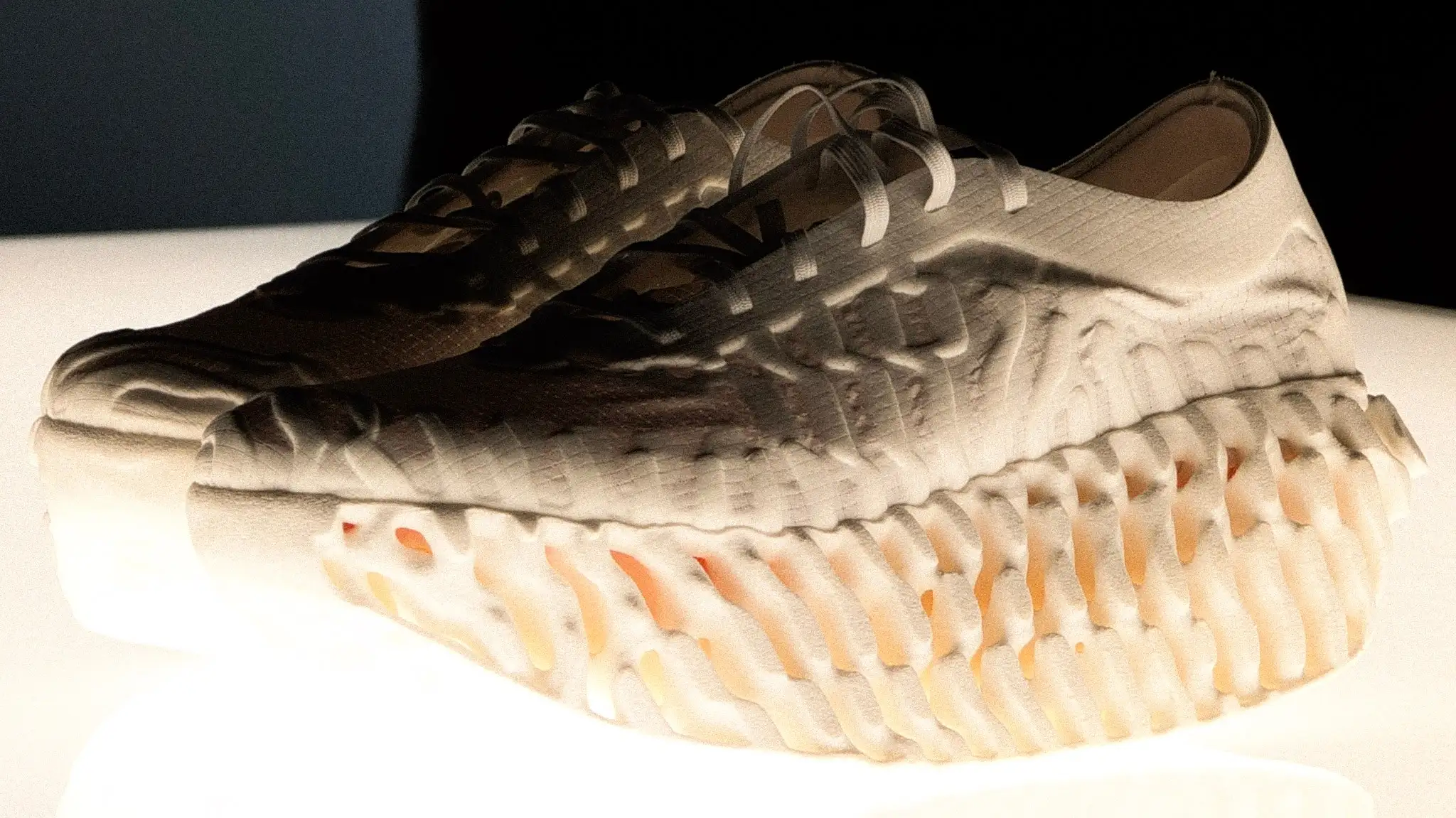
In 2017 it introduced Futurecraft 4D with Carbon, a printed midsole that gets its cushioning from a lattice structure, and 2021’s 4DFWD added bowtie-shaped cells coded to compress forward under vertical impact. Adidas has found a way around that limit before. Those midsoles are printed as an elastomeric lattice, not foam in the EVA or Boost sense, so Adidas has been able to shape cushioning through geometry for some years, though never in foam. One of five printed foam versions Adidas made in three weeks. Mateo described printed foam as a combination of two things. From additive manufacturing it takes precision, control and customisation. From foam it keeps lightness, energy return and deformation, which he called a fancy word for how squishy it is. Adidas had to develop a new additive method to make it, though Mateo didn’t say what the base material is.