
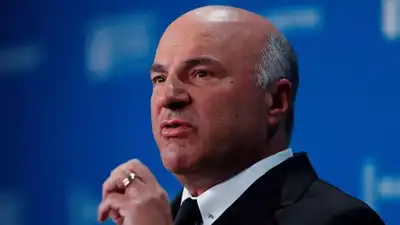
Instead, for the next 36 months his focus will be on energy infrastructure, particularly electricity production and uranium, which he believes are critical to powering the AI revolution.
Canadian billionaire Kevin O’Leary says that he is betting big on artificial intelligence but is not buying technology stocks. Speaking on the Stock Sharks: The Deep End podcast, O’Leary explained that he is taking an indirect approach to AI investments, according to a report by Benzinga. “I’m a picks and shovels guy,” he said.
Rather than expanding his holdings in volatile tech equities, he prefers to invest in the backbone of AI — power generation. He pointed to energy stocks tied to natural gas, turbines, and uranium as the most promising plays.
Google’s $3 Billion Power Contract in Finland
Google has secured a significant long-term power contract valued at $3 billion with a local utility in Finland. This deal, according to Kevin O’Leary, is noteworthy because it is unrelated to artificial intelligence (AI) or data centers. O’Leary emphasized that this move illustrates a growing trend among technology companies to treat energy access as a crucial and independent strategic asset. By locking in such power contracts early, these firms are prioritizing electricity as a vital resource in their operational frameworks, separate from their AI initiatives.
Geographically, O’Leary said Canada holds a significant global advantage when it comes to energy commodities, specifically citing Saskatchewan’s uranium reserves. He said he’s concentrating his power-related investments in the Nordic countries and in Alberta, Canada — regions he singled out for their notably low electricity costs per kilowatt-hour, a factor he sees as increasingly critical as power-hungry AI infrastructure continues to scale globally. O’Leary argued that nuclear power will play a critical role in meeting the electricity demands of modern computing infrastructure, pointing specifically to small modular reactors as what he considers the cleanest and cheapest source of electricity available. He described these reactors as a primary technological driver for power generation over the next seven to eight years — and since they require uranium pellets to operate, that’s precisely where his uranium bet comes in.