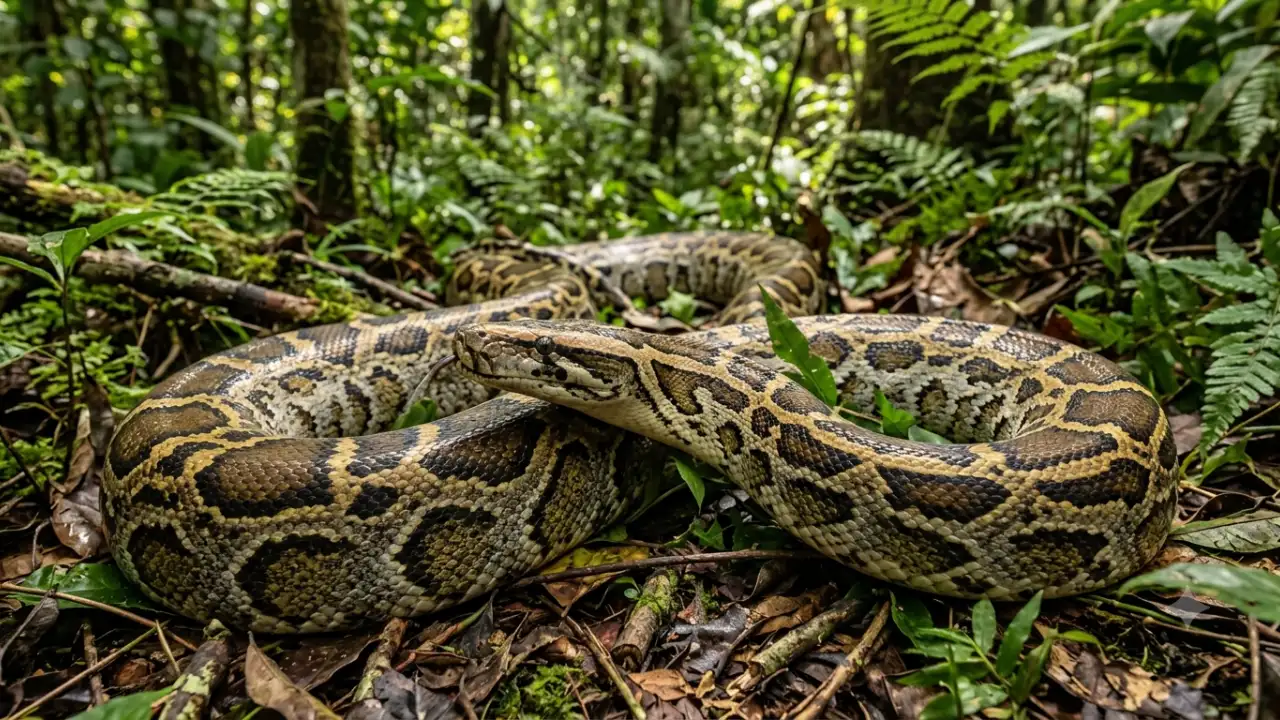
In 2025, the South Florida Water Management District and the University of Florida teamed up to deploy robotic rabbit decoys designed to mimic real prey and lure pythons out of hiding using artificial intelligence (AI), heat signatures and scent simulation. Florida used an unusual tool to control the growing population of invasive Burmese pythons in the Everglades: solar-powered robot rabbits.
The solar-powered robots are designed to imitate prey that Burmese pythons hunt. They produce a heat signature and emit a scent intended to attract the snakes, which use thermal sensing and smell while hunting. Each robot has an AI-powered camera that monitors the surrounding area. When it detects a python approaching, the system alerts South Florida Water Management District officials. A trained python removal agent can then be dispatched to the location.
Researchers estimate that between 100,000 and 300,000 Burmese pythons are present across the state’s subtropical regions. The snakes can grow longer than 18 feet, and adult females can lay more than 70 eggs in a single clutch. Burmese pythons were introduced into the Everglades during the 1970s and have since become an invasive predator in Florida.
Their presence has affected native mammals, birds and reptiles, reducing available prey for species including Florida panthers, bobcats and birds of prey.