
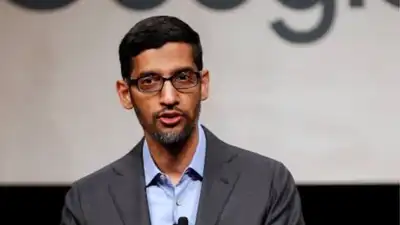
Photo: @RemporX/ X
Sundar Pichai wants smartphones to better understand consumers. Google CEO believes smartphones need to know when to interrupt you, and when to get out of your way. In an interview about phone overuse and technology’s role in everyday life, Pichai argued that a good product should be designed around the user’s needs, not the desire for attention itself.
Sometimes the best feature is silence
The appropriate level of interaction therefore depends on the situation.
His case is simple, but he said that if the user is going to forget anything significant, the phone has to ensure the user gets that information. Pichai says phones can be more interruptive than they need to be. Technology should tell people when it’s needed, but not make them return to their phones repeatedly, according to him. “Every good product needs to have restraint,” Pichai said.
However, the technology must remain silent if it has nothing to do. For Pichai, it is the answer to good product design. “If I’m about to forget my kid’s birthday, I want the phone to scream at me until I do something about it. Pichai believes smartphones should be context-aware rather than treating all notifications the same. Its important to note that, not every message from an unimportant contact should be treated with the same urgency as a reminder about something personally important. Pichai feels the ideal system should know the difference, and interrupt the user only when it’s useful. But this does not necessarily mean the phone must dictate how people live their lives; rather, it should help people realise what is worth their focus. For instance, he mentioned the difference between a spouse calling and an unknown number calling. Both cases can have varying degrees of urgency. The same principle applies to email, calendars and social networks. Not everything that arrives on a phone needs an immediate response. Pichai believes that a good product doesn’t need to keep talking to users. An example of this behaviour is a calendar app, which may be idle most of the day, only to send a single reminder when needed. A fitness app, in contrast, may need to nudge more frequently. Pichai also argued that technology should increasingly fade into the background. He pointed to Chrome as an example, explaining that Google minimised the browser’s interface so users could focus on the website rather than the software itself. The same goes for search. A complex system may deliver information behind the scenes, but the user doesn’t need to see the complexity. It’s not about how useful the technology is, but about the technology itself. The bigger challenge is determining what matters at a particular moment. A notification that is useful when someone is free could be disruptive while they are working, eating dinner or driving. One example is Android Auto. Instead of searching for information on his smartphone by touch, the system could let him ask for information verbally and receive a reply. In essence, the technology would bear the burden of delivering the information.
What this means for phone users
Products should not compel users to use them longer but should solve their problems and improve their lives, according to him. Any app that filters out unnecessary alerts or lets you unplug is acceptable, according to Pichai. He has described his approach to designing technology as “user-centric. In addition, he did not dictate how someone should use his phone. If an individual chooses to use his/her phone during meal times, they can do so Technology exists so people can do this. Pichai’s views offer an interesting approach to mobile phone addiction. It is not about how much time people spend on their cell phones, but how often they get distracted by them. A good mobile device should be silent when there is nothing to say and should come with important information only when something is truly important. Get the latest technology news and updates. Download the TOI App.