
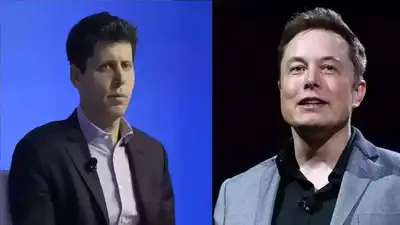
Sam Altman says people keeping RAM in personal computers is ‘quite terrible’; Elon Musk responds: People deserve …
Speaking on Cheeky Pint, Altman stated that the memory in personal devices ends up “being used 5% of the time.
OpenAI CEO Sam Altman recently said that it is ‘quite terrible to have everybody have a bunch of the world’s limited supply of DRAM sitting in their own computer’. “The people deserve to have their RAM too!,” Musk wrote without naming the OpenAI CEO. But when a X user Retard Finder @IfindRetards called Sam Altman a “retard” for his recent comments, the Tesla CEO replied “Seriously” to the post. “From a global allocation perspective, actually, it’s quite terrible to have everybody have a bunch of the world’s limited supply of DRAM sitting in their own computer,” he said, adding that the memory ends up “being used 5% of the time.”
” Now, Elon Musk has replied to Sam Altma.
On October 29, the same day the podcast went live, Intel forecast fourth-quarter revenue of $15 billion to $16 billion, short of the roughly $17 billion analysts expected, and its shares fell over 20% in extended trading. The company expects the PC market to shrink 12% this year and another 10% in 2027, and does not see memory supply or pricing easing next year. HP has said memory made up about 35% of a laptop’s production cost in July, up from 15-18% a quarter earlier.
Because of rising memory costs, and industry watchers say mobile-grade memory now costs several times what it did a year ago, onePlus, Samsung, Oppo and others have revised prices more than once.
“You want maximum utilisation in the cloud if you’re trying to deal with this very supply-constrained environment,” he said. He also said he wants a lot more supply in the market. Sam Altman said OpenAI has built its own chip, is learning to build data centres, and plans to point its robotics programme at making more of them.
Sam Altman’s point is about utilisation. Memory in a data centre serves many users through the day, while the RAM in a laptop or phone sits idle for long stretches. On memory prices, he admitted the market has not corrected itself, saying “the invisible hand is failing right now. The squeeze is visible in the smartphone market. PCs are taking a bigger hit.