
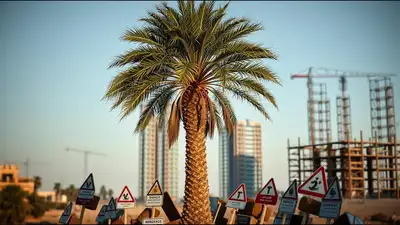
Representative Image of a vibrant date palm surrounded by construction signs, symbolizing the challenge of preserving heritage (AI-generated image)
Ma first faced the threat of losing the tree in 1972, when British colonial authorities planned a road that would have required its removal, according to the Los Angeles Times. She recalled appealing to David Akers-Jones, who was then serving in the New Territories administration, and asking that the road be shifted slightly instead of cutting down the palm. As the deadline for dealing with the palm approached, Ma continued pressing authorities to reconsider. She even wrote to Hong Kong Chief Executive Tung Chee-hwa asking whether the tree could be preserved behind her home. The family’s attachment to the palm had also grown through the natural changes around it. Ma described two smaller trees that had appeared near its base without being deliberately planted. She believed they had helped stabilise the larger palm against Hong Kong’s powerful typhoon winds. The dispute also produced an unusual coincidence. For Ma, the date palm was more than an obstacle in the path of a road. It was a surviving link to her family’s past, a symbol of faith and a tree that had already outlasted one government decision to remove it. The family’s decades-long effort to protect it showed how a single tree can become intertwined with questions of heritage, religion, memory and the rapidly changing landscape of Hong Kong.
Akers-Jones, the official whom Ma remembered helping save the palm decades earlier, was himself facing a road project that threatened his seaside home and a large banyan tree on his property.