
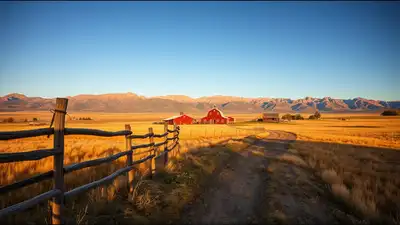
Representative Image of a historic ranch in the John Day River Valley surrounded by farmland and mountains ( AI Generrated Image)
In 1910, the couple purchased approximately 700 acres and gradually expanded their property to nearly 6,000 acres, raising sheep and cattle, cultivating crops and maintaining orchards. After James died in 1972 and Elizabeth in 1973, the family sold the ranch to the National Park Service (NPS) in 1975. The monument is also known for fossil deposits that document more than 40 million years of ancient life. Elizabeth Grant was born on 10 November 1885 in Moray County, Scotland.
In the remote John Day River Valley of central Oregon, where neighbours could live dozens of miles apart, Scottish immigrants James and Elizabeth Cant built a ranch that became an important gathering place for the local community. Their large family home also accommodated travellers, ranch workers and schoolchildren, while its rooms hosted community gatherings. The property subsequently became part of John Day Fossil Beds National Monument, where the historic house preserves the story of ranching and rural life in the region. She was the youngest child of Mary Grant, who supported her family by working as a crofter, or tenant farmer, in Muir of Lochs, near Elgin.
In 1900, he left Scotland for Portugal and Argentina, where he worked with sheep and established a business selling mules. He eventually settled in central Oregon, and Elizabeth travelled there in 1907 to join him. The couple married in October 1908, according to the National Park Service’s biographical account of Elizabeth Cant. In 1910, the family established its own ranch on approximately 700 acres. The property expanded over time to nearly 6,000 acres, according to the NPS’s history of Cant Ranch. School was held in its third-floor attic until the nearby Cant School was built in 1919, and the local teacher lived with the family. Their midnight suppers sometimes brought together more than 20 guests and continued until morning.
Elizabeth also helped accommodate workers involved in road construction and hired some to carry out irrigation projects on the ranch, according to the NPS’s Elizabeth Cant profile. Elizabeth attended school until her teenage years, when she began working alongside her mother. James Cant grew up in Forres, Scotland, in a family headed by a widowed mother. During the early years of their marriage, the Cants worked for another Scottish rancher, Alexander Murray, with Elizabeth working as a cook. After earning money and acquiring sheep through their work, James bought land known as the Officer Homestead with a business partner. They raised sheep, chickens and bees, maintained a vegetable garden and cultivated crops including alfalfa and barley. The Cants’ story also offers a glimpse into the lives of Scottish immigrants who settled in central Oregon and helped shape the region’s ranching communities. The house also played an important educational role. Beyond its agricultural and domestic functions, the house became a social centre for the area’s Scottish community. The Cants hosted gatherings featuring music, dancing and traditional Scottish dress. Such events were significant in a sparsely populated valley where neighbours could live many miles apart. Throughout the 1920s and 1930s, the ranch supported hundreds of sheep, thousands of acres of land and dozens of employees and boarders. The family also planted apple and peach orchards. When sheep ranching became less profitable in the 1940s, the Cants shifted towards cattle, continuing the business with help from their adult children and their spouses. The ranch’s history reflects both the family’s commercial success and the role its home played in sustaining a dispersed rural community.