Image: Michał Konrad Grabowski
A routine search for dangerous seabed objects before gas pipeline construction uncovered a lost ship
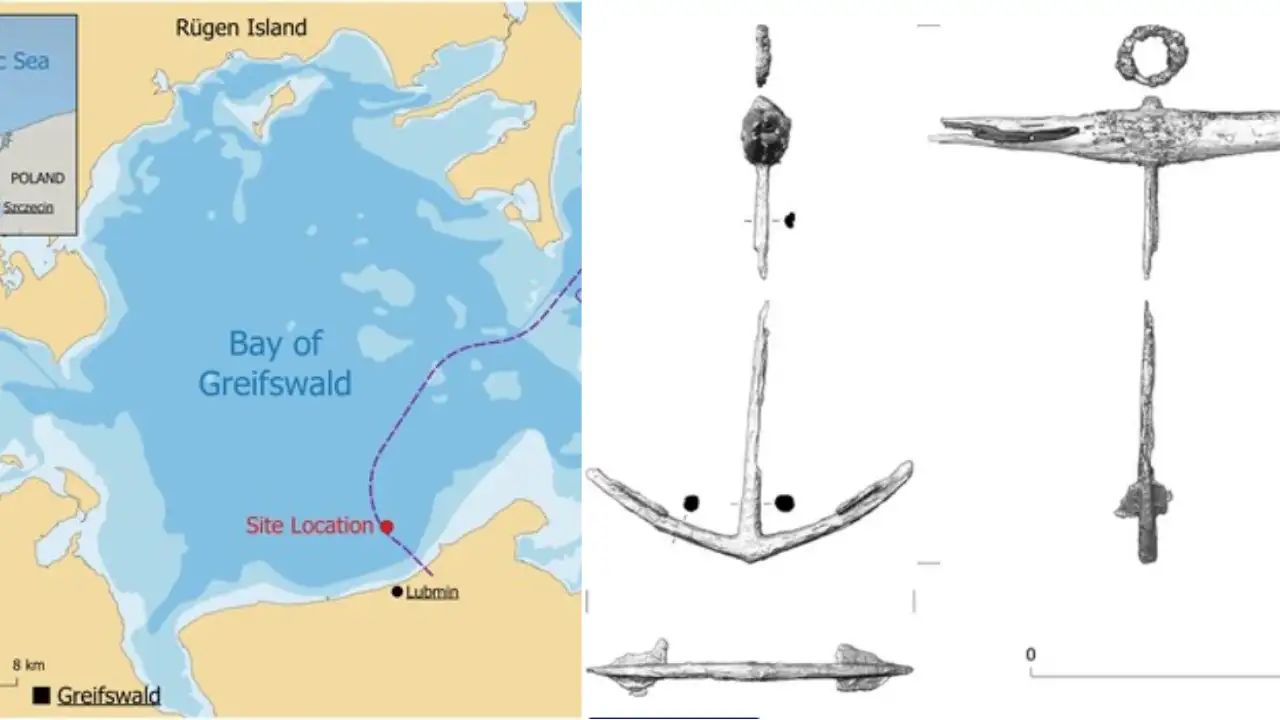
The find began with the Ostsee Anbindungsleitung project, according to Grabowski’s report. It is a fifty-kilometre underwater gas pipeline linking a new liquefied natural gas terminal at Mukran, on the island of Rügen, with a gas transmission facility near the seaside resort of Lubmin. Before building, crews must neutralise hazardous objects on the seabed, such as unexploded wartime munitions and metal debris, and an archaeological watching brief usually accompanies this work.
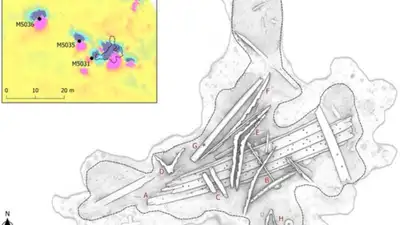
Instead, in 2023, they pulled up shoe soles, wooden pulley blocks and an iron anchor from a seventeenth-century ship. Divers sent to clear dangerous metal from a planned gas pipeline route in Germany’s Bay of Greifswald expected to find only modern debris and wartime leftovers. Underwater archaeologist Michał Konrad Grabowski describes the discovery in a preliminary report in the International Journal of Nautical Archaeology , published by Taylor and Francis. The rescue team had only twelve days before dredging began, yet it recovered more than sixty objects, including one baffling brick-like item that still has no explanation. The team made twenty-two dives over twelve days. The divers were a mix of commercial divers and maritime archaeologists, working from a thirty-metre vessel with surface-supplied air and radio communication. Their positions were tracked in real time and combined with magnetic, sonar and photographic survey data. The largest surviving piece of hull measures roughly seven and a half metres by one metre. It has five overlapping planks and a few frames, and Grabowski identified it as part of the rear starboard side. The planks are about four centimetres thick and overlap in the clinker style, like roof shingles. They were fastened with iron nails and sealed with a mixture of tar and animal hair. The rigging finds include single-sheave wooden blocks, mostly of ash, along with deadeyes and heart blocks. A grindstone about thirty centimetres across and several carpentry tools point to an onboard workshop, which Grabowski links to long-distance merchant ships or warships. The hand brace handle closely resembles examples from the Tudor warship Mary Rose. Nearly all the tools came from one magnetic anomaly, together with barrel staves and what may be spare iron fasteners stored in casks. His cautious suggestion is a sharpening device for drill bits or chisels, possibly made from a damaged tool and remounted in a new wooden frame. Until a match turns up, the object remains the wreck’s central mystery.
The frame arrangement is consistent with a shell-first building method, in which the outer planking is assembled before the internal frames.