Image(s): Italian Art Society
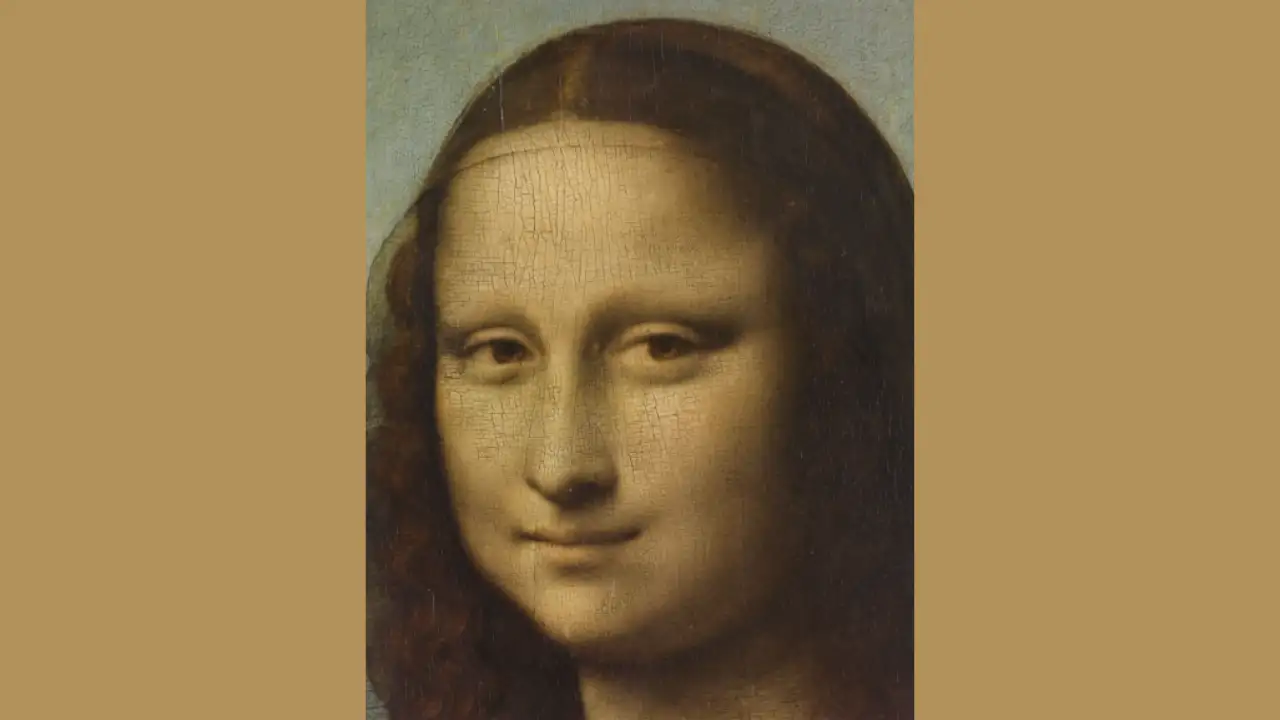
Multispectral imaging, which photographs a painting across 13 bands of light, found one tiny hair above the eye. Lisa Gherardini was an Italian woman widely known as the ‘sitter’, she was born in Florence on 15 June 1479, the first of seven children of a noble but modestly wealthy family, according to the Italian Art Society. She married the widowed silk merchant Francesco del Giocondo on 5 March 1495, aged 15, and had her first child in 1496.
The answer, according to the study, lies in Florentine culture. The Telegraph reports that Dr Laino also pointed to the loss of two children and the threat of plague, and said stress and hormonal changes can bring on alopecia. Few Mona Lisa theories have been settled, and Dr Michael Yafi, who told the European Congress on Obesity in Istanbul that her portrait showed excess body fat, called the many diagnoses fun and interesting.
Mona Lisa alopecia is the diagnosis proposed in a new medical study of Leonardo da Vinci’s most famous portrait, suggesting the sitter’s missing eyebrows and eyelashes were caused by alopecia areata universalis, an autoimmune condition that removes hair from the entire body. The study ‘ Alopecia areata universalis in Leonardo da Vinci’s Mona Lisa: A systematic retrospective iconodiagnosis ’ uses retrospective iconodiagnosis, the practice of identifying disease from artworks, and deliberately examines the painted surface rather than the woman herself. Its conclusion is striking, what has often been put down to Renaissance fashion may instead be a careful, accurate and dignified record of illness, painted by an artist famous for observing the human body closely. It had been read as the trace of a painted eyebrow that vanished over time. The study sees a single surviving real hair instead. In alopecia areata the immune system switches hair follicles off rather than destroying them, so a few can keep growing while the rest stay dormant. The paper backs this with a clinical photograph of an eight-year-old patient showing exactly the same feature. Fifteenth-century Italy had a thriving trade in real human hair, used to make the capigliara, a structured hairpiece. A married woman also covered her head as a sign of her marital status, so a full, dark, ordered head of hair is not evidence against the diagnosis. The study adds that the condition brings stigma, anxiety and depression, burdens that would have weighed heavily on a young wife whose public appearance was a matter of family honour. Dr Laino’s paper is just as candid about its own limits. It acknowledges the usual caveats of diagnosing the past, assumes the relevant passages are Leonardo’s own and well preserved, which the technical evidence supports but cannot place beyond doubt, and cannot rule out a cause that is no longer visible on the panel.