
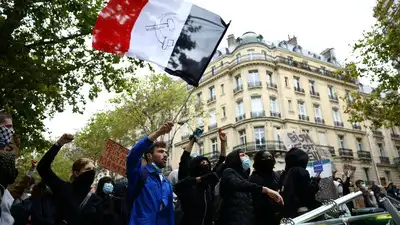
A protester holds a French flag behind a barricade to block the Boulevard Saint-Germain during a blockade of Sciences Po university in Paris.
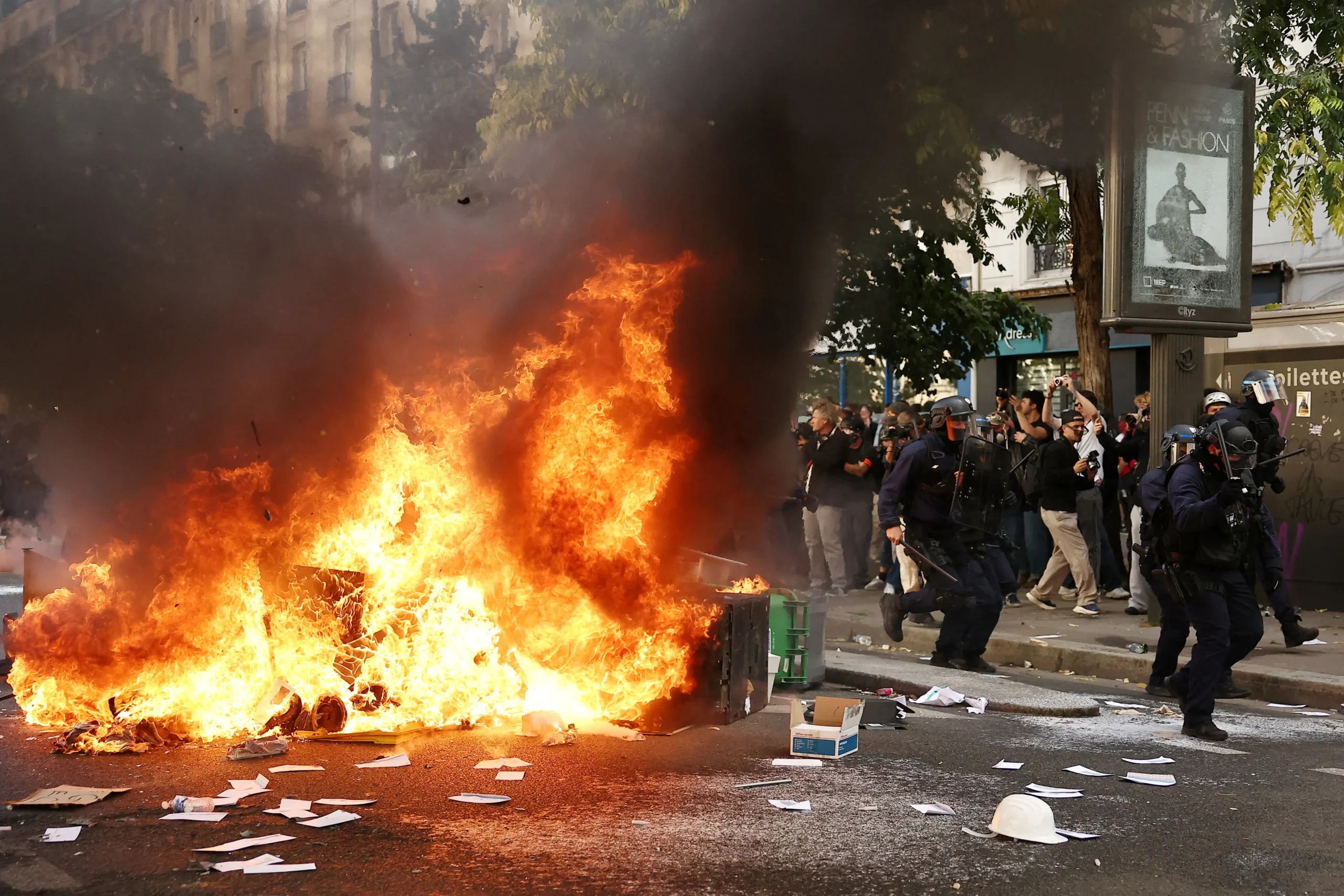
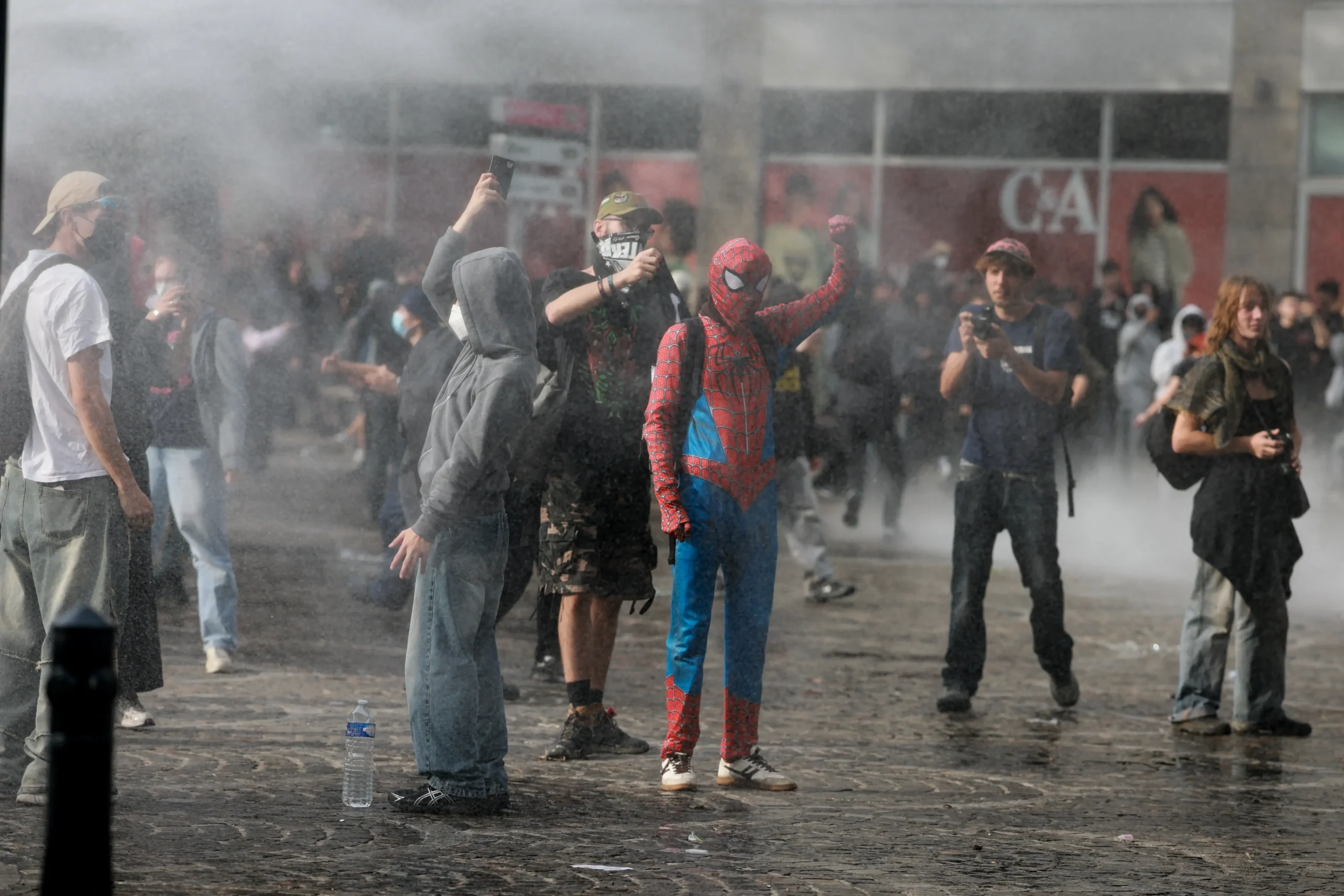
The issue of police conduct has become a major part of the debate after a 15-year-old boy lost his hand during a confrontation in Lens. A demonstrator wears a Spider-Man costume, on the day of a spontaneous street protest of high school students against education reforms introduced by the Wallonia-Brussels Federation government and an increase in student fees, in Liege, Belgium. Across Europe, a protest movement that began with French high-school students is increasingly finding echoes in neighbouring countries, as young people complain about overcrowded classrooms, teacher shortages, ageing school buildings, rising education costs and cuts to public spending. The movement began in the Paris region in mid-September, when high-school students and teachers protested over a lack of resources and staff. It quickly spread across France, with students blocking school entrances and later joined by university students, parents and trade unions. Their complaints include overcrowded classrooms, teachers not being replaced when absent, long school hours, deteriorating buildings and inequalities between schools in wealthier and poorer areas. Students have also raised concerns about the university admissions system and the pressure of the education system. French CRS riot police run past garbage bins and object set on fire amid clashes with protesters during a demonstration by high school and university students, supported by teachers’ union and school parents, in Paris. The French government has since suspended the use of stun grenades in student protests and opened investigations into police conduct.
Student groups are preparing demonstrations after the country’s university association warned of possible cuts of around €1 billion from the next three-year university budget. Austria is facing another version of the same problem.