
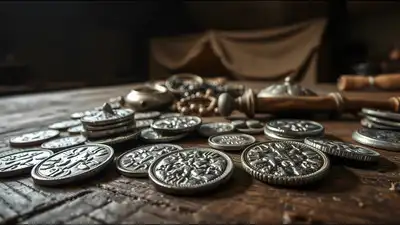
Representative Image of ancient silver coins and Viking Age artifacts displayed for archaeological examination (AI Generated Image)
Further examination subsequently established that the hoard contained approximately 24,100 silver coins and 144 additional objects. The collection weighs about 4.7 kilograms according to later Swedish reporting. When the discovery was first announced in September 2025, archaeologists did not yet know the final number of coins. The Stockholm County Administrative Board said at the time that the hoard could contain around 20,000. The subsequent examination produced a larger total of approximately 24,100 silver coins, together with 144 other objects.
The exact location of the discovery has been kept confidential while the archaeological work has been carried out. The material was subsequently assessed by the National Heritage Board, which considered its archaeological and historical significance when determining whether the state should redeem it. The National Heritage Board now identifies the discovery, known as the Hörningsholm hoard, as the largest coin hoard ever found in Sweden.
Other coins are connected to Gotland. Some feature imagery that may represent a church building, although the interpretation is presented by the authorities as a possibility rather than a certainty. The mixture of royal, ecclesiastical and Gotlandic coinage makes the collection particularly significant to researchers studying the monetary and social history of medieval Sweden.
In May 2026, the National Heritage Board decided to redeem the Hörningsholm hoard for 4 million Swedish kronor. Its approximately 24,100 silver coins and 144 additional objects provide researchers with an unusually substantial collection from the Viking Age and early Middle Ages, all originating from a single buried find near Stockholm. Swedish heritage legislation requires certain archaeological finds containing precious metals to be reported to the authorities and made available for possible redemption by the state. The finder reported the discovery to the Stockholm County Administrative Board, allowing the authorities to take custody of the archaeological material and assess it.
The authority said its assessment of the compensation took into account the exceptional cultural and historical value of the discovery as well as the need for redemption payments to remain reasonable. The decision means that the hoard will become part of Sweden’s archaeological heritage rather than remaining in private possession.