
PC: AFP
Italian rice farmer Alice Cerutti has restored about a third of her 110-hectare farm to its natural state, creating wetlands and woodland that now support rare wildlife. At Cascina Oschina farm on the Vercelli plain in north-west Italy, she has planted more than 10,000 native plants, helping butterflies and dragonflies thrive and attracting rare birds.
Alice Cerutti took over her family’s Cascina Oschina farm in 2012. She has restored about a third of its 110 hectares, including 25 hectares converted into wetlands. Cerutti has planted more than 10,000 native plants, including oaks, alders, ash and hornbeams. She said the number of migrating birds in the rice-growing region had fallen by 80% over the past 15 years. Cerutti’s work has changed part of a landscape that monks transformed from marshland into rice fields around 400 years ago. Around 1,200 sheep graze on crops between rice harvests, leaving organic matter behind. Agricultural organisation Coldiretti estimated that around 25% of the country’s rice production may be lost to heat this year.
The farm’s restored landscape also supports rare insects, including the Large Copper butterfly, alongside butterflies and dragonflies that, she says, have increased since native plants were introduced.
The restored wetlands have also become the only recorded nesting site in Italy for the black-tailed godwit, according to Agence France-Presse (AFP). Cerutti continues to grow rice, including historic varieties that she says withstand drought and extreme heat better than modern ones. Cerutti says butterfly and dragonfly numbers have risen sharply since planting began. Cerutti said she grew her Carnaroli Classico without using a single gram of chemical fertiliser. As some farmers turn to dry-seeding, which avoids the need for continuous flooding, agronomist Giovanni Molina told AFP that flooded rice fields play an important role in recharging underground aquifers.
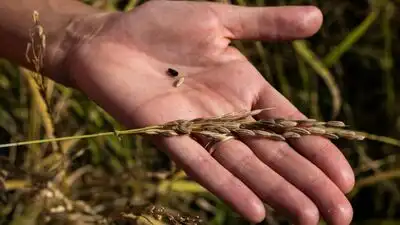
Her approach comes as Italy’s rice sector faces rising production costs, imports and increasingly severe droughts. By making space for nature, she is working to protect biodiversity while continuing to produce rice in a changing climate. The farm lies on the Vercelli plain between Milan and Turin, where golden rice fields now remain alongside woodland and wetlands. Her farm is an EU-certified protected area. The restored habitats now support rare species, including the Large Copper butterfly, while providing a refuge for birds in Italy’s rice-growing region. The wetlands have become an important habitat for wildlife, including the black-tailed godwit. Cerutti’s property is now the only recorded Italian nesting site for this bird. Instead of using all the available land for crops, she has returned a substantial area to wetlands and woodland, prioritising biodiversity alongside agricultural production. Cerutti grows red and black rice alongside historic varieties such as Carnaroli Classico and Arborio Classico. These varieties produce smaller but higher-quality yields than modern ones and withstand drought and extreme heat better. Carnaroli Classico has awns, which are slender, bristle-like extensions thought to help protect the rice against heat and cold. Instead, she uses green manure and legume crops to enrich the soil. Italy is Europe’s largest rice producer, but the sector faces rising production costs, a flood of Asian imports, and droughts made more frequent and intense by human-driven climate change. Meanwhile, Cerutti has given up some productive land to restore natural habitats. You use AI every day. Now get your AI Quotient. Take the AIQ test.