PC: Sameer Al-DOUMY / AFP via Getty
Reactor 5 was already unavailable for planned maintenance, while reactor 6 continued operating at full capacity. As per Reuters, the shutdowns followed measures introduced after a much larger jellyfish-related outage at the same site in 2025. Gravelines is one of France’s largest nuclear sites, and its six reactors together account for 5.4 gigawatts of generating capacity.
Because no fresh jellyfish were being detected in the area around the plant, eDF said the situation had begun to improve. The response was therefore expected to result in a relatively short interruption compared with last year’s much wider shutdown. Losing three units simultaneously can therefore have a noticeable effect on the amount of electricity available, even when the shutdown is temporary.
The operator said the incident did not pose a threat to the safety of the plant, its workers or the environment. Once the remaining animals had been cleared, the affected reactors could be brought back online following the necessary inspections and checks. The episode still highlights how several reactors can be affected by a single event at a coastal nuclear facility.
EDF took reactors 2, 3 and 4 offline as a precaution, while reactor 1 was limited to half its normal output. Each unit can generate about 900 megawatts, giving the plant a total capacity of 5.4 gigawatts. In this case, EDF shut reactors 2, 3 and 4, while reactor 1 was limited to 50% output as a precaution. Citing AFP calculations based on EDF data, France was facing a 15.6% shortfall in nuclear power production on the Sunday before the latest Gravelines closures, according to Euronews. A Swedish nuclear facility experienced a three-day shutdown in 2013 after jellyfish interfered with its cooling system, while an incident in Japan in 1999 caused a major reduction in nuclear output.
Because of reduced river levels, one northern reactor, for example, had remained offline for much of the summer.
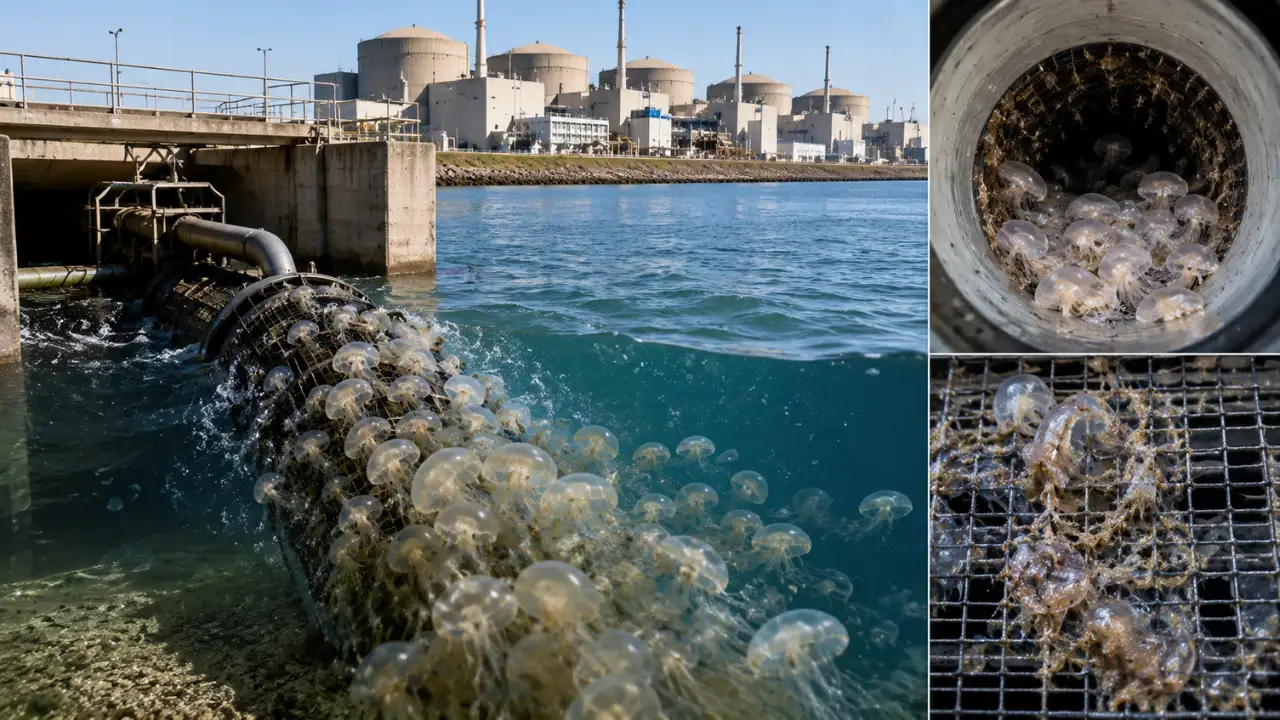
Those already inside the system were later removed using vacuum trucks, according to an EDF engineer. A huge swarm of jellyfish has forced France’s Gravelines nuclear power plant to shut three reactors and reduce output from a fourth, after the animals clogged parts of the seawater cooling system. A fifth reactor was already out for planned maintenance, leaving only one of the site’s six units operating at full capacity. Gravelines, one of France’s largest nuclear power stations, relies on seawater from a canal linked to the North Sea to cool its reactors. Fishing boats were also sent to reduce the swarm’s density before it reached the plant, while vacuum trucks were used to clear jellyfish already caught in the system. Gravelines relies on seawater drawn from a canal connected to the North Sea to cool its six reactors. When large numbers of jellyfish are drawn towards the intake system, they can accumulate on filters and restrict the flow of water needed for cooling. Cameras monitor jellyfish near France’s Gravelines nuclear plant The previous incident prompted EDF to strengthen its early-warning system around the plant. Fixed cameras have been installed along the intake canals and around the filter drum screens, allowing staff to spot large concentrations of marine life before they cause serious blockages. The operator has also worked with a French fishing organisation and a sea-rescue group to monitor the waters around Gravelines. Their task was to reduce the concentration of jellyfish before they reached the plant, rather than waiting until the animals had clogged the cooling equipment. Image AI generated The jellyfish incident comes during a summer in which France’s nuclear generation has already been affected by extreme weather. Heatwaves have forced restrictions at several reactors, while low river levels have also disrupted plants that depend on freshwater cooling. The figure reflected the wider condition of the country’s nuclear fleet, rather than the impact of the jellyfish swarm alone. High temperatures and drought have created separate challenges for operators across the country. Gravelines is not the first nuclear plant to be affected by a sudden influx of jellyfish. Such events can occur when large swarms are carried towards seawater intake points. Marine scientists have pointed to several conditions that can favour jellyfish populations, including warmer seas, overfishing, the loss of natural predators and changes to marine habitats. Plastic pollution among the factors being discussed by experts. These influences do not mean every jellyfish outbreak has a single cause, but they can affect the abundance and distribution of jellyfish in coastal waters. For nuclear operators, the incident shows that keeping a reactor running safely can depend on conditions well outside the reactor building. Cooling systems are essential, and when their seawater intakes become blocked, operators may have little choice but to reduce or stop generation until the obstruction is removed. The affected reactors can now be restarted once cleaning and safety checks are completed. The immediate disruption may be brief, but the repeated incidents have given operators another environmental risk to plan for as France continues to contend with increasingly difficult summer conditions. Catch the latest World News and Live updates. Download the TOI app.
The latest disruption comes a year after jellyfish caused a much wider shutdown at the same plant, prompting EDF to install additional cameras and introduce earlier monitoring measures. At Gravelines, EDF’s newer monitoring arrangements allowed the approaching swarm to be identified and fishing boats to be deployed before the animals reached the plant in large numbers. Fishing boats were sent out on Saturday after an initial warning about the approaching swarm.