
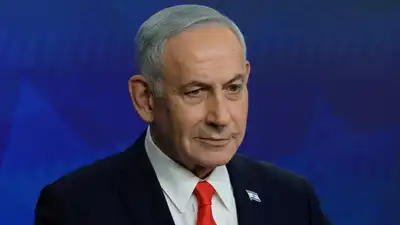
A wartime leader on trial at the ballot box: Netanyahu fights to stay in power
Israel Prime Minister Benjamin Netanyahu is facing a crucial test of his political future in Tuesday’s election, with voters weighing his leadership following the Hamas-led October 7, 2023, attacks, successive wars in Gaza and with Iran, and Israel’s growing international isolation, news agency Reuters reported. Despite the mounting challenges, Netanyahu, Israel’s longest-serving leader with 19 years in office, remains a formidable political survivor. If neither manages to assemble a coalition in Israel’s 120-member parliament, Netanyahu could remain in office as caretaker prime minister until another election is held next year. Polling stations are scheduled to remain open from 7 am to 10 pm (0500 to 2000 GMT). The election comes after one of the most turbulent periods in Israel’s history since its establishment in 1948. The trauma of the October 7, 2023, Hamas-led attacks, Israel’s subsequent military offensive in Gaza and deep divisions over Netanyahu’s right-wing government have dominated the country’s political landscape. Not all voters, however, believe the prime minister should be held responsible for the October 7 attacks. Nof Gabay, an 18-year-old Likud supporter, dismissed that criticism and backed Netanyahu’s leadership during the war. After the October 7 attacks, in which Hamas-led militants killed 1,200 people and took another 251 hostage, Israel launched a military offensive that devastated much of Gaza. Gaza health authorities say Israeli attacks have killed 74,000 people. Israel also dealt major blows to Iran-backed Hezbollah in Lebanon and exchanged strikes with Iran before launching a 12-day aerial campaign against Iranian nuclear sites in 2025.
On Sunday, Netanyahu said Trump was prepared to act again to “finally” remove the Iranian threat, but only if he remained in power. Eisenkot, however, accused the prime minister of “relying on a campaign of fear-mongering, lies and threats,” adding that Trump would work “in full cooperation with any leader chosen by the people. Lisa Tortor, another voter opposed to Netanyahu, said she hoped he would leave office and a new government would begin repairing the damage to Israel’s international standing and the wider Jewish community. She said she hoped Netanyahu would go and “they can form a new government and do some of the repairing of the damage that Bibi has done for Jews all over the world and for Israel, and Israel’s image. Gabay called him “the right man for the state of Israel” and said, “Netanyahu managed the war in the best possible way. He has said this could be achieved through military action or an “arrangement”, including a diplomatic solution backed by the United States. No landslide,” Asa-El said, according to Reuters.
With nationalist politics firmly entrenched and the country’s fragmented electoral system making coalition-building decisive, he could still emerge best placed to form the next government. Opinion polls point to a close contest between Netanyahu’s Likud party and its right-wing allies and a rival alliance led by Gadi Eisenkot, a former military chief of staff and security hawk who has attracted support from both right-wing and centrist voters. Netanyahu has made his wartime leadership and close relationship with US President Donald Trump central to his campaign. Trump has endorsed the Israeli leader, with the two countries joining forces in the war against Iran. Netanyahu may once again need the support of far-right leaders Itamar Ben-Gvir and Bezalel Smotrich to secure a governing majority. Both have faced sanctions from some Western countries over allegations of inciting violence against Palestinians. Meanwhile, Ben-Gvir’s Jewish Power party has gained ground in opinion polls. Neither Netanyahu nor Eisenkot has a clear route to power. The election campaign has unfolded against the backdrop of years of military conflict that have reshaped Israel’s security and diplomatic position. The conflict escalated further this year with a joint US-Israeli war against Iran. Netanyahu has presented his handling of these conflicts as evidence of his leadership and ability to confront Israel’s security threats. His alliance with Trump has also become a key part of his pitch to voters, particularly as tensions with Iran remain central to the campaign. Eisenkot, meanwhile, has argued that Israel’s next government must ensure Iran does not acquire a military nuclear capability. The competing positions underline how security policy remains central to the election, even as voters grapple with questions about accountability, the future of the Gaza conflict and Israel’s standing abroad. Even if Eisenkot’s alliance makes gains, forming a government could prove difficult. Like nearly all Jewish-led parties in Israel, his camp opposes the two-state solution that has underpinned decades of peace negotiations with the Palestinians. The participation of Israel’s Arab minority could also influence the outcome. Arab citizens of Israel, who are Palestinian by heritage, could help shift the balance in a closely contested election if turnout is high. citing a lack of shared values, analysts believe they could still support a minority government led by him Although Eisenkot has ruled out partnering with Arab parties. Such an arrangement could offer a route to removing Netanyahu from office without formally joining his coalition. The country’s fragmented political system means that winning the most votes may not be enough. The ability to secure support from smaller parties and assemble a parliamentary majority could ultimately determine who governs Israel. Israeli political analyst Amotz Asa-El of the Shalom Hartman Institute expects the result to be closely fought, with neither side securing a decisive mandate. “My expectation is that we will have only a slight majority either way. You use AI every day. Now get your AI Quotient. Take the AIQ test.
Such violence has surged since 2023, straining Israel’s ties with Western countries. Eisenkot has, however, criticised violence by Jewish settlers against Palestinians in the Israeli-occupied West Bank. He has also opposed Netanyahu’s far-right coalition partners, Ben-Gvir and Smotrich. Meanwhile, dissatisfaction with Netanyahu has prompted some voters in traditional Likud strongholds to campaign against him. Others have turned away from the prime minister as he continues to fight corruption charges in a long-running criminal trial, which he denies.
For many of Netanyahu’s opponents, the vote is also a referendum on accountability for the security failures that preceded October 7, Israel’s deadliest day.
Mali Hajaj, an education ministry employee who supports Eisenkot, said a national inquiry into the attacks was essential for the country to begin healing. “the most important thing is the establishment of a national inquiry because that’s where our healing will come from,” she said.