
Iran hits back at US ‘economic onslaught’
Bessent announced “Operation Economic Outcast” on Monday, describing it as a broad campaign to sever Iran’s financial connections and cut revenue supporting the Iranian government and its military apparatus. The Treasury secretary said Washington had identified the networks Iran uses to move oil and evade sanctions. He said Iran now faced a choice between international isolation and returning to the global economy.
“Treasury has mapped every node, facilitator, and network that Iran has used to smuggle oil and evade sanctions. “Iran now faces a clear choice, with only two paths before them: complete global isolation and a subsistence economy, or a path to normalcy with the opportunity to rejoin the global economy. Beginning today, the actions of Treasury and other agencies will block every potential source of revenue that funds the Islamic Revolutionary Guard Corps (IRGC) and the evil Iranian regime,” Bessent said. Today we are launching Operation Economic Outcast to foreclose all other options available to the Iranian regime,” Bessent added.
The latest US measures come after Washington imposed sanctions on nearly 60 Iranian individuals, entities and vessels linked to military activities, procurement networks and petroleum and petrochemical trade.
Ghalibaf’s remarks came after US Treasury Secretary Scott Bessent launched “Operation Economic Outcast”, a campaign aimed at cutting Iran’s financial links around the world and targeting countries and networks that continue to support Tehran economically. In a post on X, Ghalibaf said, “Americans know that no one buys their bombast; the United States is not in an economic position to further restrict its relations with other countries. “Iran’s trading partners, both in the media and through messages sent to us, have made it clear that they don’t take these statements into account anywhere,” he added. “To the ordinary soldiers supporting this regime, as more and more of your paychecks stop or are supposedly just delayed, ask whether your commanders are leading your country to triumph or to ruin,” Bessent said. “And recall that the Berlin Wall fell when ordinary soldiers decided not to shoot at their own people,” he added. The Treasury secretary had warned a day earlier in an opinion article that an “economic D-Day is coming for Iran”. The sanctions target Iran’s oil trade, shipping networks and military-linked organisations, including its so-called “dark fleet” of tankers and international intermediaries accused of helping transport Iranian petroleum and petrochemical products. The State Department said the measures were intended “to further expose individuals and entities that enabled strikes against US forces and allies and to restrict the revenue that the Iranian regime uses to attack its neighbors, support terrorism abroad, brutally oppress its own people, and hold the global economy hostage. “The United States must correct its tone and approach in its interactions with Iran, because relying on coercion and bullying will only complicate the implementation processes,” Pezeshkian said. “Our nation will overcome any pressure and threat by relying on this solidarity,” he added. “The Islamic Republic of Iran is ready for any cooperation and interaction in the economic, political, and security dimensions with Islamic countries and neighbours, because the Holy Prophet (PBUH) has always commanded peace and friendship,” he said. “The unity and cohesion of Islamic countries is the most important deterrent against the conspiracies of the Zionist regime and the enemies of Islam, and if this convergence is realised, the enemies will not be able to advance their sinister goals,” he said. “In order to advance common goals and achieve a comprehensive agreement, it is essential that diplomatic processes be discussed and examined with complete precision and meticulousness,” Munir said. “The deep historical, religious and cultural commonalities between Pakistan and Iran are a valuable asset for overcoming the current complex circumstances and charting a bright future,” he said.
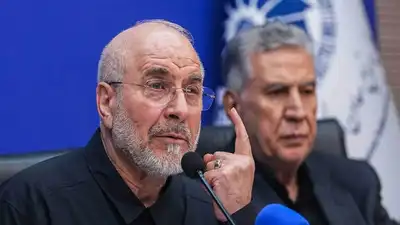
Iranian Parliament Speaker and top negotiator Mohammad Bagher Ghalibaf has hit back at the United States over its escalating economic pressure on Tehran, saying Washington is not in a position to further restrict its economic relations with other countries. The latest exchange comes as Washington expands sanctions against Iran and seeks to restrict Tehran’s access to international financial networks, oil markets and other sources of revenue. Bessent also directly addressed Iranian soldiers, urging them to question the consequences of continuing to support the government. His remarks followed similar calls from US President Donald Trump for greater economic pressure on Tehran and a return to negotiations. Washington has also targeted senior Iranian military figures and organisations accused of supporting Iran’s military operations and procurement activities. The sanctions form part of the Trump administration’s broader effort to restrict Tehran’s access to international markets and financial networks. The escalation has coincided with Iranian calls for diplomacy and greater regional engagement. He made the remarks during a meeting with Pakistan Army Chief Asim Munir in Tehran. Pezeshkian also called for greater cooperation between Iran, neighbouring countries and other Islamic nations, saying Tehran was ready to engage on economic, political and security issues. He also stressed the importance of unity among Islamic countries amid continuing regional tensions. Munir’s visit to Tehran has added a diplomatic dimension to the growing confrontation between Washington and Tehran. The Pakistan Army chief held talks with Iranian officials and expressed support for greater bilateral cooperation. He also welcomed efforts aimed at advancing regional stability. He also described the countries’ historical, religious and cultural ties as an asset in dealing with the current regional situation. The latest developments underscore the widening gap between Washington’s economic pressure campaign and Tehran’s push for diplomacy. Iranian officials have warned that further coercion could complicate efforts to reach diplomatic agreements While the US seeks to cut Iran’s financial and oil revenues. Catch the latest World News and Live updates. Download the TOI app.
Iranian President Masoud Pezeshkian warned on Monday that Washington’s approach could complicate diplomatic efforts.