
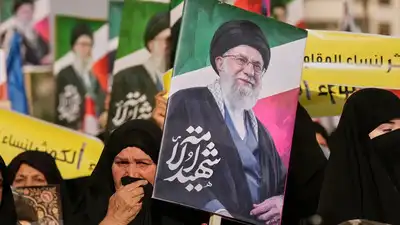
The crackdown comes as Iran faces intensified economic pressure from Washington
The US has announced expanded sanctions targeting Tehran and warned that countries continuing to trade with Iran could also face secondary sanctions.
Citing NewsNation and regime-monitored Iranian media, Tehran has introduced new regulations criminalising contact with what it describes as “hostile” media outlets, according to Newsnation’s report. A bill titled “Countering the Infiltration of Intelligence Services and Foreign Governments or Institutions in the Country” reportedly makes interviews with foreign media an offence, specifically naming US and Israeli outlets. An Iranian refugee who spoke to NewsNation anonymously for safety said the rules were designed to prevent Iranians from informing the outside world about abuses and organising future protests. “These new rules are another attempt by the regime to tighten its control over people and prevent any form of independent connection or cooperation with the outside world,” the refugee said. Iranian refugee Rayan Amiri, founding leader of the Conservative Party of Iran, said the latest measures reflected a broader strategy of ruling through fear. “The Islamist regime is afraid that these voices may receive international attention and inform the international community about the dreadful and Orwellian situation in Iran,” Amiri said. Earlier this month, the Islamic Republic’s judiciary warned that anyone sharing footage or information with “hostile states against national security and interests” that causes “public panic” could face the capital charge of “Corruption on Earth”.
Iran is tightening its grip on citizens as internal tensions mount, introducing tougher restrictions on communication with foreign media and institutions amid growing fears of dissent. The latest measures come as the country faces mounting economic pressure, with US sanctions threatening further disruption while the Iranian rial has fallen to a record low, worsening pressure on ordinary Iranians. Those found sharing information could face up to two years in prison. The measures extend beyond media interactions, with academic cooperation and communication with foreign institutions also potentially coming under scrutiny. “This goes far beyond ordinary regulation or censorship. It is about controlling who people are allowed to communicate and cooperate with, particularly when those connections could expose them to ideas, opportunities, information, or networks outside the regime’s control,” they added. The crackdown comes as Iran faces intensified economic pressure from Washington. Iranian Foreign Ministry spokesperson Esmail Baghaei warned that Tehran would respond to any escalation, saying, “Our hands are not tied. The pressure is being felt inside Iran, where the currency has hit a record low. further restrictions risk pushing up the cost of basic goods and deepening public frustration While the Iranian economy has adapted to years of sanctions by developing domestic industries and finding alternative trading partners. He alleged that the regime labels activists and commentators as CIA or Mossad agents and seeks to imprison or assassinate critics abroad. He cited the killings of Iranian exiles Masoud Molavi and Saeed Karimian in Turkey as examples. The crackdown has also extended to people sharing information about unrest. Catch the latest World News and Live updates. Download the TOI app.