
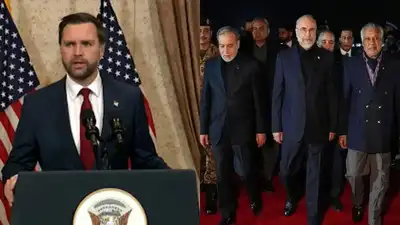
Negotiations between the United States and Iran aimed at establishing a ceasefire and a comprehensive diplomatic framework concluded without a resolution after nearly 21 hours of discussions in Islamabad. The talks, which were high-stakes, focused on addressing ongoing tensions between the two nations but ultimately failed to produce an agreement.
Speaking to reporters, Vance said, “We have been at it for 21 hours, and we had several discussions with Iranians; we have not reached an agreement, and that is bad news for Iran more than it is bad news for the USA. Iran’s foreign ministry spokesperson Esmaeil Baqaei said discussions over the past 24 hours covered a wide range of contentious issues. US Vice President JD Vance, who led Washington’s delegation, confirmed that American negotiators would return home empty-handed after failing to bridge key differences with Tehran.
“But the simple fact is that we need to see an affirmative commitment that they will not seek a nuclear weapon, and they will not seek the tools that would enable them to quickly achieve a nuclear weapon,” Vance said, adding that this remains “the core goal of the president of the United States. Meanwhile, Iran’s foreign ministry said after the talks that the United States must refrain from “excessive demands and unlawful requests”, signalling Tehran’s strong objections to Washington’s conditions. In a statement posted on X, Iranian authorities said negotiations would continue “despite some remaining differences,” suggesting both sides are willing to keep channels open even after the latest setback. “Discussions were held over the past 24 hours on various aspects of the main issues of the negotiations, including the Strait of Hormuz, the nuclear issue, war reparations, the lifting of sanctions, and the complete end of the war against Iran and in the region,” he said. “The success of this diplomatic process depends on the seriousness and good faith of the opposing side, refraining from ‘maximalist and unlawful demands’, accepting Iran’s rights,” the spokesperson said. In a parallel statement, Baqaei reiterated that the talks hinge on the United States avoiding “excessive demands” and recognising Iran’s “legitimate rights and interests,” indicating that Tehran views Washington’s conditions—particularly on nuclear restrictions—as overly stringent. We have not forgotten and will not forget the experiences of America’s breaches of promise and ill deeds,” the statement said.
He underlined that the core sticking point remained Iran’s nuclear programme. Despite the breakdown, Iran indicated that diplomacy remains on the table. However, Tehran made it clear that the success of any future agreement would depend heavily on Washington’s approach. In a detailed statement, Iran’s foreign ministry combined resolve with scepticism. “Diplomacy for us is the continuation of the sacred jihad of the defenders of the Iranian land.
Pingback: Donald Trump-led United States on Tuesday imposed sanctions on “all remaining Iranian