
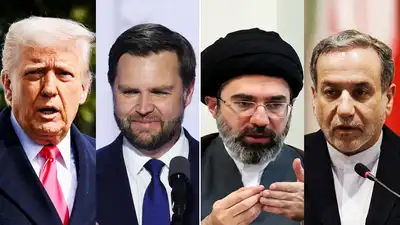
US-Iran war tensions escalate as midterms approach: Vance writes to Iran; Tehran pushes for 7-day ceasefire
NEW DELHI: Iran is pursuing a seven-day plan to secure a ceasefire and reopen the Strait of Hormuz as diplomatic efforts intensify amid the possibility of renewed US military strikes after the November 3 midterm elections.
He said the plan could be implemented in less than a week if the necessary conditions were met. US Vice President JD Vance has reportedly reached out to Iran’s security leadership to explore a framework for negotiations, even as Washington warns Gulf allies to prepare for a potential escalation. Iranian Foreign Minister Abbas Araghchi said on Wednesday that Tehran was working with regional mediators to advance the proposal, which Iran had previously conveyed to the United States through Qatar.
Whether the proposal can meet Iran’s demands, secure a ceasefire and restore normal shipping through the Strait of Hormuz remains uncertain as the November 3 US midterm elections approach. Vance’s reported outreach to Rezaei and the proposed seven-day plan indicate that diplomatic channels remain active, even as Washington keeps the military option open.
“All ministers, heads and deputies of the executive branches are obliged to maintain full readiness based on requirements, and use the existing capacities to increase productivity and strengthen the national power,” he said. “Enemies should not think they can weaken the will of the Iranian nation and force the country to surrender,” he stressed. The Iranian cabinet discussed the country’s prevailing conditions, strengthening national resilience and countering external threats. Pezeshkian stressed the need for continuous preparedness to deal with different possible scenarios. Pezeshkian also called for greater resilience against threats, sanctions and external pressure. During the meeting, Araghchi briefed the cabinet on diplomatic developments and regional consultations, particularly those involving a visiting Qatari delegation and Pakistan’s army chief. The remarks come as Tehran pursues diplomatic efforts to revive negotiations while preparing for a possible confrontation. You use AI every day. Now get your AI Quotient. Take the AIQ test.
Iranian President Masoud Pezeshkian told the country’s cabinet on Wednesday that the government would pursue the implementation of the supreme leader’s directive with full commitment and resources, according to Iran’s state news agency IRNA.
“We remain in close and ongoing contact with intermediaries to review ideas that can ensure implementation of our 7-Day Plan in even less than a week. Separately, US news website Axios reported that regional mediators led by Qatar were pushing for an agreement to restart US-Iran talks and prevent a resumption of hostilities after the November 3 US midterm elections. In a memo dated October 23 and reviewed by Reuters, US Director of National Intelligence Jay Clayton warned that Iran had stepped up efforts to target American personnel and that alleged plots against US citizens had reached advanced stages. Trump has repeatedly suggested that the conflict could end soon while keeping open the possibility of renewed bombing after the November 3 elections. The Pentagon’s latest estimate to Congress put the cost of the war to American taxpayers at $47.1 billion.
The diplomatic push comes as The Wall Street Journal reported that Vance had sent a letter to Mohsen Rezaei, secretary of Iran’s Supreme National Security Council and a former commander of the Islamic Revolutionary Guard Corps (IRGC), in an effort to revive negotiations and avert renewed American attacks.
“While our Brave Armed Forces are fully prepared to defend the Homeland, Iran continues to give diplomacy a chance to succeed,” Araghchi said in a post on X. It has resurfaced following recent diplomatic engagements in the region, particularly Qatar’s involvement, according to Al Jazeera’s reporting from Tehran. An Iranian security source told Al Jazeera that the plan was not fundamentally new. The report said the contact was made at the direction of US President Donald Trump. Trump has not made a final decision on whether to launch fresh strikes against Iran, according to diplomats briefed on the matter and cited by The Associated Press (AP). Washington has warned several Gulf Arab countries to prepare for a possible “short, intense military campaign” against Iran after the elections, The Wall Street Journal reported. “Devastating impact on int’l markets of any Israel-instigated military misadventure in Arabian Gulf region remains major concern for both gas suppliers and consumers,” Araghchi said in a post on X, referring to discussions at the Gas Exporting Countries Forum summit in Moscow. “Specifically, through various channels, we have received intelligence that Iran has substantially increased efforts to target US personnel,” Clayton wrote to US Secretary of State Marco Rubio. “The lethal plotting efforts by the Iranians against US citizens have reached advanced stages in both the Middle East and certain other countries,” he added. Trump said earlier in the same address. “I said, ‘Whenever I want it to end. The United Arab Emirates foreign ministry has urged the parties to “exercise wisdom and pursue political solutions to help contain tensions” and prevent a return to full-scale military operations.
The proposal dates back to September, when the Iranian delegation was in New York for the United Nations General Assembly. Tehran has also indicated that the seven-day period could be shortened, suggesting that the central question is whether Iran’s demands and conditions can be met. Under the proposal, the Strait of Hormuz would reopen within seven days if conditions, including a ceasefire across the Middle East, were fulfilled. Iran has also demanded the unfreezing of its assets held abroad, the lifting of sanctions on its oil sector and an end to the US naval blockade. The letter and subsequent discussions between US and Iranian officials focused on exploring a framework for negotiations rather than the details of a comprehensive peace proposal. US officials have also urged regional allies to prepare for potential Iranian retaliation against energy facilities and other critical infrastructure. Tehran has warned that renewed military action could have far-reaching consequences for global energy markets, particularly if fighting disrupts shipping through the Strait of Hormuz. Iran has restricted maritime traffic through the waterway since the war began in late February and has attacked vessels attempting to cross without its authorisation. The United States, meanwhile, has maintained a naval blockade of Iranian ports to put pressure on Tehran’s economy. Iran has warned that any renewed attack would trigger a broader response. Rezaei has threatened strikes against US-linked infrastructure, including data centres and facilities associated with artificial intelligence. Concerns over the safety of American personnel have also intensified. “Somebody asked me before, when will the war in Iran end? It’ll be very quick, but we have to have it end properly, with total and complete — a total statement, they will never have a nuclear weapon. The conflict has become a political challenge for Republicans ahead of the midterms, with rising petrol prices adding to voter concerns about its economic consequences. The military situation has also become more complicated as the conflict has spread across the region. Iran-backed Houthi rebels have attacked Saudi oil infrastructure and airports, while a Saudi-led coalition has carried out strikes against Houthi-held territory in Yemen. Iran’s Supreme Leader Ayatollah Sayyid Mojtaba Khamenei has called for an end to the region’s state of ‘neither war nor peace’, as Tehran prepares for the possibility of renewed military confrontation with the United States and Israel.
The Strait of Hormuz is a critical shipping route through which around a fifth of global oil and liquefied natural gas supplies previously passed. During a campaign stop in Lubbock, Texas, on Tuesday, Trump said a conclusive end to the conflict could come “in a couple of weeks, if you don’t mind.