
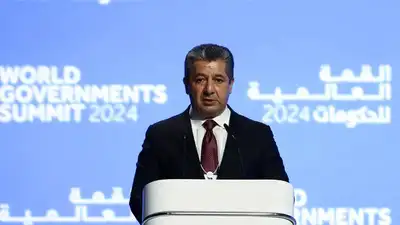
Iranian drones targeted the office of Iraqi Kurdistan PM Masrour Barzani and the residence of the region’s security chief
The Kurdistan Counter-Terrorism Service said the drones, identified as Hadid-110 aircraft, targeted Barzani’s private office and the residence of the head of the region’s Security and Intelligence Agency. Two drones launched from Iranian territory targeted the office of Kurdistan Regional Government (KRG) Prime Minister Masrour Barzani and the residence of the region’s security chief early Monday, with no casualties reported, Kurdish authorities said. The strikes came after reports revealed that Nechirvan Barzani, president of Iraq’s Kurdistan Region, had been used by the Donald Trump administration as a secret channel to communicate with Iran’s Islamic Revolutionary Guard Corps (IRGC) during efforts to negotiate an end to the war. The agency said the drones were launched from Iranian territory. A spokesperson for Nechirvan Barzani’s office separately confirmed that he had played a role in relaying messages between Washington and Tehran and in efforts to ease tensions.
Barzani condemned the attack as “reckless and unacceptable”, calling it a “dangerous escalation” and a direct threat to the security and stability of the Kurdistan Region. He said the attacks would not deter the regional government from carrying out its duties and protecting its citizens. US officials approached Nechirvan Barzani in May after Washington became uncertain whether Iran’s official negotiators had the backing of the powerful IRGC, according to an Axios report. The spokesperson said the Kurdistan Region had consistently advocated dialogue and negotiations. “Such aggression against our trusted Kurdish allies is unacceptable,” Barrack said, adding that Washington would not “condone or tolerate” the hostilities.
Barzani subsequently relayed messages between US officials and IRGC commander general Ahmad Vahidi.