
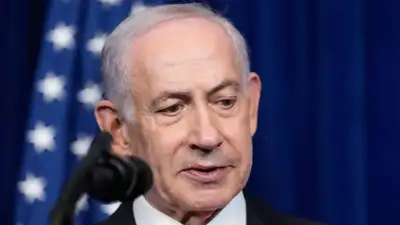
File photo: Israel’s prime minister Benjamin Netanyahu speaks during a news conference
The developments have strengthened Eisenkot’s position ahead of a crucial decision by Israeli president Isaac Herzog on whom to invite to form the next government, following the inconclusive October 27 election. Netanyahu’s Likud emerged as the single largest party with 27 seats in the 120-member Knesset. However, his broader nationalist-religious bloc secured only 53 seats, falling short of a parliamentary majority. Herzog has until November 11 to decide whom to nominate. The candidate who receives the mandate will have up to 42 days to put together a governing coalition.
Under Israeli law, the president must nominate the lawmaker he believes has the best chance of forming a government, not necessarily the leader of the party that won the most seats. UTJ’s decision to withhold its recommendation marks a rift with Netanyahu, its longstanding political ally. The seven-seat party comprises two factions — Degel HaTorah, representing Lithuanian ultra-Orthodox Jews, and Agudat Yisrael, representing Hasidic ultra-Orthodox Jews. The election results have also triggered a dispute over allegations of voter fraud. Netanyahu and his allies have accused Arab-led parties of benefiting from possible vote tampering, with critics alleging that the prime minister’s camp is attempting to cast doubt on the results to undermine the outcome. If no candidate succeeds, Israel could face another election.
Israeli prime minister Benjamin Netanyahu suffered a another setback in his bid to retain power on Thursday after the ultra-Orthodox United Torah Judaism (UTJ) party declined to endorse any candidate to form the next government, while an Arab-led party backed his main rival Gadi Eisenkot. Herzog was scheduled to meet Netanyahu and Eisenkot separately at his residence in Jerusalem on Thursday evening, concluding consultations with political parties that began a day earlier.