
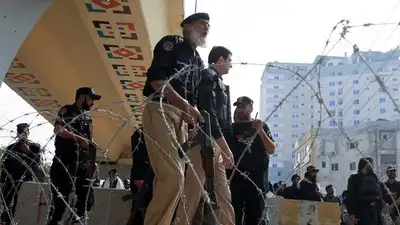
The emergency has also raised concerns about the separation of powers. In the affected districts, the constitutional distinction between judicial and executive authority has reportedly been set aside, concentrating control in unelected hands.
Pakistan’s imposition of emergency and governor’s rule in Khyber Pakhtunkhwa on October 11 has placed the province under direct federal control, effectively suspending the regional administration led by imprisoned former prime minister Imran Khan’s Pakistan Tehreek-e-Insaf (PTI).
Decades of militant policy and blowback
The emergency has extended federal control across 12 districts in Khyber Pakhtunkhwa, further weakening elected authority in a province that has long borne the consequences of Pakistan’s security policies.
The concentration of power in unelected authorities, alongside the military’s expanding role in civilian affairs, has raised concerns over the state of democracy in Pakistan, according to a report by news agency ANI. The move follows years of political turmoil, including Khan’s imprisonment, constitutional amendments that have weakened judicial independence, and the removal of the PTI-led provincial government. Pakistan’s security crisis has deep roots in its long-standing use of militant groups as instruments of state policy. For more than five decades, the country has pursued strategic depth through its relationship with armed groups, while distinguishing between factions considered useful and those viewed as threats. Rather than confronting the broader implications of this policy, Pakistan has continued to differentiate between militant factions it considers acceptable and those it seeks to eliminate. The resulting security failures have placed civilians, particularly in the tribal areas, at the centre of a prolonged conflict. The imposition of emergency rule marks another stage in the concentration of power within Pakistan’s security establishment. The federal intervention has effectively displaced the PTI-led provincial administration, depriving the opposition of its remaining provincial government.
The move, which invokes Articles 232 and 234 of the Constitution, comes amid a worsening security situation and a crackdown on opposition leaders and protesters. It has also renewed questions over Pakistan’s decades-long policy of using militant groups for strategic gains, which critics say has fuelled the violence now threatening its own territory.