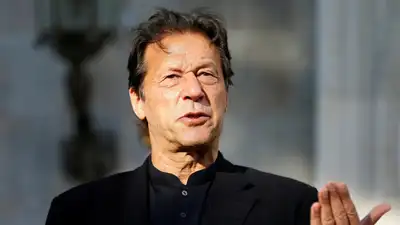
Former Pakistan PM Imran Khan has been incarcerated since 2023 (File photo)
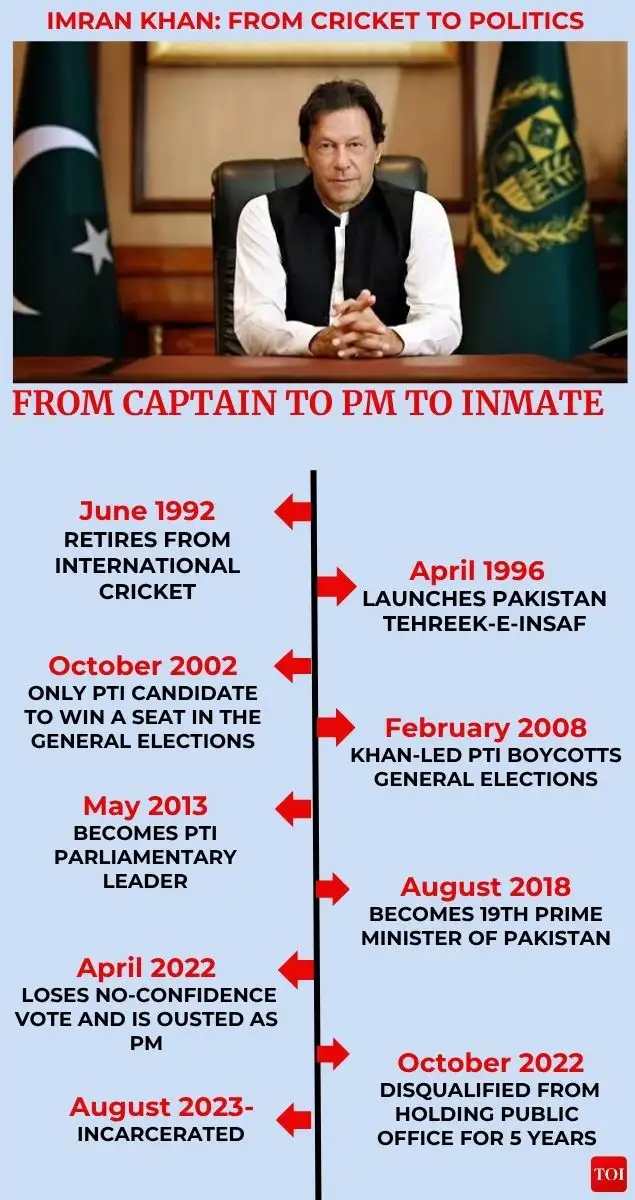
Then, days before the September 27 protest, PTI postponed the march until October 4, temporarily easing the pressure on the government. PTI-backed independents won the largest number of directly elected national assembly seats in the 2024 general election, and his supporters continue to mobilise around demands for his release. Imran Khan retired from international cricket in 1992, shortly after leading Pakistan to its first and, so far, only 50-over Cricket World Cup title. Four years later, in 1996, he formally entered politics by founding the PTI. His political breakthrough finally came after the 2018 general election, when the PTI emerged as the single-largest party and he became prime minister. Pakistan’s 2024 general election offered the clearest indication that Imran Khan’s imprisonment had not erased his political relevance. Despite the PTI being stripped of its election symbol and Imran Khan remaining in prison, PTI-backed independents won 92 directly elected National Assembly seats — more than candidates backed by any other political grouping. In October 2022, just months after his ouster as prime minister, Imran Khan contested by-elections in seven of eight National Assembly constituencies voting on October 16. He then won another by-election in Kurram on October 30, taking his tally of by-election victories that month to seven. The 2024 elections reinforced that point, showing that his imprisonment and the restrictions placed on the PTI had not eliminated its support among voters. The phrase took on greater significance after his arrest on May 9, 2023, when Pakistan witnessed widespread rioting and arson by PTI supporters. The fact that more than 100 cases have been brought against him, his disqualification by the Election Commission in 2022, and the restrictions imposed on the PTI ahead of the 2024 general elections have only strengthened that narrative among his supporters. In December 2025, UN Special Rapporteur on torture Alice Jill Edwards raised concerns over reports that Khan was being held in conditions falling below international standards for humane and dignified detention. Ahead of the September 27 march, authorities deployed thousands of security personnel and erected extensive barricades and roadblocks around Islamabad.
The postponed Islamabad march is therefore less an end to the latest confrontation than another pause in a political standoff that has survived elections, convictions and imprisonment. He won six of the seven seats he contested, while the Pakistan People’s Party won the other two constituencies. Edwards subsequently urged Pakistani authorities to end his reported solitary confinement and ensure that his detention conditions complied with international standards, warning that the reported conditions could amount to torture or other inhuman or degrading treatment.
The federal government’s frustration with these protests was evident ahead of the recently postponed Islamabad march, when interior minister Mohsin Naqvi spoke of the need to find a “permanent solution” to the PTI’s repeated demonstrations in the capital. “This time we will find a permanent solution; we will not leave it halfway,” Naqvi said. Therefore, Imran Khan remains the PTI’s “red line” — one reason efforts to marginalise him politically have so far struggled to succeed. In August, 21 former captains urged the government to ensure “humane treatment and proper medical care” for their former on-field rival.
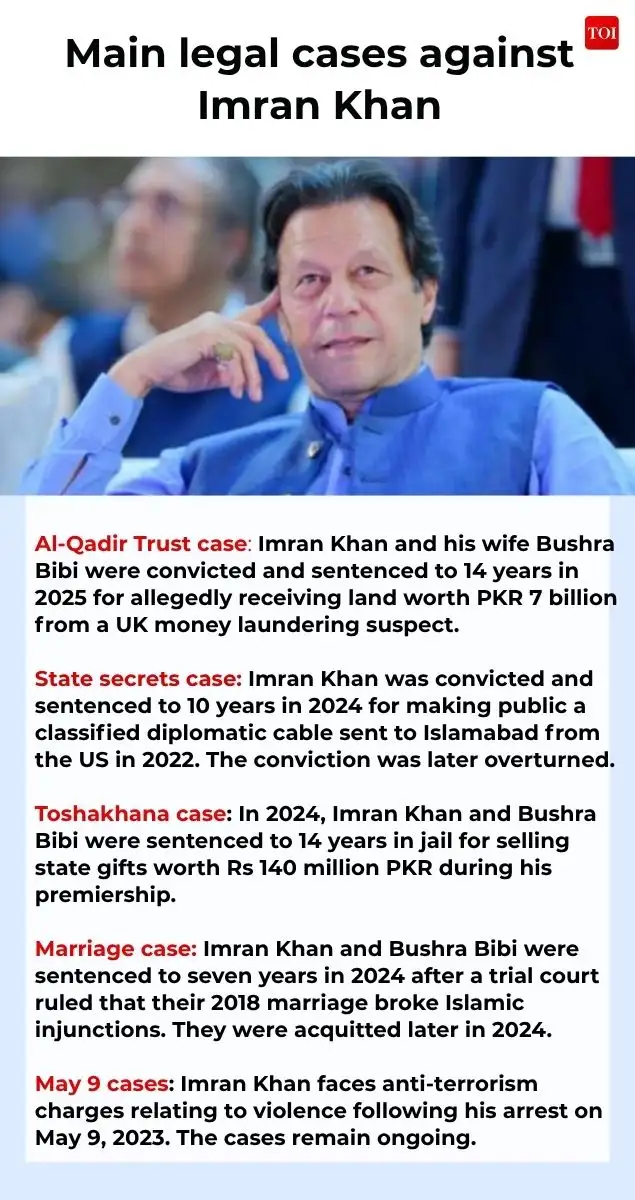
But the roads can be reopened and the barricades removed. The political problem surrounding Imran Khan is proving harder to clear. The former prime minister has now spent more than three years behind bars. The establishment has used imprisonment, restrictions on his contact with the outside world, scores of legal cases and a crackdown on his supporters. Yet none of it has so far succeeded in removing Imran Khan from the centre of Pakistan’s politics. His rise to power was widely seen by rivals and analysts as having benefited from the backing of Pakistan’s military, the country’s most powerful institution, although both Khan and the military denied that the army had helped bring him to power. it showed that his absence from the ballot did not translate into the disappearance of his support While that result did not bring the party back to power. However, the outcome should not have been a surprise. The by-election results offered an early indication that removing Imran Khan from office had not dented his electoral support. As its founder and most prominent face, PTI has repeatedly described Imran Khan as its “red line. Protesters targeted government buildings and military installations, including the residence of a corps commander in Lahore and the army’s general headquarters in Rawalpindi. The events marked a dramatic escalation in the confrontation between Imran Khan and the military establishment. They also demonstrated why the PTI has continued to place him at the centre of its politics: attempts to remove him from the political arena have not removed the attachment to him among a significant section of the party’s supporters. Since his incarceration, the party has repeatedly mobilised in Islamabad, demanding his release. Imran Khan’s prolonged imprisonment has also strengthened a persecution narrative around him. His party and supporters have consistently argued that the numerous cases against him are politically motivated and intended to keep him out of politics. Pakistani authorities have rejected those allegations. Main legal cases against Imran Khan The conditions of his imprisonment at Rawalpindi’s Adiala Jail have added another dimension to the persecution narrative. The communication cited allegations of prolonged solitary confinement, restricted access to the outside world and inadequate ventilation. The Pakistani establishment has succeeded in keeping Imran Khan behind bars. But with so many eyes on his case, it has not succeeded in making his political relevance disappear. The controversy surrounding Imran Khan’s imprisonment has increasingly extended beyond politics and Pakistan, as his cricketing legacy has kept his case in the international spotlight. Former international cricket captains have appealed to Prime Minister Shehbaz Sharif’s government over Khan’s treatment and access to medical care. Matters almost came to a head during the recent England-Pakistan Test series. During the second Test at Lord’s, the Pakistan Cricket Board reportedly considered not sending its players back onto the field after the lunch break after Sky Sports aired an interview with Imran Khan’s sons, Kasim and Suleiman. The PCB ultimately returned to the field and lodged a complaint with the broadcaster. The episode underscored how Imran Khan’s imprisonment continues to attract attention beyond Pakistan and outside politics. Every time the PTI has marched on Islamabad, the Pakistan government has responded by fortifying the capital, blocking entry routes and deploying thousands of police and paramilitary personnel. The crackdown extended to Imran Khan’s family too, with his three sisters detained ahead of the now-postponed march. Such measures may prevent protesters from reaching Islamabad, but they have not stopped the PTI from returning to the streets with the same central demand: Imran Khan’s release. The state has managed to contain individual protests, but each confrontation has been followed by another, keeping his imprisonment at the centre of Pakistan’s politics. By isolating him in prison and cracking down on his family and party, the Pakistani authorities have sought to contain Imran Khan’s political influence. So far, however, his electoral support, PTI’s continued mobilisation and the attention surrounding his imprisonment show that those measures have not removed him from the country’s political contest. For now, Imran Khan’s ability to retain political relevance despite his imprisonment remains a significant feature of Pakistan’s politics. You use AI every day. Now get your AI Quotient. Take the AIQ test.
In April 2022, the opposition brought a parliamentary no-confidence vote against Imran Khan, which he lost and was thus removed from office. He has since faced more than 100 cases, many involving corruption allegations. Imran Khan was imprisoned in August 2023 and has remained behind bars since then. The hospital opened in 1994.
Islamabad had prepared for another confrontation. Roads were blocked, security forces deployed and Pakistan Tehreek-e-Insaf (PTI) supporters were expected to march towards the capital demanding the release of their jailed leader, Imran Khan . That relationship subsequently deteriorated. Several of his convictions have been overturned, suspended or otherwise challenged, while he has consistently denied wrongdoing. Yet his incarceration has done little to diminish his presence in Pakistan’s public life or erase him from the public consciousness. Thanks to his cricket career, Imran Khan was already a well-known public figure before entering politics. Following his retirement, he gained further goodwill by giving Pakistan its first specialised cancer hospital, the Shaukat Khanum Memorial Cancer Hospital, named after his mother, in Lahore. That personal following later became the foundation of a political movement, the PTI, that presented him as an outsider challenging Pakistan’s established political order. In a country where civilian politics has long been shaped by the Bhutto-Zardari and Sharif families, Imran Khan offered voters a figure outside the traditional political dynasties. His image as a retired cricket captain with no family legacy in politics helped distinguish him from the established political class. Imran Khan: From cricket captain to PM to inmate His prime ministership brought him further visibility and established him as a central figure in Pakistan’s civilian politics. And therein lies his significance: an outsider who challenged Pakistan’s established political dynasties, became prime minister, and later fell out with the military establishment before being jailed.