
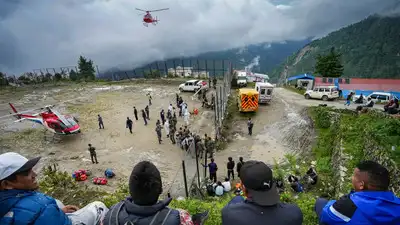
Nepal floods exposed gaps in disaster monitoring and early-warning systems
Nepal’s warning system came under scrutiny after a glacier collapse triggered devastating flash floods in Rasuwa on August 26, with authorities issuing a disaster alert 38 minutes after the ice-rock avalanche. The collapse struck the Lhende valley near the Nepal-Tibet border at 8.37am, sending a rapid surge of water, debris and boulders downstream.
Communities were caught off guard, with survivors relying largely on instinct and help from neighbours to escape, according to a report in the Kathmandu Post. Scientists said predicting the specific glacier collapse was difficult and the steep terrain gave authorities little time to respond. He said an effective system needs risk assessment, real-time observation, communication mechanisms and emergency preparedness. “But for people downstream we used every means to inform them—through text alerts, caller tune, media broadcasts, and police miking,” she added.
The deadly floods have killed thousands and several remain missing. However, the disaster exposed a wider weakness: Nepal’s warning systems are largely built around individual hazards even as Himalayan disasters increasingly involve cascading and cross-border risks. “There is no such thing as an early warning system in Nepal. Simply having sensors does not mean it’s a system; it has to be much more comprehensive,” the report quoted Anil Pokhrel, former chief executive of the National Disaster Risk Reduction and Management Authority saying. “If the Chinese sensors detect something upstream, a series of sirens should automatically go off all at once. Text messages should go off with a loud buzzer even if it is on silent mode,” he added.
Because the flood had destroyed the [communications] towers, yet local authorities informed communities, and people went from door to door warning each other,” the report quoted Shanti Mahat, spokesperson of NDRRMA, saying, we could not do much in Rasuwa. “We informed DHM at nine.