The extraordinary natural historian, ecological advocate, writer and broadcaster Sir David Attenborough turns 100 today. Environmental filmmaker Ashwika Kapur speaks with Krishnendu Mukherjee about Attenborough’s documentaries, his wonder and precision — and filming with him, jumbos and jam tarts — sending birthday wishes and gratitude in Times Evoke.
I then met Sir David in 2014 at the Wildscreen Film Festival, often called ‘the Green Oscars’. In 2017, I got an opportunity to work with him. Around 9 in 10 British viewers reported altering their use of plastic in the weeks after. The one image that has stayed with me since childhood is his legendary encounter with mountain gorillas in 1979.
My first film ‘Sirocco — How a Dud Became a Stud’, about an eccentric New Zealand kakapo bird, had won me an award.
I asked if I could — to my disbelief, they said yes. He came in, said hello to everyone, sat down and pulled out this tiny old phone. He said, totally deadpan, ‘Of course it’s smart — it even has a calculator in it. I told him about Sirocco, the hilarious flightless kakapo who’d become an unlikely sensation. ‘That sounds wonderful,’ he said. Of course, for decades, as he himself says, his programmes showed the beauty of nature instead of how it was in trouble — but what he’s done since is enormous.
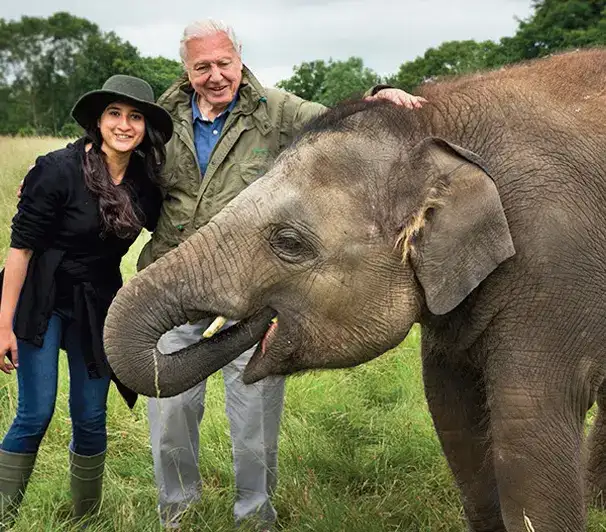
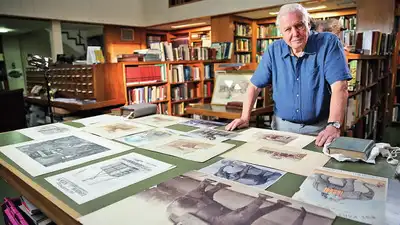
I grew up in Kolkata in the 1990s when natural history television programmes were not readily available in India. However, I was an animal-mad child — by the time I turned five, the balcony of our flat was already a sanctuary for rescued birds, frogs, rabbits and squirrels. My father encouraged my love for animals. He sourced a small treasure trove of David Attenborough tapes from abroad and brought them home, one on each trip. I watched ‘Life on Earth’, ‘The Trials of Life’, ‘The Private Life of Plants’, etc., on a tiny TV set. I thought I was being entertained — I had no idea I was being shaped. After college, the assumption was I’d do something ‘sensible’ like law or banking — instead, I picked up a camera and left for Africa to be a wildlife filmmaker. That decision had been made for me years ago by a gentleman on a small TV. He walked me through rainforests, deserts and mountains and left an indelible mark. However, the real prize for me was that David Attenborough was there in person. I got a project at Humble Bee Films in Bristol. They were producing ‘Attenborough and the Giant Elephant’. Generally, people who work on these shoots tend to be a small number of crew Sir David has known for decades. Yet, I pitched what I thought was a long shot. Nobody was capturing the behind-the-scenes of the shoot. Day one was at the Zoological Society of London (ZSL) library. Sir David was very warm and witty. Somebody on the crew gently ribbed him about being one of the last people on Earth without a smartphone. There were other surprises. We took a tea break and Production had set out a large spread with biscuits, jam tarts and a huge bar of chocolate. Being halfBengali, I’m not the most disciplined when it comes to sugar. But that morning, I was astonished — while the director was talking David Attenborough through shots, his hand moved to the first jam tart. Then, a second. Then, a third. Then, the chocolate. In a world where everyone is constantly logging their macros and taking pictures of oat milk, it was the most liberating thing I had seen. One day, I plucked up the nerve to mention to him that we’d met briefly at Wildscreen and I’d given him a DVD of my first film, only to learn afterwards that he watched just VHS tapes. He asked me about the film. He was amused. ‘It’s so hard to make wildlife films that are actually funny. His episode on plastic pollution, featuring a pilot whale carrying her dead calf which had possibly ingested plastic or albatross parents unwittingly feeding plastic to their chicks, did something rare — it changed behaviour immediately and at scale. His other films have followed in that spirit. First, the kakapo — the wonderful flightless parrot from New Zealand I first saw wobbleing across our TV set in ‘The Life of Birds, which then became the subject of my first film. Attenborough has given us the most heart-stopping wild moments ever. The marine iguana hatchling, sprinting for its life from a congregation of writhing racer snakes, could outdo any Hollywood chase! He gave us the first proper film of a snow leopard in the wild. He’s filmed orcas hunting in coordinated packs and shown birds of paradise and their theatrical displays. In ‘The Green Planet’, he taught us to love plants — to make people cheer for a seed is quite a feat! That incredible moment on film was entirely unscripted — one gorilla gently looked him directly in the eyes while two baby gorillas climbed into his lap. He abandoned his script entirely, having the most spontaneous heartfelt response. Attenborough has described that as one of the most extraordinary and privileged moments of his life — I still haven’t recovered from it. On his birthday, on behalf of many, I’d like to thank David Attenborough for making us fall in love with our beautiful Earth.