
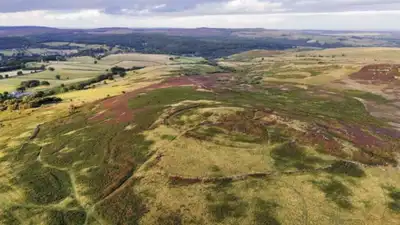
Now, after a two-year fundraising campaign that drew support from more than 25,000 people across over 50 countries, the 9,486-acre estate has been acquired by The Wildlife Trusts and Northumberland Wildlife Trust for nature conservation, as per a report by The Guardian. The charities announced the successful purchase on October 30, 2026, describing it as a rare opportunity to restore wildlife habitats across a vast stretch of northern England. For nearly eight centuries, the Rothbury Estate in Northumberland remained in the hands of the Percy family, whose descendants include the Dukes of Northumberland.
The campaign, which sought to raise around £30 million, brought together individual donors, charitable foundations, philanthropists and government support. Members of the public contributed more than £17 million, while a £5 million grant from The National Lottery Heritage Fund and a £1.94 million grant pledged by the Department for Environment, Food and Rural Affairs (Defra) helped push the appeal towards its target, according to The Wildlife Trusts. Donations also came from more than 50 countries, including Finland, Barbados, Kenya and New Zealand.
The Wildlife Trusts and Northumberland Wildlife Trust have said they want to make nature recovery compatible with farming and the needs of local communities. The area is home to several species that conservationists hope to protect and help recover. Curlews, lapwings and other wading birds inhabit its uplands, while mountain bumblebees forage across its grasslands. Its woodlands provide shelter for endangered red squirrels, and the estate is also home to cuckoos and merlins, the UK’s smallest falcon. The Wildlife Trusts believes the estate could support an even greater variety of wildlife if habitats are restored and connected. Its longer-term ambitions include encouraging the return of species such as pine martens and beavers, alongside improving conditions for animals already living there. Their plans include restoring habitats, supporting nature-friendly and regenerative farming, improving public access and creating opportunities for people to learn about the estate’s natural and cultural history. The charities have also stressed that the purchase is not intended to simply turn the entire estate into an inaccessible wildlife reserve. Instead, they want to work with farmers, land managers and residents to develop a model in which conservation and productive rural businesses can coexist.
The charities had already begun research and conservation work on sections of the estate acquired in October 2024. As The Guardian reported, some farmers and local representatives have raised questions about the potential impact of changes to traditional land management, food production and the profitability of farms operating on the estate.
The Wildlife Trusts has said it intends to work with those who live and work on the land. The project has, however, attracted some criticism. Volunteers, local community groups, archaeologists, birdwatchers and academics have helped document its wildlife, landscape and history. New citizen-science projects are also planned, including reptile surveys, soil-health testing and acoustic monitoring to record the sounds of wildlife. The purchase marks the end of the fundraising campaign, but the conservation work is only beginning.