
PC: London Museum
Inside the £437 million project to transform Smithfield Market
As reported by London Evening Standard, the redevelopment has taken years of planning and construction, with the budget reaching £437 million. Its opening also marks a new chapter for a museum which is set to open on November 28, 2026, that has spent nearly five decades documenting the changing character of the city. The move follows the closure of the museum’s previous premises at London Wall in 2022. The decision to move the museum to Smithfield was confirmed by the City of London Corporation in 2015, following earlier discussions about finding a new home. The original timetable envisaged an opening in 2021, but the work took longer than anticipated as the project dealt with the practical demands of adapting an existing historic structure. Smithfield has served London for more than 800 years, with its history closely connected to markets and the movement of food through the capital.
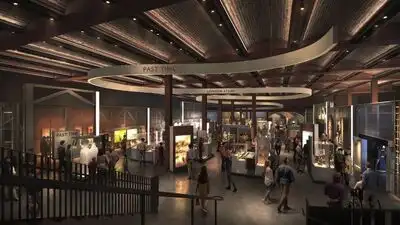
For years, the future of Smithfield’s old market buildings has been tied to a larger question about how London preserves its past while finding new uses for its historic spaces. Now, one of the City’s best-known Victorian market halls is being prepared for a different kind of public life. The London Museum is moving into the restored General Market in Farringdon, bringing its collections into a building once associated with the capital’s wholesale meat trade. The new museum occupies the former General Market building at Smithfield, a site whose working history stretches back far beyond the present redevelopment. Its new home gives the institution an opportunity to present its collections within a different part of the capital, surrounded by buildings that have long been associated with London’s commercial life. Funding has come through a partnership involving the City of London Corporation, the Mayor of London and charitable organisations. Supporters include the National Lottery Heritage Fund, the Goldsmiths’ Foundation and the Linbury Trust. The scale of the investment reflects the ambition to preserve the historic building while adapting it for exhibitions, public programmes and other museum activities. The museum’s displays are arranged around three connected areas: Real Time, Our Time and Past Time. Together, they are intended to explore London’s history through objects, personal stories and events that have shaped the capital, rather than presenting its development as a single, uninterrupted timeline. The wholesale meat market became a familiar part of the city’s commercial infrastructure, supplying butchers, restaurants and caterers. Its overnight trading schedule has long distinguished it from many other public markets.