
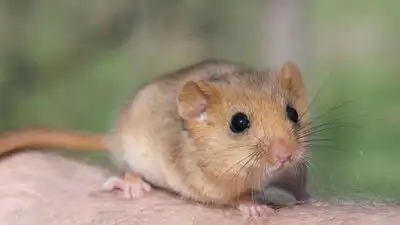
dormouseRepresentative image from Canva
In 1902, a small population of edible dormice was released at Tring Park, a private estate in Hertfordshire, as part of a Victorian-era fascination with exotic wildlife. More than a century later, that single introduction has grown into a national problem: by 2018, the Mammal Society estimated around 23,000 edible dormice lived in the UK, mostly in the Chiltern Hills. Today, the UK government pays land managers £40 per hectare per year under a Countryside Stewardship scheme to control these invasive rodents, which strip bark from trees, damage fruit crops and predate hole-nesting birds, according to official reports from GOV.UK.
Because of the harm they cause to native habitats and species, read on to know more about it here: Edible dormice are classified by the UK government as an invasive non-native species (INNS). Because edible dormice are invasive and cause measurable economic and ecological harm, the UK government has created a dedicated funding stream to support their control, why the government pays land managers to control them.
Under the Countryside Stewardship Higher Tier (CSHT) scheme, the “CSP20: Edible dormouse control and management” action pays land managers £40 per hectare per year for 10 years to reduce dormouse populations and limit damage. Their most visible impact is on trees. In early summer, they strip bark from the crowns of pole-stage or mature trees, leaving distinctive rectangular patches. This can cause stem breakage, forking and, in severe cases, tree death. Preferred species include larch, Scots pine, Norway spruce, beech, birch and orchard trees. A key challenge in managing edible dormice is avoiding harm to the native hazel dormouse (Muscardinus avellanarius), which is a protected species. The two look similar to non-specialists, but they differ in size, tail characteristics and habitat preferences. Government guidance stresses the importance of correct identification using non-native species secretariat (NNSS) ID sheets and, where necessary, advice from Natural England or Forestry Commission officers. By paying land managers to control dormice in key areas, the government aims to limit further spread, reduce damage to trees and crops, and protect vulnerable wildlife such as hole-nesting birds. At the same time, the scheme reflects a broader shift in UK policy toward proactive management of invasive non-native species, recognising that prevention is far cheaper and more effective than trying to reverse established invasions.