
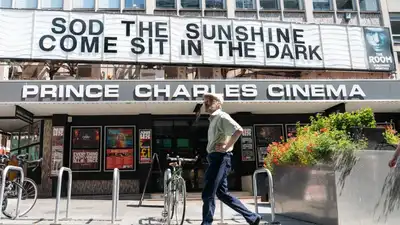
Image: The Standard
London’s Prince Charles Cinema has secured its future after 21 months of uncertainty over its lease, signing a new 25-year agreement without a break clause following a public campaign that attracted more than 168,000 petition signatures. The agreement, announced on October 15, 2026, brings the dispute to an end and allows the venue to continue its distinctive programme of cult classics, repertory screenings, film marathons and special events. The Prince Charles Cinema announced on October 15 that it had signed a new lease covering the next 25 years, with no break clause. Its petition had gathered 168,645 signatures by the time the new agreement was announced.
The independent cinema, located near Leicester Square in London’s West End, faced the prospect of having to leave its premises if its landlord exercised a proposed redevelopment clause. The cinema thanked its supporters, staff and members of the film industry, whose backing helped draw national attention to the fight to preserve the venue. The agreement ends a prolonged period of uncertainty over whether the independent venue could continue operating at its current location. The cinema, situated on Leicester Place near Leicester Square, is known for screening films from across the history of cinema, including cult favourites, older releases and specialist formats. The campaign to preserve the Prince Charles Cinema attracted widespread public support.
Why the Prince Charles Cinema matters to London’s film culture
It thanked the 168,645 people who had signed its petition, along with its staff, media supporters and members of the international film community. The dispute began publicly in January 2025, when the cinema raised concerns about the terms proposed for its next lease by its landlord, Zedwell LSQ Ltd, which is owned by property group Criterion Capital. In May 2025, Westminster City Council designated the Prince Charles Cinema an Asset of Community Value after a recommendation from the Soho Society. The 25-year lease without a break clause gives the Prince Charles Cinema greater certainty over its long-term future at Leicester Place. The Prince Charles Cinema has operated as a repertory venue since 1991 and is known for programming more than 850 films a year across its two screens. The cinema says it sells more than 250,000 tickets annually and receives no public funding.
The cinema said the new agreement would allow it to continue operating and investing in its facilities. The cinema said the proposed agreement included a redevelopment break clause that could have required it to leave the premises on six months’ notice if the landlord secured the necessary planning permission. The venue has previously said that continued investment is essential to maintaining its audience experience and its ability to screen films in different formats, from analogue projection to digital.
Its programme also features all-night film marathons, sing-along screenings, quizzes and other events that distinguish it from conventional multiplexes. It also argued that the proposed rent was substantially above market rates. The possibility of early termination created difficulties for a venue that depends on maintaining specialist screening facilities and investing in its building over time. The cinema warned that uncertainty about its future could undermine its ability to plan improvements and continue its programme. Criterion Capital rejected allegations that it had attempted to intimidate or disadvantage the cinema. The landlord maintained that a break clause was standard commercial practice and that its rental expectations reflected a fair assessment of the market. The disagreement continued as the cinema sought a new lease without the redevelopment clause that had become the central issue in the dispute. The campaign drew attention to the venue’s role in London’s film culture and the difficulty of replacing a specialist cinema once it closes. Supporters argued that its programming, atmosphere and commitment to older and less widely screened films made it an important part of the capital’s cultural landscape. The cinema also received support from filmmakers, actors, writers and producers. Its management thanked the international film community for helping raise awareness of the dispute and acknowledged the staff who continued running screenings throughout the uncertainty. The public campaign did not replace negotiations between the cinema and its landlord, but it helped keep the venue’s future in the public eye. The campaign attracted support from prominent names in the film industry, including directors Christopher Nolan, Danny Boyle, Edgar Wright and Robert Eggers, as well as actor Paul Mescal. Their backing highlighted the cinema’s standing among filmmakers and audiences who value repertory screenings and opportunities to experience films on the big screen. The Prince Charles Cinema has developed a reputation for showing films that may not be readily available in mainstream cinemas. Its programme includes classic cinema, cult productions, horror marathons and screenings in formats such as 35mm and 70mm. For supporters, the potential loss of the venue represented more than the closure of a local business. They viewed it as a threat to a distinctive part of London’s film culture. The designation recognises the building’s importance to the local community. Under England’s community-asset framework, it can provide eligible community groups with an opportunity to organise a bid if the owner decides to sell, subject to the relevant rules and timescales. The status did not itself guarantee the cinema a new lease or prevent redevelopment. However, it provided formal recognition of the venue’s cultural and community significance during the dispute. The cinema thanked the Soho Society for recommending the designation and Westminster City Council for approving it. The agreement removes the specific early-termination mechanism that had become the focus of the campaign. It also gives the cinema a longer period in which to plan improvements to its building and screening facilities. The new lease does not guarantee commercial success, but it provides a more stable basis for the cinema to continue its operations and develop its programme. Criterion Capital has also indicated plans to develop a hotel on the upper floors of the building. The lease agreement allows the cinema to continue operating while the landlord pursues its plans for other parts of the property. Criterion Capital chief executive Vaqas Farooq welcomed the agreement, describing it as a resolution to the dispute and a commitment that would provide security for the cinema and its audiences. Cinema owner Ben Freedman also welcomed the outcome, saying it would allow the venue to plan for the future with greater confidence. The agreement brings the public dispute to a close while leaving the cinema and landlord with their respective long-term plans for the property. Its schedule ranges from classic films and cult favourites to specialist screenings, film marathons and audience events. This mix has helped it develop a following among cinephiles in London and international visitors. The lease agreement also comes amid broader concerns about the survival of independent cultural venues in expensive city centres, where property costs and redevelopment can place pressure on businesses that serve a specialised audience. You use AI every day. Now get your AI Quotient. Take the AIQ test.