
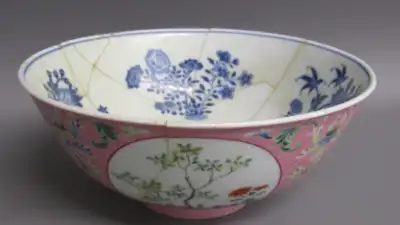
A Lincolnshire woman kept a box marked ‘broken porcelain’ in her attic for more than 20 years and repeatedly wondered what to do with it; the inherited Chinese pieces were finally taken to auction and sold for more than £160,000/Image: JohnTaylors/BNPS
The pieces fetched £196,992, including fees, at auction. Most people wouldn’t think they’re worth more than a pound or two, but they’re rare, highly collectable and therefore highly valuable.”
A Lincolnshire woman has sold a collection of inherited Chinese porcelain for more than £160,000 after keeping a box labelled “broken porcelain” in her attic for more than 20 years. “I brought it up to Lincolnshire [in 2002] and since then it’s just lived in the attic,” Stewart told the BBC. Some pieces had been damaged over the years, leading to the box being labelled “broken porcelain”. Stewart told the BBC that her grandfather’s records showed her grandmother was responsible for damaging several pieces, including some of the most valuable ones. Auctioneer James Laverack, from John Taylors Auction Rooms, said the collection’s appearance did not initially suggest its eventual value.
Gill Stewart rediscovered the box while looking for Christmas decorations at her home in Benniworth, near Louth. “Every time I went up to get the Christmas decorations, I thought ‘I must do something with that box’. Stewart eventually took the collection to John Taylors Auction Rooms in Louth to find out whether it was worth selling. The auction house divided the pieces into separate lots, which attracted far higher bids than expected. Stewart inherited the porcelain after the death of her grandfather, Brigadier Robert Kellie, who had collected the items while stationed in China around the turn of the 20th century. Kellie had kept detailed notes about the collection, including the reign marks, designs and damage to individual pieces. Reign marks record the Chinese dynasty and the emperor’s reign during which an object was made. The notes also recorded who had broken some of the items. “It’s the sort of stuff you would hear about people finding in charity shops or carboots.
She had repeatedly wondered what to do with the items but did not take them to an auctioneer until earlier this year.
The lot had been estimated at £50 to £100 but sold for £59,000. An expert told the auction house it could be worth £20,000 in good condition, but its damaged state led to an estimate of just £100. It ultimately sold for £5,000.
Because chinese porcelain can be difficult to assess, laverack said the auction house sought advice on the pieces.
One of the strongest results came from a lot containing 16 porcelain pieces, including four “month cups” of the type produced at imperial kilns during the Kangxi period, which ran from 1662 to 1722. The two highest-selling lots went to a UK dealer who was present at the auction, according to The Guardian. Laverack said interest in the collection became increasingly clear as the auction approached, although the team remained uncertain about the outcome until the sale.
it did not anticipate the final result Although the team expected interest. Another lot demonstrated how damage did not necessarily prevent the pieces from attracting bidders. One item had been broken and glued back together. He called Stewart after her lots had finished selling to tell her the result. Stewart had not watched the auction and was taken aback when she heard the figure. You use AI every day. Now get your AI Quotient. Take the AIQ test.