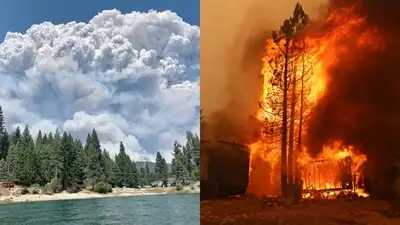
A massive pyrocumulonimbus cloud rises during Creek Fire in California. Credits – Wikipedia
A neighbour warned Wood Grigsby, who had lived in upper Kagel Canyon for about 12 years, about the fire while he was asleep. Credits – Wikipedia A 2019 study by Alexandra Syphard and USGS scientist Jon Keeley, published in the journal Fire , offers wider context. The researchers analysed building inspectors’ reports for more than 40,000 wildfire-exposed structures across California between 2013 and 2018, comparing homes that survived with those destroyed.
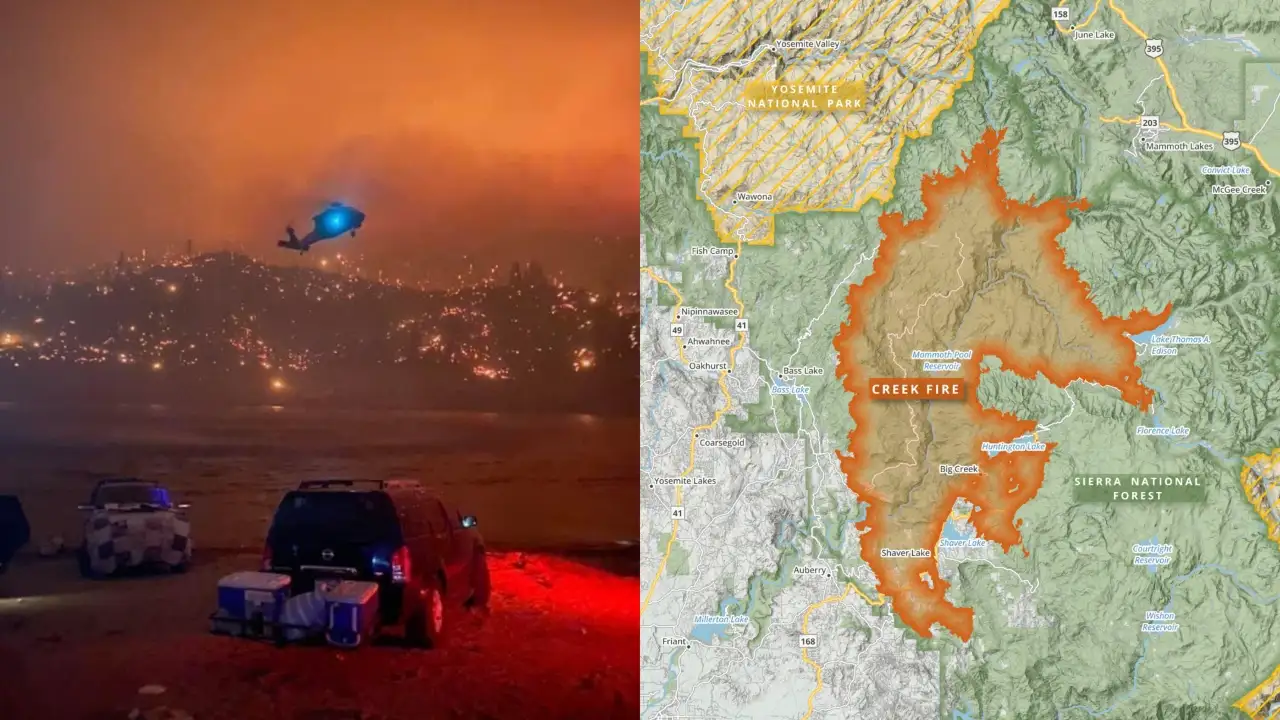
Because wildfire researchers have found that homes can catch fire through several different channels, those small fires matter. When he got outdoors, he discovered that surrounding properties were already in danger and that flames were spreading throughout the canyon. In contrast to nearby properties, his house was somewhat protected. Grigsby had cleared brush around the house and replaced some vegetation with gravel, reducing the fuel immediately surrounding the property. A dwelling need not be located in the primary fire front. Research by the National Institute of Standards and Technology found that firebrands, or smouldering embers, can ignite mulch near a structure, depending on their size and number, airflow, and the moisture of the material. Researchers looked at firebrands, or smouldering embers, and how they can ignite fires in mulch near structures. Their investigations demonstrated that igniting depended on the size and number of firebrands, airflow and the moisture level of the material. Once the spark ignites a tiny fire close to a house, the risk might rise quickly. A burning piece of landscaping material could send flames to siding, decks or other combustible portions of a building. A helicopter flies over the Creek Fire area as firefighters and officials respond to the wildfire and its widespread impact. Statewide, structural characteristics explained more of the difference than defensible-space distance did, though destroyed homes were over-represented in the data
Controlled wildfire studies further highlight the importance of material right adjacent to a home. In a separate NIST investigation, scientists tested several types of mulch beside realistic-scale building corners and exposed the area to showers of firebrands. The experiments found that firebrands could first create smouldering ignition in mulch, which could then transition to flaming. Under the tested wind conditions, flames from the burning mulch eventually ignited the adjacent building assembly. The results help explain why the few feet around a house can be so important in a wildfire. A fire doesn’t have to look like a single big flame front. An ember can fall on a flammable item, ignite it and then offer the following step towards the building. Grigsby and his son weren’t trying to stop the fire; they were guarding against exactly this kind of ember ignition. But Grigsby’s story is not to suggest that homeowners should stay and fight an advancing wildfire. Conditions near a fire can change rapidly, and skilled firefighters risk a lot even with training, protective equipment and communication systems. A USGS study supports that point. In their analysis, structural traits were a crucial factor in explaining which California homes survived. But the researchers also observed that the criteria they analysed could not account for all structural loss. Thus, Grigsby’s efforts during the fire represented only one part of the story. Vegetation clearance ahead of time to reduce fuel and gravel made a less flammable surface. Moving furniture away from the house removed another probable ignition source. The Creek Fire demonstrated how a neighbourhood can swiftly become a series of distinct fire environments. One property burns, while another adjacent one survives. An ember falling harmlessly on gravel can ignite a hazardous fire on dry grass or combustible landscaping.