
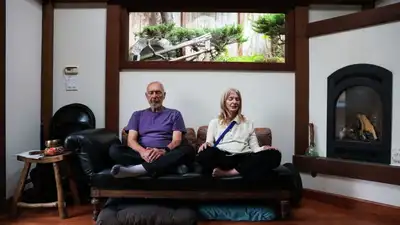
PC: San Francisco Chronicle
Geffner and Rodin began considering a redesign of their backyard around 25 years ago. Construction was completed around 2008, and the couple used the space for more than a decade without encountering problems. That changed in 2019, when an anonymous complaint was made to San Francisco’s Planning Department alleging that the structure violated city rules.
The sanctuary stands behind the couple’s rainbow-painted house on Clipper Street in San Francisco, according to the San Francisco Chronicle. England assured them that they did not need to worry about obtaining permits for such a small addition, according to Geffner. Geffner described the experience as “a rude awakening”, while Rodin said, “We were really trusting in our cowboy.
Gently curving stone steps lead to a meditation room built into the sloping hillside, with two skylights allowing natural light into the space. Sliding glass doors open towards a rocky grotto where koi fish swim. They hired landscape designer Kent Gordon England, who designed the meditation room and koi pond. England did not respond to the newspaper’s request for comment.
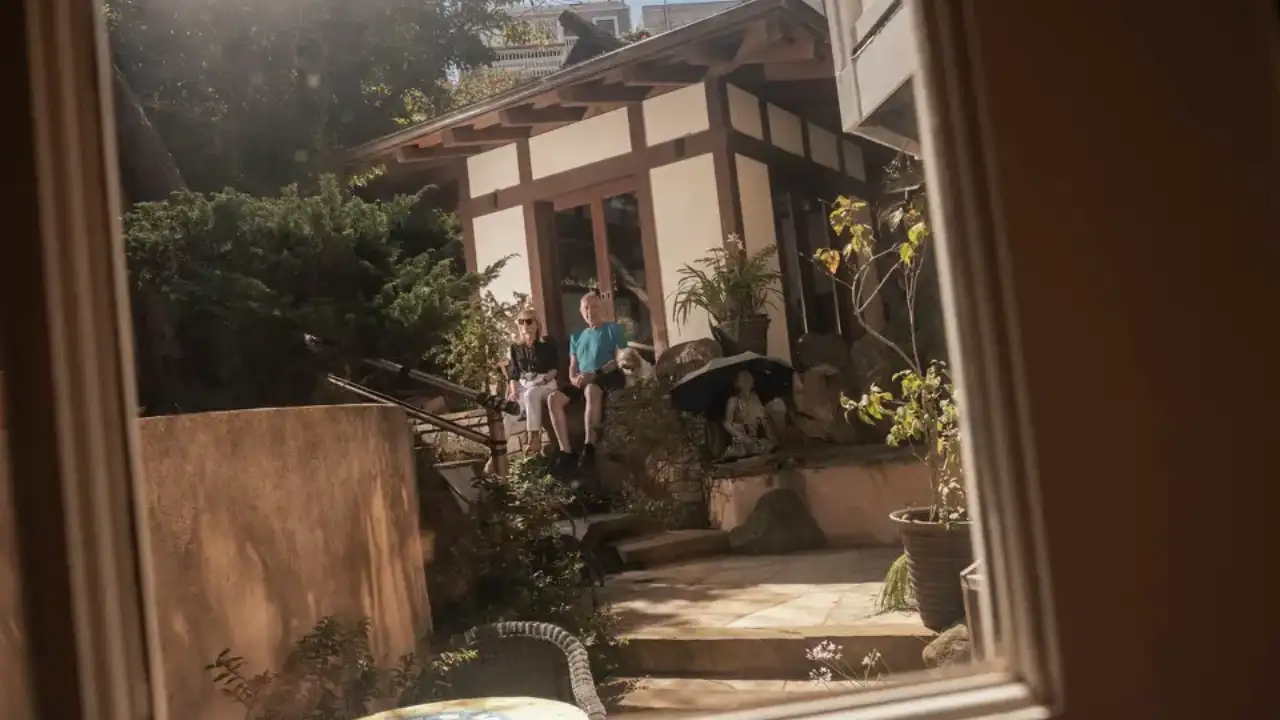
What happens next in the backyard sanctuary zoning dispute
The couple also sought support from their neighbours, going door to door and distributing a 13-page packet of photographs documenting the backyard and meditation room. Geffner said they received more than 30 letters of support. The proposal would extend an existing provision that grandfathered in backyard buildings constructed before 2003. If approved, the revised cut-off date would cover the couple’s sanctuary, which was completed around 2008.
The newspaper reported that the number of backyard buildings that could qualify under the proposed change was not yet clear.
Explaining the significance of the design, Geffner told the hearing, “In Buddhist tradition, the peaked roofs and deep eaves are understood as this building’s primary way of signalling this is a sacred, protected space. Mandelman said the length of time a structure had existed without causing a problem should be considered when deciding whether it needed to be removed. “You look at it and think, ‘That can’t be right,’” Mandelman said of the couple’s predicament, according to the San Francisco Chronicle. Patrick Hannan, a spokesperson for San Francisco’s recently merged planning and building inspection departments, said planning staff had worked with Mandelman on the proposal. In a statement quoted by the newspaper, Hannan said, “Our job is to balance priorities when they conflict in the real world. He described the proposed amendment as “a targeted way to let the small meditation space stay while ensuring that the interior-block open space will be preserved. ” The zoning administrator, Corey Teague, told the couple at the hearing that he would consider their arguments and respond later. Teague has remained in regular contact with the couple’s architect, although Geffner and Rodin had not received a final decision at the time of the San Francisco Chronicle report, according to Hannan.
He added that it should not be necessary for homeowners to spend years and substantial sums of money trying to secure permission to keep such a structure.