AI Representation: An Alabama farmer discovered a meteorite on a dirt road and sold it for enough money to buy a house and a car. Image credits: Chatgpt
Mindat lists the McKinney stone’s weight as 1.68 kilograms. The NASA analysis, Kinetic Damage from Meteorites , presented as a poster at the 2019 Planetary Defense Conference, describes the Sylacauga stone as a 4-kilogram meteorite that indirectly hit Hodges. In addition, a 4-gram stone falling onto a young boy is recorded for the 1992 Mbale fall; neither incident caused death. The poster adds that fragments on the order of 0.1 kilograms may be enough to cause serious human injury or death and it cites Halliday et al.’s 1985 estimate that a person is struck by a meteorite roughly once a decade, most likely by a gram-sized piece. A second study, The fall, recovery, classification, and initial characterization of the Hamburg, Michigan H4 chondrite , published in Meteoritics & Planetary Science , examined a stone from the 2018 Michigan fall that belongs to the same H4 group as the Sylacauga stones.
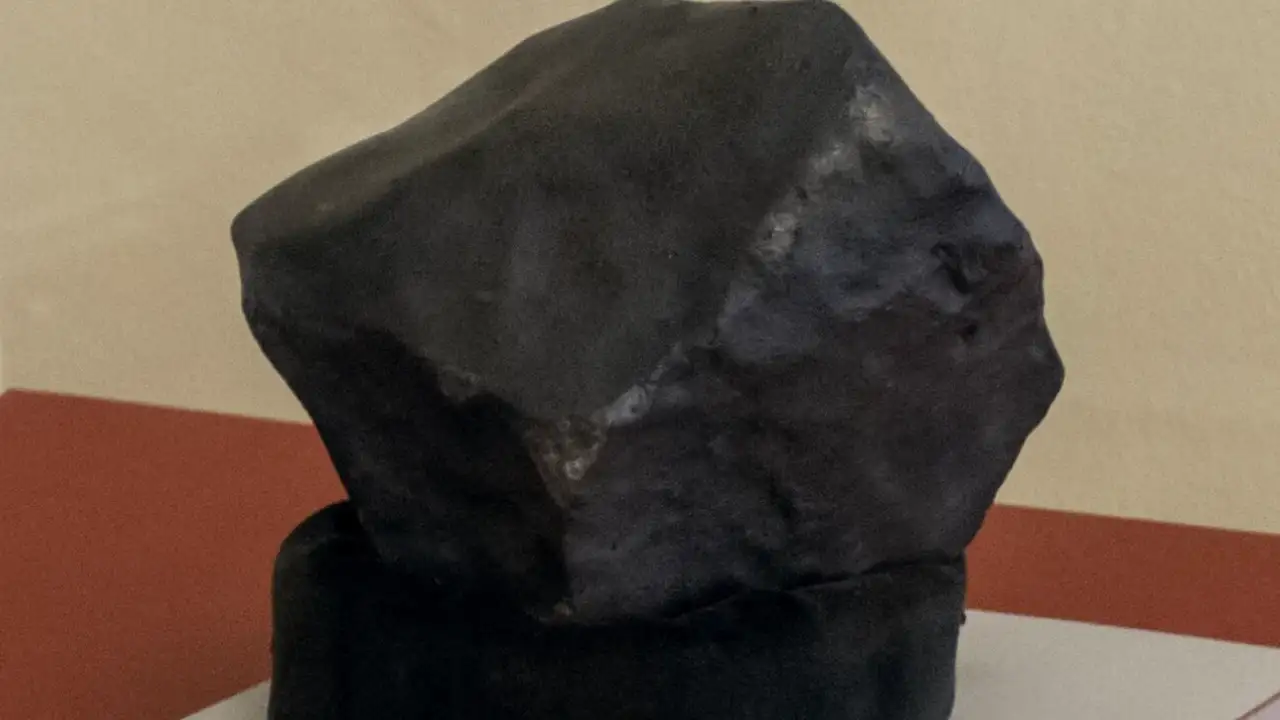
Because of the black rock, the second stone was discovered by Julius Kempis McKinney, a local farmer who, the Encyclopedia of Alabama says, found it on a dirt road on December 1, 1954, when his mules refused to move.
One of them says that he brought the stone to the postman, who was the only government representative he trusted. He sold the piece through a lawyer and it went to the Smithsonian Institution, for enough money to buy a small farm and a used car. There are different stories of the discovery. Another story states that he put the stone aside and came back home in the evening, having heard about the stone of the Hodges. The postman and McKinney concluded that there must be a connection between the rock and the Hodges stone and it could be valuable. The information can be found on the Weekly Recess website.