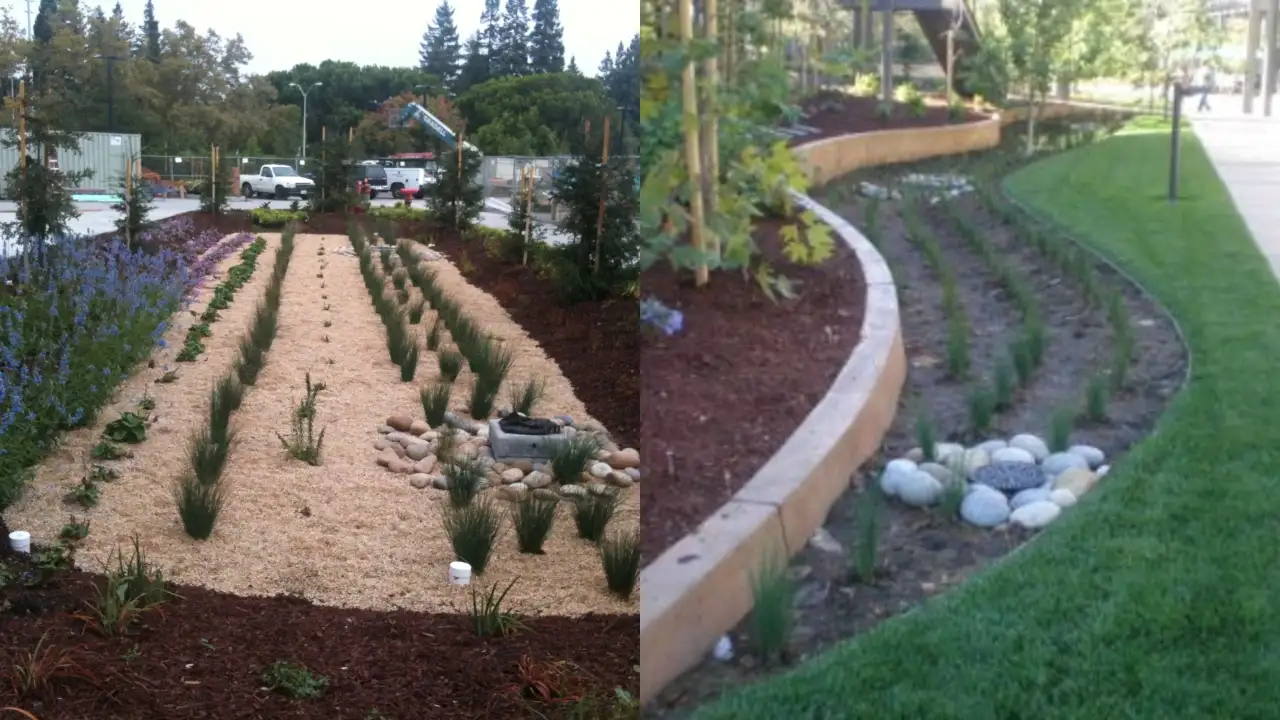
A planted rain garden with grasses, stone beds and drainage inlets illustrates green stormwater infrastructure designed to capture, slow and infiltrate runoff before it reaches the sewer system. Credits – Wikimedia Commons
Some 60 percent of Philadelphia uses what engineers call a combined sewer system, in which rainwater and domestic sewage flow together through the same pipes to treatment plants. That system works in dry weather, but heavy rain can overwhelm the pipes, sending a mix of stormwater and untreated sewage into rivers and streams. For a community between the Delaware and Schuylkill rivers, this meant billions of gallons of filthy water finding its way into local waterways every single year.
Rainfall patterns have intensified since the plan was first drawn up in 2009, and the city may eventually need to combine its green strategy with more grey infrastructure to keep up with larger storms. The individual components of this system are intentionally tiny and unglamorous, and that is part of why the total achievement is easy to miss. One rain garden may only collect a small amount of water from one block, one porous parking lot may soak up runoff from one storm and one row of street trees may slow rain on its way down. But multiplied across thousands of such sites across the city, the cumulative impact is that a significant portion of Philadelphia’s overall stormwater burden is being handled before it ever gets to an outdated pipe network. And none of this indicates the initiative has outright solved Philadelphia’s stormwater problem. But even so, the core assumption underlying Green City, Clean Waters, that a city can make a real reduction in sewage pollution by rethinking its streets, not just its pipes, has already changed how planners in other flood-prone areas think about stormwater. Delegations from other cities often visit Philadelphia to learn how the programme was conceived, financed and implemented on this scale, and numerous towns have subsequently drafted their versions of green stormwater plans, taking Philadelphia’s approach as the starting template. Whatever the city ultimately does to adapt to the increased rainfall, the core premise that redesigning streets and vacant lots can compensate for the massive subsurface infrastructure has shown that street redesign can help reduce pressure on subsurface infrastructure, one rain garden and permeable pavement at a time.