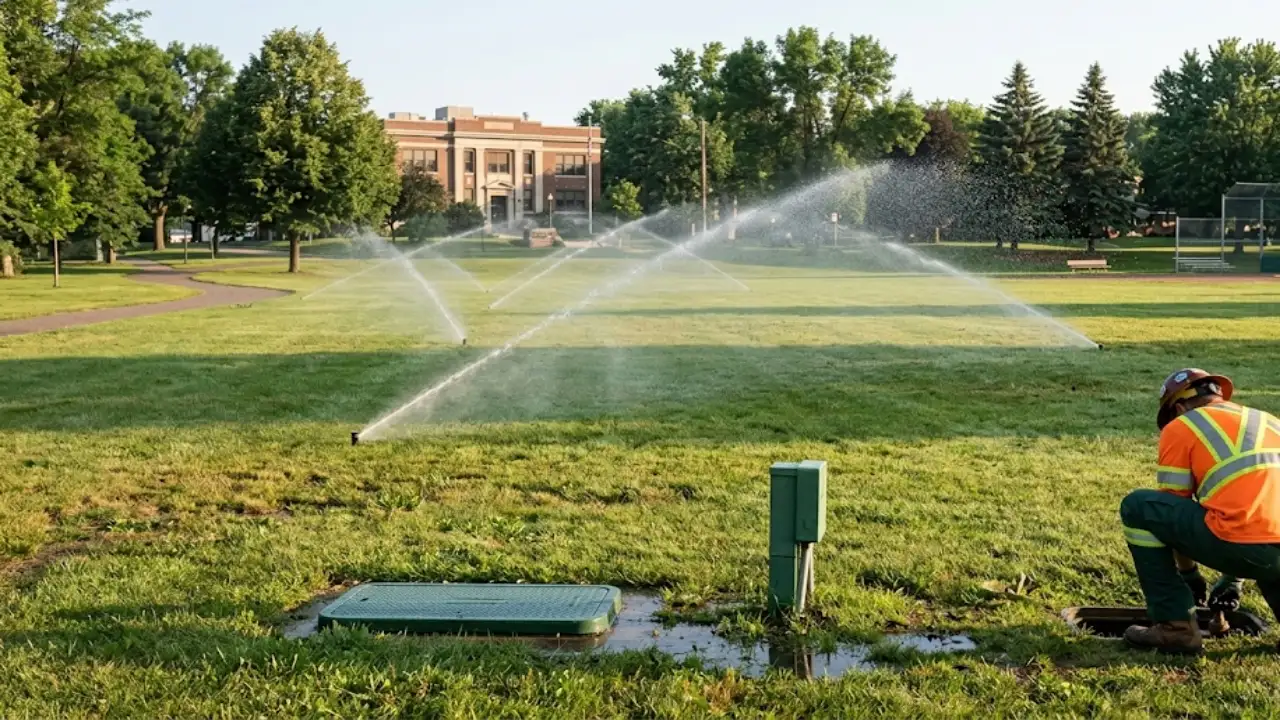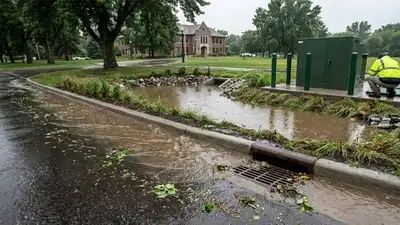
AI-generated representative image showing stormwater runoff being captured and diverted into a water-reuse system. Credits – Gemini
Anthony Village installed a 500,000-gallon underground storage tank that collects runoff from nearby streets, buildings and parking lots. The city reports a 91% reduction in runoff volume during the growing season, a 77.5% reduction in phosphorus load from the site and savings of about 4.6 million gallons of potable water or groundwater for irrigation each year. What the tank does The system, which catches, cleans and reuses runoff from a 15-acre area around City Hall, was funded by the Mississippi Watershed Management Organisation . Water is stored in a 500,000-gallon underground reservoir before being reused on about 20 acres of municipal land. A Metropolitan Council handbook gives the city’s water tower a capacity of 250,000 gallons, half the capacity of the underground reservoir. When the city drained the tank for maintenance in November 2015, it took days to pump the water down and left thigh-thick sludge on the floor, the mayor subsequently wrote.
According to the City of St. Why runoff is a problem The city says stormwater runoff is a major source of pollution to surface waters, while runoff from rooftops, pavement and lawns can carry garbage, oil and debris into storm drains and nearby water bodies. Rain washes pollutants from roads into the stormwater system. Along the way, runoff can pick up debris, oil, litter and leaves before entering the stormwater system. It was intercepted by St. Anthony Village, a small town in the Twin Cities region of Minnesota. St. It collects runoff from nearby streets and parking lots and stores it for later reuse. Anthony Village , the facility was the first of its kind when installed. Silver Lake is on Minnesota’s Impaired Waters List, and stormwater systems in St. Anthony and surrounding communities can carry runoff directly into local lakes, rivers and streams. Phosphorus is of particular concern since it feeds the algae in lakes, and the city is responsible for two watersheds that expect to see continuous improvement. The city calls that park Central Park, but some state documents call it City Park. The tank has another function: it also receives backwash from the adjacent water treatment plant and filters that water for reuse. Solid pollutants settle to the bottom of the tank, while the stored water is filtered and then pumped to the adjacent ball fields and City Hall campus for irrigation. AI-generated representative image showing reclaimed stormwater being reused to irrigate a municipal park. Credits – Gemini Maintenance and Lessons If pollution settles out, that means the tank collects it. It also shows that the system requires regular cleaning. Minnesota’s Stormwater Manual uses St. Anthony Village as a large-scale example of stormwater reuse and notes that stored water from cisterns can be used for non-potable purposes such as irrigation. The same guidance cites Tucson, Arizona, as a separate example, where commercial developments are required to meet at least half of their irrigation needs with harvested rainwater. The project shows how captured stormwater can be reused for municipal irrigation while reducing demand for other water supplies. It does need frequent cleaning and room to grow, but the city’s own results suggest it has been worth the investment. You use AI every day. Now get your AI Quotient. Take the AIQ test.