
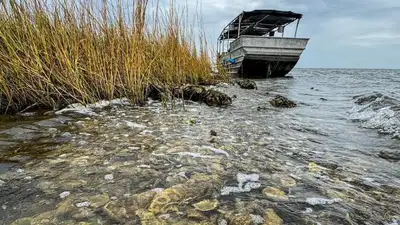
At Grand Bayou Indian Village, volunteers used 200 tons of bagged oyster shells to create a 400-foot reef designed to protect the Indigenous community’s shoreline. Two years after the project was built, monitoring recorded a sharp increase in live oyster density, rising from 52 to 130 oysters per square metre between 2025 and 2026, according to the Coalition to Restore Coastal Louisiana (CRCL). Discarded oyster shells from restaurants are helping rebuild a vulnerable stretch of Louisiana’s disappearing coastline.
The project, completed in 2024, is part of an effort to recycle oyster shells and return them to the water, where they can provide a surface for young oysters to settle and grow. The reef was constructed by hand along the residential shoreline of Grand Bayou Indian Village in Plaquemines Parish, southern Louisiana. CRCL’s monitoring records list the community, the National Oceanic and Atmospheric Administration (NOAA) and several other organisations among its partners.
Nearly 1,000 people lived in the village in the 1940s, according to the report, while only around a dozen homes remained there in 2024. The 2024 reef was the second project CRCL had undertaken in partnership with the community. WWNO reported that the community has experienced substantial land loss over generations.
The stakes are particularly high for Grand Bayou Indian Village, home to members of the Atakapa-Ishak/Chawasha tribe. Boats are the primary means of getting around. The reef cannot reverse Louisiana’s wider coastal land loss on its own. Community members have acknowledged that such structures may eventually be overtaken by water and waves. Their value, however, lies in slowing erosion, creating marine habitat and buying time for places that hold cultural and historical significance. The increase in live oyster density is an encouraging monitoring result, not proof that the shoreline is now secure. But as Louisiana continues to lose land to the water, the Grand Bayou project illustrates how community-led restoration can combine waste recycling, habitat creation and a practical effort to protect an Indigenous village’s remaining shoreline.
An earlier reef was built to help protect Lemon Tree Mound, a culturally significant site that has become surrounded by water as the landscape has changed.