
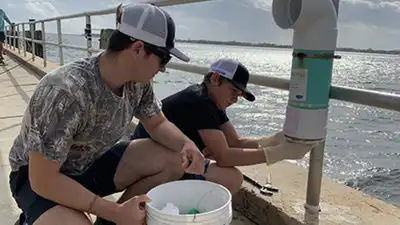
JOHN CARL TILGHMAN AND HIS BROTHER EMPTY MONOFILAMENT COLLECTION BINS THEY INSTALLED TOGETHER/ Image: Points of Light/ JOHN CARL TILGHMAN
At just 10 years old, John Carl Tilghman encountered something during a family trip that changed the direction of his life, a US national park littered with rubbish. Instead of simply walking past it, he and his brother began thinking about what they could do to protect the wildlife affected by human waste. That conversation eventually became Conservation Brothers, a hands-on conservation initiative focused on protecting natural resources and helping animals. Years later, Tilghman is still carrying that mission forward. Now a high school junior, he spends time rescuing fish, sea turtles and pelicans caught in discarded fishing line, installing monofilament collection bins and building nesting boxes for wood ducks.
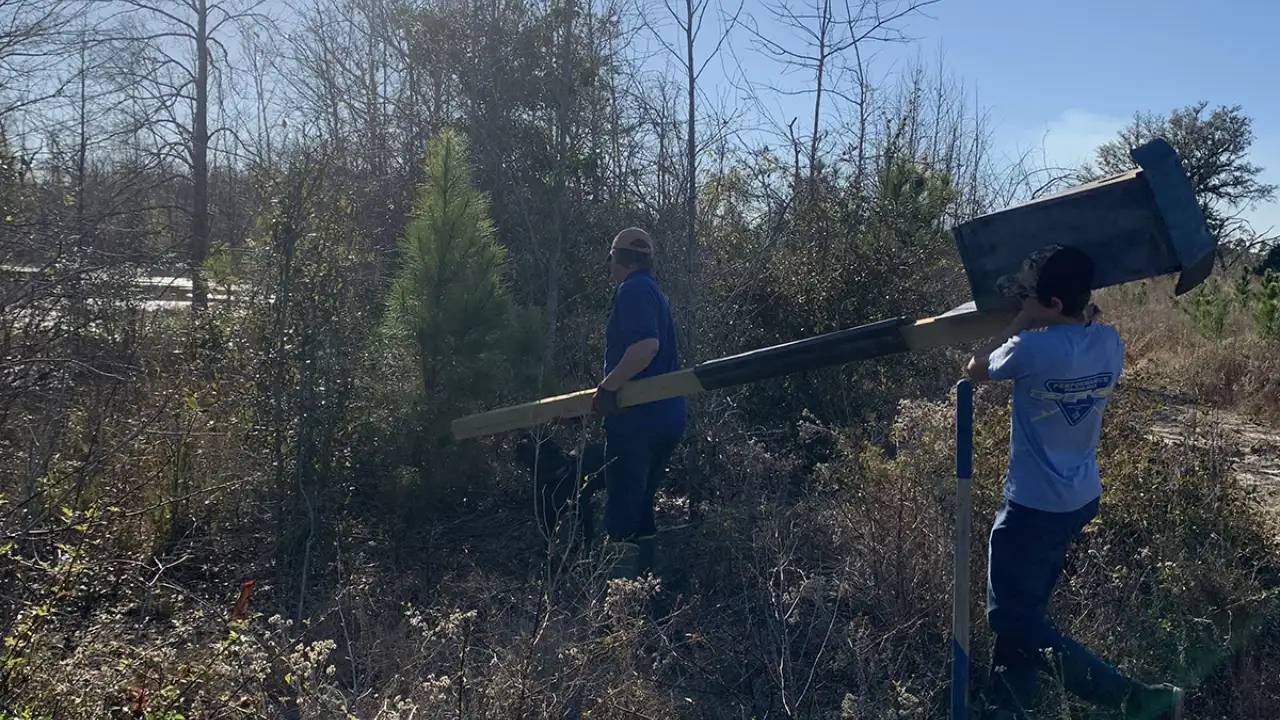
Tilghman’s work now stretches well beyond the project that began when he was 10. Conservation Brothers continues to organise shoreline clean-ups, fishing clinics and habitat projects, while Tilghman remains directly involved in planning and carrying out its activities. His experiences have also shaped his ambitions for the future. Tilghman is considering careers in biology or environmental engineering, reflecting how closely conservation has become tied to his interests. He also hopes the organisation will continue after he leaves for college, with plans to eventually pass its responsibilities to two younger cousins who share his enthusiasm for the outdoors. His story is a reminder that environmental action does not always begin with a large organisation or an elaborate plan. Sometimes, it starts when a child sees a problem, refuses to ignore it and decides to do something about it.