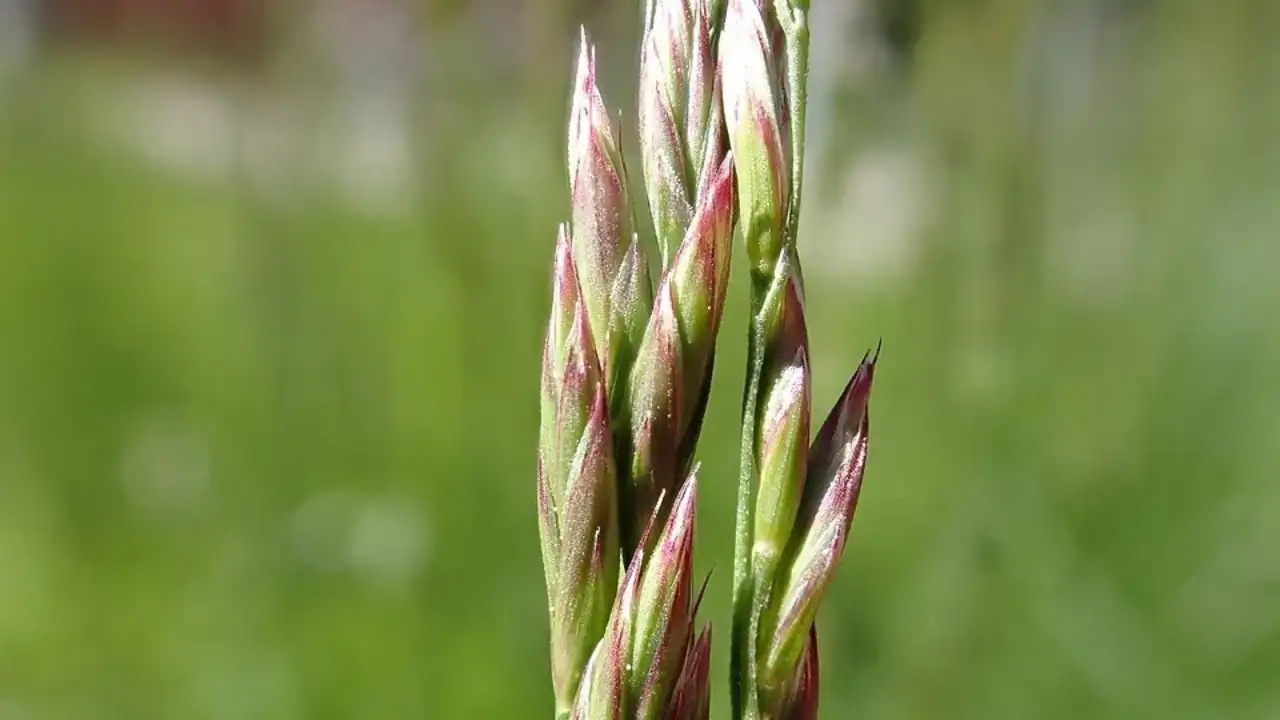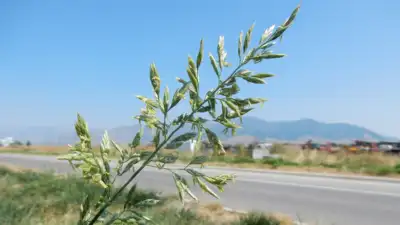
Tall fescue growing naturalized on the campus of Montana State University, Bozeman, Gallatin County, Montana | Wikimedia Commons
Tall fescue grows across more than 35 million acres of US pasture and hayland and is valued for its ability to survive drought, tolerate grazing and grow on difficult soils, but microscopic fungus living inside many tall fescue plants produces toxins that are associated with an estimated $1 billion in annual lost production for the US beef industry, according to the US Department of Agriculture’s Agricultural Research Service (USDA ARS) . The agency describes the condition as fescue toxicosis, a livestock disorder linked to toxic compounds produced by the fungus. The fungus helps the grass survive Tall fescue is a cool-season perennial grass that is widely used across the eastern and southeastern United States; it establishes readily, forms dense pasture cover and can remain productive on land where other forage grasses struggle. Farmers also value its ability to tolerate grazing pressure and retain usable growth into cooler months. The fungus is called Epichloë coenophiala , and lives between the plant’s cells. Its relationship with tall fescue is mutually beneficial, in a sense that the grass supplies the fungus with nutrients and a place to live, while fungal compounds help the plant withstand environmental stress and deter certain pests. The problem comes from a group of chemicals called ergot alkaloids, since one of the principal compounds, ergovaline, can constrict blood vessels in animals that consume infected forage. Virginia Tech’s agricultural extension specialists explain that the fungus does not usually change the plant’s outward appearance, so farmers cannot reliably identify toxic plants by sight alone. Cattle can eat the grass but gain less weight Animals may eat less, gain weight more slowly, develop elevated body temperatures and spend more time standing in shade or water during hot weather, while reproductive performance and milk production can also decline.
Tall fescue grows across more than 35 million acres of US pasture and hayland | Wikimedia Commons Red clover offers another management option USDA researchers have also studied interseeding red clover into infected tall fescue pasture, and in a two-season grazing experiment, Angus-cross steers grazing pastures containing red clover recorded higher average daily gains than cattle on tall fescue alone. Because it is hardy and productive, and the challenge for producers is to preserve those advantages without exposing cattle to the toxic effects of the fungus living inside the grass, tall fescue remains useful. The economic estimate covers lost production rather than a single disease-treatment bill, since lower weight gains, reproductive losses and other performance problems can affect returns across a beef operation.
Researchers later developed varieties that contained selected, or “novel,” endophytes that retain many of the grass’s agronomic advantages without producing the same harmful levels of ergot alkaloids. The effects can become especially difficult to manage during summer, since ergot alkaloids restrict blood flow, which makes it harder for cattle to release body heat. Animals may reduce their feed intake and grazing time, while producers see lower weight gains than expected from an otherwise productive pasture. Cattle can develop fescue foot in more severe cases, which is a condition that is associated with reduced circulation to the extremities, and the resulting tissue damage can affect hooves, ears and tails. The symptoms vary with exposure, animal sensitivity and environmental conditions, so not every animal grazing infected pasture will show the same signs. Removing the fungus created another problem Early efforts to address the issue focused on tall fescue varieties without the fungal endophyte, and those plants avoided the toxin problem, but they often lacked the persistence and stress tolerance that made traditional tall fescue so useful. Producers can also manage existing infected fields through grazing decisions and alternative forage crops, and the appropriate approach depends on pasture condition, climate, available land and the cost of reseeding. It is expensive to replace an established pasture, and poorly adapted alternatives may not persist as well. Researchers attributed some of the benefit to isoflavones in legumes, which can help counteract the blood-vessel constriction that is associated with ergot alkaloids. The study provides evidence for one management strategy that may reduce some adverse effects while farmers continue to use established grass stands. You use AI every day. Now get your AI Quotient. Take the AIQ test.