
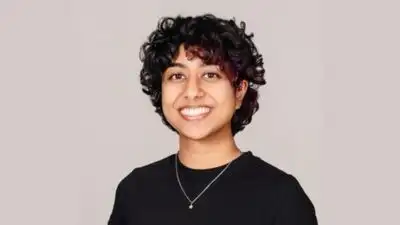
Meera Ramaswami, Founder at CargilityPhoto: Meera Ramaswami/ LinkedIn
Because the best prototype is not always the easiest product to manufacture consistently, that stage is important. The company has advanced to a working prototype with design for manufacturing completed and has been targeting an initial small production run and market launch. A design for manufacturing review helps identify ways to reduce complexity, control cost and maintain quality.
Observation to design Meera began developing the concept in 2022, using a process of observation, prototyping and testing. She and her mother, Praveena Ramaswami, became co-founders of Cargility in 2025.
Cargility’s mobility concept eventually became a patented technology.Meera Ramaswami was awarded the US patent “Vehicle Access Mobility Tool” in December 2025. Meera recognised that the problem was larger than one family. Older adults, people recovering from surgery or rehabilitation, people with disabilities and caregivers may all face difficulties during vehicle entry and exit. Existing solutions such as walking frames, canes or assistance from another person may not be convenient in the narrow space beside a car. She didn’t start with an abstract engineering problem, but rather looked at a specific moment in everyday life and asked what kind of support would make it safer. The device needed to be portable, strong and compatible with different passenger vehicles. It also had to be easy enough for a user or caregiver to position without complicated installation. A support that worked only in one type of car would have limited value, so adaptability became an important part of the design. The design is intended to reduce fall risk and ease the physical strain placed on caregivers. It provides a fixed point of support during the transfer rather than requiring a person to rely on a moving car door or another individual’s strength. Developing the first concept was only the beginning. Meera tested different designs and compared their performance. Meera’s invention gained recognition through the Invention Convention, a programme supported by The Henry Ford that encourages young people to identify problems and develop solutions. The programme teaches students to move through stages including constructing a prototype, testing it, revising the design and communicating the final idea. The recognition helped Meera to validate the invention and gain access to a network of mentors, educators and organizations experienced in product development. It also helped turn the project from a student design into an innovation with commercial potential. The patent describes a device that latches to a vehicle doorframe striker and has an articulating leg attached to the engagement portion. A patent does not mean a product is ready for mass production or on store shelves. It protects the claimed invention and establishes intellectual property rights. It was a major milestone, but more work is needed to make the patented design a reliable product, including manufacturing, testing, regulatory considerations, supply chains and consumer input. It showed that the device had moved beyond a school project and into a formal innovation process. It also created a foundation for building a company around the technology. Meera did not build the company alone. Meera continued developing the technical solution, while Praveena left her career to focus full time on the business.The partnership combines engineering and commercial development. Meera understands the design and the problem that inspired it. Praveena has focused on evaluating the mobility ecosystem, building relationships and determining how the company can move toward manufacturing and customers. Starting a company for a physical product is not just having an invention. Founders need to find users, understand the healthcare and mobility market, figure out a pricing model, and decide how the device will be distributed. They must also test the product with the people it is meant to help.
Earlier descriptions of her work indicate that she created possible models, evaluated them and selected the design that performed best.