
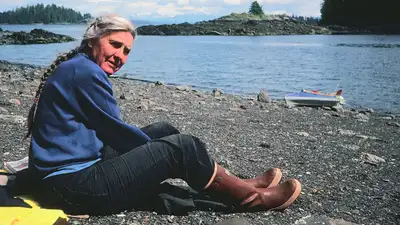
Celia Hunter flew a war-surplus plane to Alaska in 1947 and built a wilderness life near Denali
It brought an end to a 54-year campaign to protect Alaska’s wild landscapes. Hunter died in her sleep on 1 December 2001 at the age of 82, according to historical records documented by the Alaska Conservation Foundation. Her death marked the end of an environmental career that began when she flew surplus military aircraft north to Fairbanks in the winter of 1946. Hunter co-founded the Alaska Conservation Society in 1960 and later helped establish the Alaska Conservation Foundation in 1980. Over more than five decades, her work helped protect more than 100 million acres of public land across Alaska.
Celia Hunter spent the final evening of her life writing urgent letters to US politicians, asking them to oppose oil drilling in the Arctic National Wildlife Refuge.
In 1960, Hunter and her colleagues created the Alaska Conservation Society, the first statewide volunteer environmental group in Alaska. In 1976, Hunter became the first woman to serve as interim executive director of The Wilderness Society. In 1980, she co-founded the Alaska Conservation Foundation, which provided grants and financial support to grassroots environmental groups across the state. In 1991, the Sierra Club gave Hunter the John Muir Award, its highest honour for lifetime conservation work. The Wilderness Society followed with the Robert Marshall Award in 1998. On the night she died in December 2001, she stayed late at her desk writing letters to members of the US Congress, urging them to vote against allowing petroleum exploration on the coastal plain of the Arctic National Wildlife Refuge.
“Flying across bush Alaska, the entire landscape was a seamless whole, unmarred by man-made boundaries,” Hunter observed. As industrial development, resource extraction and military projects grew across Alaska after the war, Hunter turned towards organised environmental campaigning. Having seen Alaska’s huge wilderness areas before statehood, Hunter remembered how connected and untouched the landscape appeared. The organisation gave local residents a way to speak on federal conservation policies, including plans to establish the Arctic National Wildlife Range. She led national campaigns during an important period of debate over federal land policy. Her work received major recognition. Hunter continued taking part in public policy debates into her eighties. She regularly wrote to federal officials and mentored younger conservationists.