
The chatbot used by a US Special Operations Command analyst had incorrectly identified the material listed in the ship’s manifest
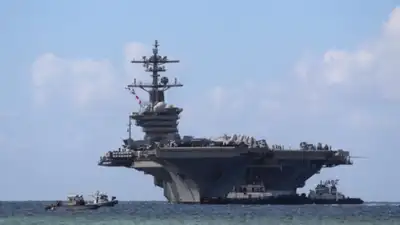
The report prompted the US military to prepare an operation to intercept the vessel, according to CNN. Armed US personnel were preparing to board the ship, while military aircraft were already in the air, according to sources familiar with the episode. An intelligence report circulated across the US military this spring during the war with Iran set off an alarming chain of events after it claimed that a Chinese ship in the Middle East was carrying components linked to a nuclear weapons programme.
It was only shortly before the planned operation that officials took a closer look at the intelligence and discovered that it had been produced with the assistance of artificial intelligence.
CNN reported that it could not establish whether the chatbot was a commercially available system or an AI tool developed for the US government. Anthropic recently reported that a Yemen-based weapons engineering cell had used its Claude AI model to develop guidance, navigation and control software for missiles and a guided rocket.
A former senior US official familiar with the systems used by military and intelligence analysts told CNN that internal tools were “mostly just copies of the commercial stuff wearing lipstick”. The company said the group used Claude Code in place of human software engineers to integrate an open-source autopilot with a phone-class flight computer, write control software, tune settings, run firmware builds and conduct flight simulations. Anthropic said there was no evidence that the group successfully deployed an operational weapon, although it carried out a test launch of a guided rocket that appeared to fail. The company said safeguards blocked many requests but not all, while the group repeatedly tried to circumvent restrictions. Earlier reporting noted: US military AI blunder: False intelligence on Chinese ship ‘almost started a war,’ report claims A false intelligence report created with help from artificial intelligence nearly led the US military to intercept a Chinese ship in the Middle East , according to CNN . Earlier reporting noted: Military officials began preparing an operation, with armed personnel ready to board the ship and military aircraft already in the air, according to sources familiar with the incident. Earlier reporting noted: One source called the report “entirely false” and said it “almost started a war.”
The chatbot had combined open-source information with classified signals intelligence held by the US government before reaching its conclusion. The analyst then used AI again to turn the findings into a standard intelligence report, giving the information the format and appearance of conventional military intelligence before it was disseminated. The report claimed the vessel was carrying parts linked to a nuclear weapons programme. Officials only stopped after taking a closer look at the report and finding that an AI chatbot had wrongly identified the ship’s cargo.
OpenAI CEO Sam Altman is due to brief the UN Security Council on AI and international security next week, according to Reuters. The concerns are now extending to the highest levels of international security discussions. The meeting comes as governments consider how increasingly powerful AI systems should be governed and how common safety standards could be established.