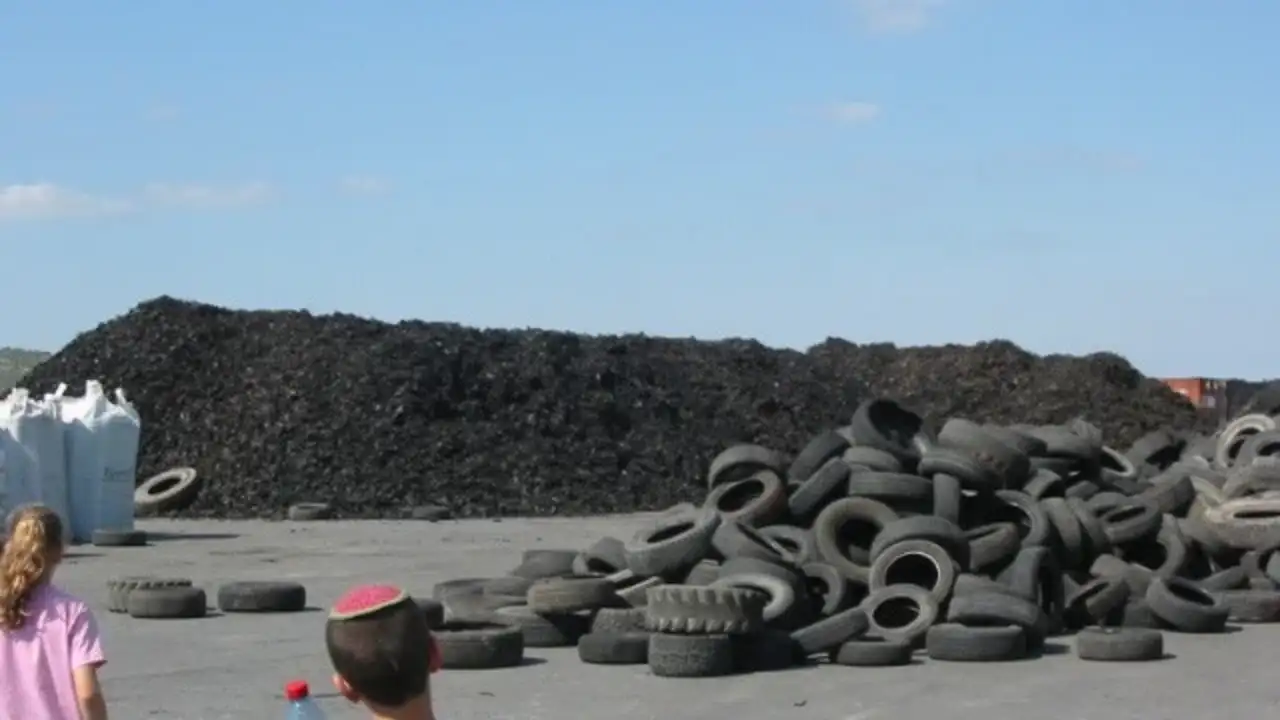
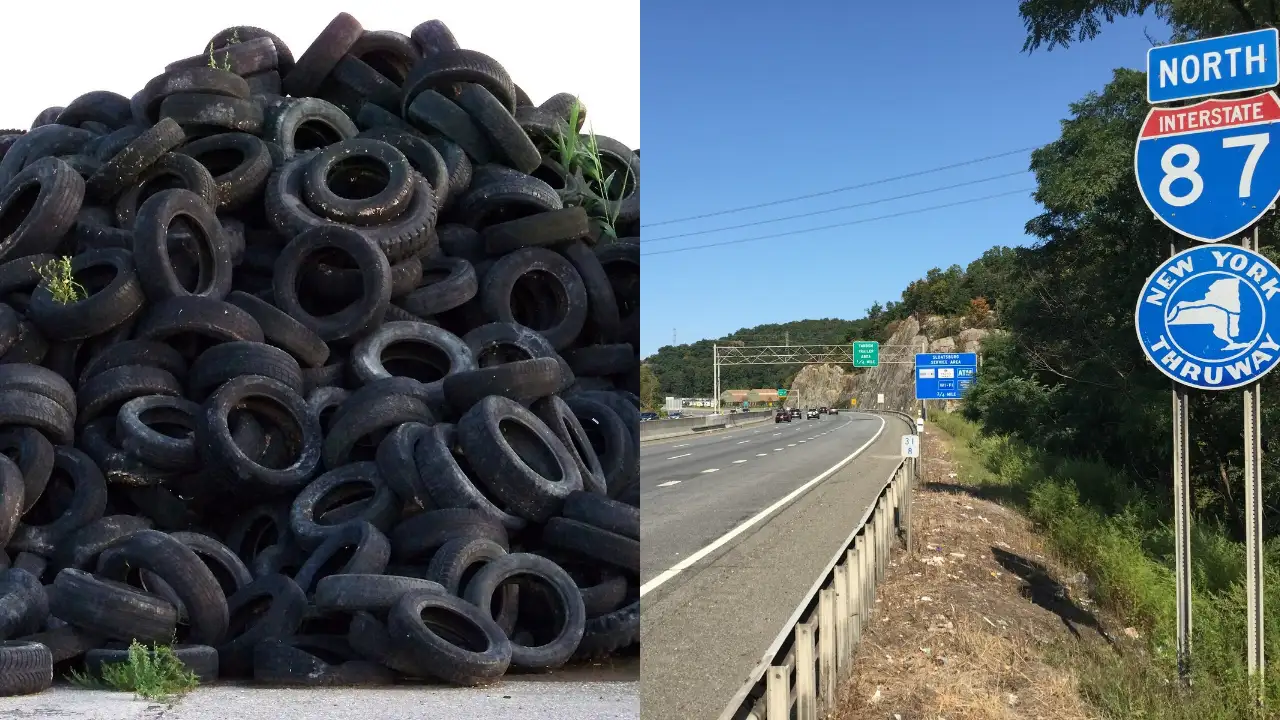
Discarded tyres, pictured for illustration, alongside I-87 in New York | Wikimedia Commons
An earlier NYSDOT annual report described the project as a first-of-its-kind construction effort in the agency’s Region 7 and documented the installation of tire cells that contained hundreds of thousands of tires during the construction process. NYSDOT records say that by November 2005, two projects under the Tire Shred Initiative had used the equivalent of about 1.4 million tires and helped remediate two waste-tire sites. The second project, on State Route 240X in Erie County, used nearly 300,000 tires in a new embankment section. A technical summary prepared for NYSDOT and the New York State Department of Environmental Conservation describes the wider program and its environmental controls, and states that the I-87 Railroad Grade Crossing Elimination Project used approximately 1.1 million tires and was completed in spring 2005.
The report also says tire-shred embankments were subject to design criteria that were intended to keep them above the water table and away from environmentally sensitive locations. The technical report said groundwater testing from the early projects showed very low levels of iron and manganese, while the design guidance took a conservative approach to site selection. The tyres were shredded to specified sizes and placed in engineered sections. Tire shreds are much lighter than conventional soil and aggregate, which can reduce the load imposed on underlying ground, although the engineering design has to account for factors such as drainage, settlement and the potential for heat buildup in thick tire-shred fills. The state monitored water quality around the projects, with testing for metals and other potential contaminants.