Door County, Wisconsin used dye to trace why 229 people got sick. Image credits: Wikipedia
In June 2007, a brand-new restaurant in Door County, Wisconsin, provided the setting for perhaps the most extensively documented outbreak of waterborne disease of recent times in the USA, according to the CDC’s Surveillance for Waterborne Disease Outbreaks Associated with Drinking Water, United States, 2007–2008, the MMWR summary covering 2007-2008 outbreaks. 229 cases of acute gastroenteritis occurred among customers and staff at the restaurant not long after it opened, and six people were hospitalized, according to the same CDC report. First, a case-control study by Borchardt and colleagues ruled out food poisoning and found that drinking the restaurant’s well water was associated with illness (odds ratio = 3.2, a measure of how much more likely illness was in one group versus another). Second, testing detected norovirus genogroup I, a group of viral strains that cause acute gastroenteritis, in the restaurant’s well water at around 50 genomic copies per liter. Third, genetic sequencing confirmed the same viral strain, genotype GI.2, in the patients’ stool samples, the restaurant’s septic tank, and the well water.
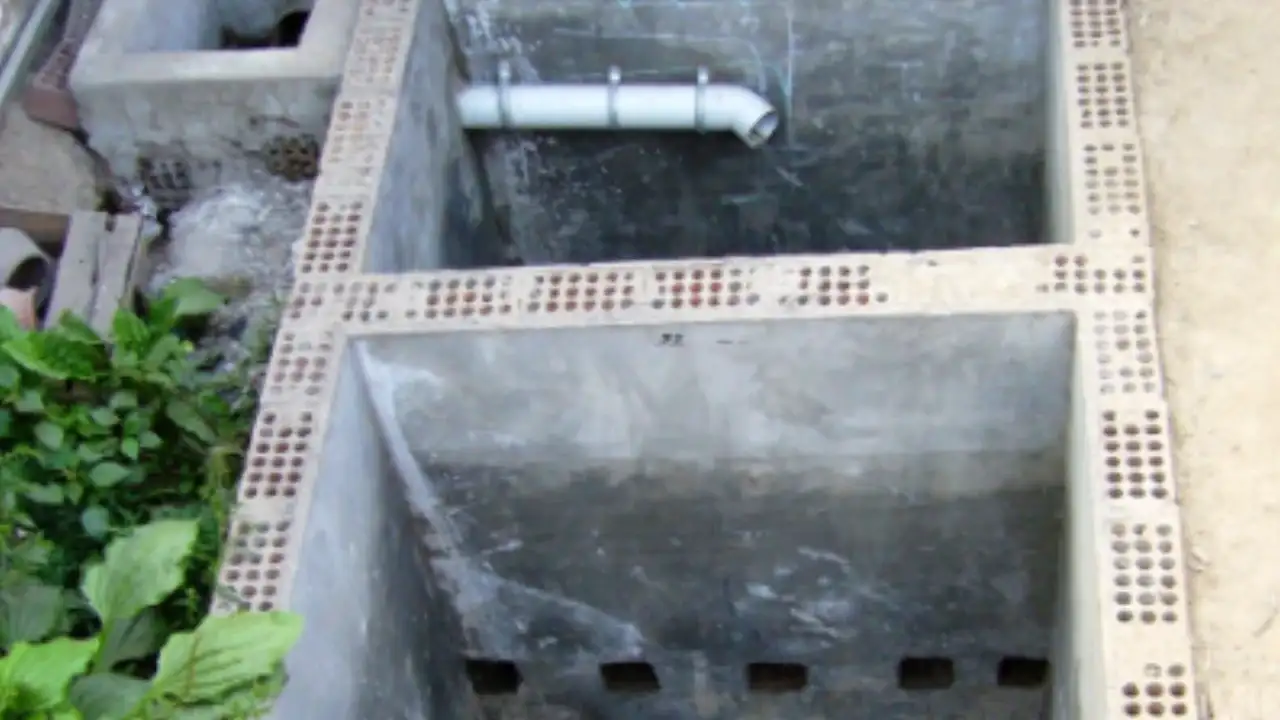
Borchardt and colleagues reported that dye injected into the septic tanks reached the well within six days through a leaking fitting, while dye released into the infiltration field took about fifteen days to arrive. All this to address the single question of how human waste found its way into a well that complied with all the state building codes. Together, these findings identify the well as the primary source of infection in the outbreak, as documented by Borchardt and colleagues in the journal Ground Water. In order to determine how the contamination got to the well, two different dyes were injected into two parts of the septic system, the tanks and the infiltration field. This is where the account of wastewater reaching the drinking water well in about a week began. Wastewater from both the tanks and the infiltration field ultimately reached the restaurant’s well. This meant the septic effluent was carried by groundwater directly into the drinking water well.
Door County is located on top of a fractured dolomite aquifer of Silurian age. This rock formation is made up of joints and bedding-plane channels that let water, along with whatever pollutants it carries, move rapidly with little natural filtration. Adherence to those codes turned out not to be enough for this particular geology: the setback distances assumed groundwater would move slowly enough to be filtered naturally over weeks or months, but the dye tests showed it could travel through the fractured dolomite in a matter of days.
As noted earlier, both the well and the septic system were built entirely in accordance with the state codes in place at the time.