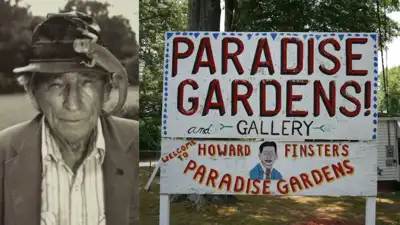
Howard Finster / Paradise City entrance sign | Wikimedia Commons
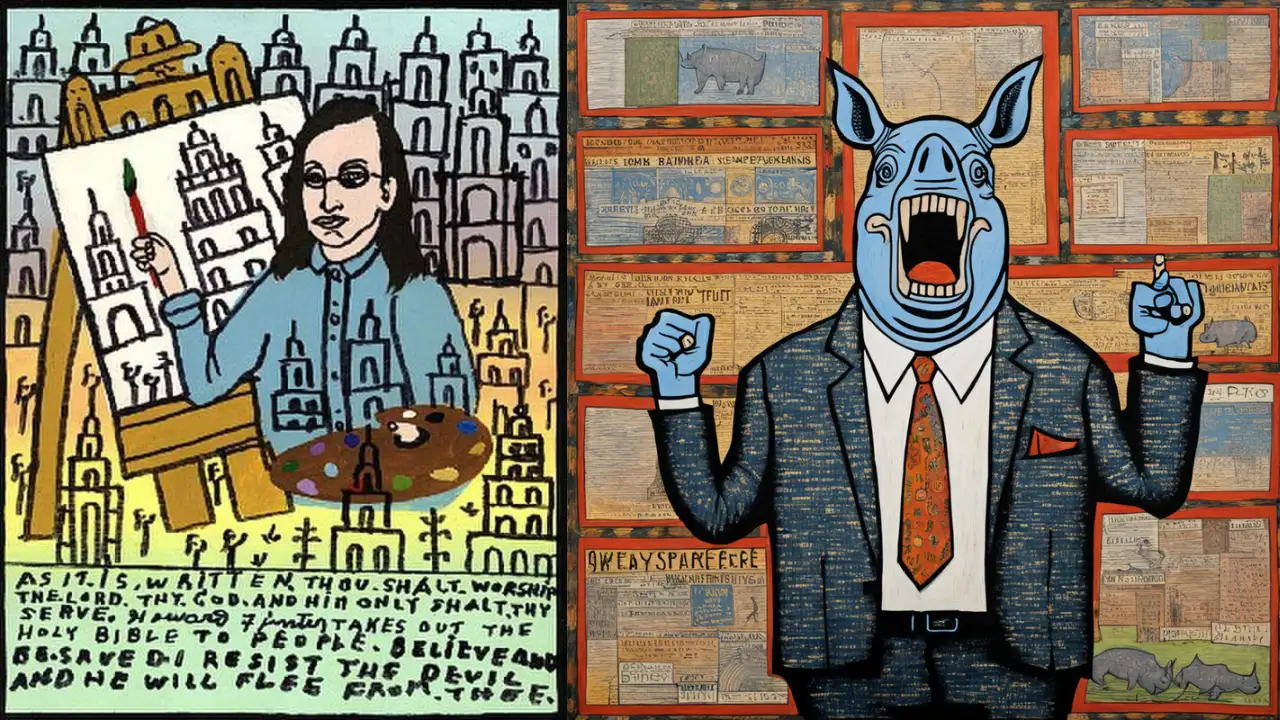
A Georgia preacher and bicycle repairman named Howard Finster was 59 when he said that he received a vision that God was instructing him to create sacred art. He was not trained as an artist, but he began painting in 1976 and went on to produce 46,991 works before his death in October 2001, according to the Paradise Garden Foundation . In terms of the volume of paintings produced by him, the Paradise Garden Foundation records 46,991 works completed by the time he died at 84.
Finster also built an outdoor art environment called Paradise Garden at his home in Pennville, Georgia, and later incorporated it into Summerville. He filled the property with paintings, concrete sculptures, religious messages, salvaged objects and structures that were assembled from discarded materials, and the garden developed over several decades, with Finster treating the entire site as part of his artistic work. His first painting followed an experience that he described as a face appearing in a dab of white paint on his finger, and interpreted it as a divine instruction to paint sacred art. The episode became important to his account of how he began making art late in life. The garden contains Bible verses that are embedded in concrete, bicycle parts, television tubes, mirrors, bottles, plastic toys and other discarded items. These materials were combined with religious imagery and paintings of historical figures, inventors and public personalities, and some of the objects were collected, while others became part of structures that he built himself. From local preacher to nationally recognised folk artist Finster’s art made a number of television appearances and had connections with musicians, which helped him reach a wider audience, and his paintings mixed religious subjects with familiar images from American public life, which is a combination that made them different from conventional devotional art. Finster took help from family members, who assisted him with repetitive tasks such as cutting out patterned shapes and filling background colours. He generally completed the detailed work and added the text himself.