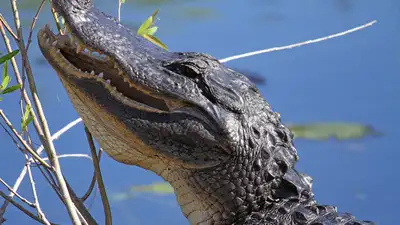
An American alligator in Everglades National Park near Homestead, Florida. Image credits: Wikimedia Commons
Pet shop popularity in the 1950s after restrictions on the alligator trade A review titled The invasive spectacled caiman (Caiman crocodilus) in Florida, United States: invasion timeline, insights, and implications for Everglades restoration , published in Frontiers in Amphibian and Reptile Science on April 6, 2026, reports that spectacled caimans became popular in the American pet trade in the 1950s after restrictions on the American alligator trade. The species is a mid-sized crocodilian that rarely exceeds 2.5 m in total length and adapts to a wide variety of habitats. In the 1970s, caimans were first found and removed at Homestead Air Reserve Base and by 1980 the species was determined to be established, meaning it was reproducing in the wild in South Florida. 330,705 caimans imported into the United States between 1977 and 2024 The review also traces the trade. CITES trade data show 330,705 spectacled caimans imported into the United States from 1977 to 2024, so the total does not cover the earlier imports of the 1950s and 1960s. Fish and Wildlife Service LEMIS records show 18,525 caimans imported directly into Florida from 1999 to 2018, with a peak of 10,841 in 1999 and a low of 6 in 2018 and Guyana was the largest source at 12,211. The species is not listed as prohibited in Florida, so importation, trade, possession and breeding remain allowed under Florida statutes 379.3761 and 379.3762. Habitat overlap with alligators in Biscayne Bay The review claims that caimans in South Florida inhabit canals, ponds and ditches, but recent reports of their presence have been in marsh and slough habitats within Water Conservation Area 3 and Everglades National Park, such as Shark River Slough. The 2023 study What is the potential for extirpating spectacled caiman from Comprehensive Everglades Restoration Plan projects in South Florida? , published in Management of Biological Invasions , used survey and removal data from 2012 to 2021 along 11 survey routes. Image credits: Wikimedia Commons Its authors removed 251 caimans over that period and annual removals rose from 5 in 2012 to a peak of 47 in 2020.
Some exotic pets are later released by owners, contributing to the spread of non-native species. Some escape from captivity while others are simply released and in a warm climate with canals and ponds in Southern Florida, a few survive and reproduce. Most caimans imported since then came from Colombia, which made it the main source of the animals introduced in Florida. First wild records in the 1960s and an established population The review reports that the earliest wild sightings of spectacled caimans in Florida date to the 1960s, when residents reported them in Palm Beach County.
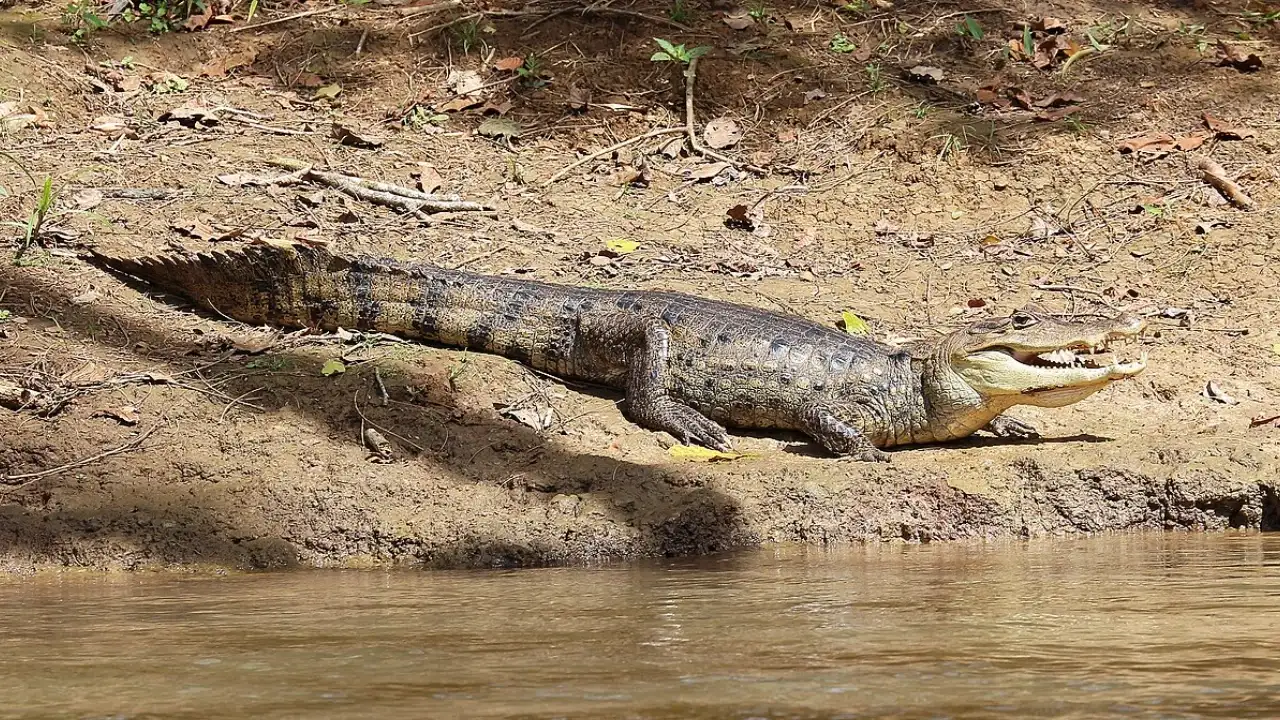
Florida’s wetlands contain a combination of native reptile species; none is more emblematic of the state than the American alligator. The Everglades also contain the American crocodile, which has a more limited coastal distribution, so two crocodilian species are found together in that area, sharing the same waters, food sources and nesting grounds. Their existence relies on factors such as water levels, salinity, food and habitat. Florida is a major hub for the exotic pet trade, especially in South Florida, where importers, breeders and tourist attractions are involved. The species’ rapid establishment in South Florida likely reflected a large initial founder population, small-bodied reproductive animals, broad habitat tolerance and warm temperatures and the authors warn that spread into protected areas such as Everglades National Park could make control harder and increase the risk to sensitive ecosystems. These dates mark when wild animals were recorded, not when they arrived. The Wildlife Society’s summary of another removal study places the introductions mainly in and around Homestead in the 1950s, the decade the pet trade took off. U.S. A spectacled caiman (Caiman crocodilus*). Native to Latin America. The review credits the same study with placing nesting from mid-June to mid-July and the start of hatching in early September. Competition with native crocodilians remains a hypothesis The review is cautious on this point. Competition among caimans, alligators and crocodiles remains hypothetical and has not been quantified, and the authors call for research on how far the species’ niches overlap. They suggest that large caiman populations could limit the recovery of native crocodilians and hamper Everglades restoration goals. They point to the Amazon basin, where evidence suggests spectacled caimans may be limiting the recovery of black caimans and to Venezuela, where their expansion is hypothesized to have inhibited the reintroduction of Orinoco crocodiles. You use AI every day. Now get your AI Quotient. Take the AIQ test.