
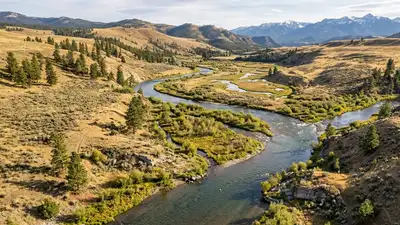
PC: AI Generated
One important step came in 1986, when the area was listed as a federal Superfund site, bringing it within a programme designed to address serious pollution requiring long-term remediation. The US Environmental Protection Agency ultimately endorsed dam removal as the preferred clean-up approach in 2003. The decision followed more than 10,000 public comments from people in western Montana supporting a full clean-up and the removal of the structure. Reportedly, the dam’s removal was completed in 2008.
The work also required the river corridor to be restored so that the site could function as a floodplain again. The Clark Fork Coalition, a conservation organisation working to protect the river system, spent years pressing for a more comprehensive response. Removing the dam was initially regarded by some as an unrealistic solution. Keeping the structure in place, however, would have left the reservoir and its contaminated sediment as continuing problems. The Coalition helped build public support for taking it down, working alongside residents and other groups concerned about water quality and the health of the river. The polluted material accumulated in its reservoir had to be addressed as part of a wider remediation and restoration programme, rather than simply being left behind as the river changed course. The reservoir had contained millions of cubic yards of sediment, and managing that material was central to reducing the risks to people and wildlife. Public agencies led the remediation and redevelopment process, with the Clark Fork Coalition contributing advice and representing community interests in decisions about the clean-up. With the obstruction gone and the restoration work under way, the confluence began to regain its role as a meeting point between two connected waterways, rather than a landscape shaped by a century of impounded water and contaminated deposits. Without the dam separating the waterways, fish gained a more open route through the confluence of the Clark Fork and Blackfoot rivers. This matters for native trout, which rely on connected stretches of cold, clean water to reach suitable habitats and move through the river system. Restoring passage does not, by itself, guarantee that every fish population will recover. Water temperature, habitat quality and other environmental pressures still influence the health of a river. The restored floodplain also gives the river corridor a different relationship with surrounding land. Rather than being confined by the former reservoir and dam, the area can accommodate natural river processes more readily. The area around the old dam has also taken on a new purpose. The restored confluence is part of Milltown State Park, which provides public access to a landscape once associated with industrial pollution and the hazards posed by contaminated sediment. Plans for the park have included walking trails, fishing access and picnic facilities, giving residents and visitors opportunities to spend time beside the rivers. The site offers space for activities such as angling, boating and birdwatching, while allowing people to see the results of the restoration at close quarters. Land that required extensive environmental intervention has become a public recreation area, with the rivers themselves once again central to the landscape. The park also gives the community a way to engage with the history of mining pollution and the lengthy process required to address it.
But removing a barrier can eliminate one obstacle to movement, allowing fish to use reaches that were previously difficult or impossible to access.
The consequences became especially apparent after a major flood in 1908 carried large quantities of mine waste into the river system. The reservoir eventually held an estimated 6.6 million cubic yards of sediment, according to the Clark Fork Coalition. For decades, the meeting point of the Clark Fork and Blackfoot rivers in western Montana lay behind a dam that held back more than water. Sediment carried downstream from copper mining around Butte had accumulated in the reservoir, leaving a legacy of contamination that reached beyond the river itself. Flooding and ice jams could stir the material up again, while arsenic from the mining waste affected nearby drinking water wells. By the time plans to remove the dam gained support, the problem had been building for almost a century. Its eventual removal changed the landscape at the confluence, allowing the rivers to reconnect and opening a new chapter in the area’s restoration. Milltown Dam stood near Missoula, where the Clark Fork meets the Blackfoot River, roughly eight miles upstream of the city. Built in the early 20th century, it created a reservoir that gradually filled with sediment washed down from mining operations in the Butte area. Over the years, contaminated material settled behind the dam. That accumulation was not simply an environmental concern confined to the riverbed. Arsenic contamination reached local groundwater wells, and subsequent floods and ice jams could disturb polluted deposits, exposing aquatic habitats to further damage. The removal of Milltown Dam addressed a local problem, but its significance extends across the connected river system. The Clark Fork carries water through a region affected by generations of mining, and pollution in one stretch can have consequences for communities and habitats further downstream. Reconnecting the rivers and dealing with the contaminated reservoir removed a longstanding source of risk at an important junction. The work was not a single engineering intervention followed by an instant return to pristine conditions. It depended on years of advocacy, public involvement, regulatory decisions, sediment management and the restoration of the land around the former reservoir. Monitoring and wider watershed clean-up remain important to the long-term health of the rivers. You use AI every day. Now get your AI Quotient. Take the AIQ test.